Grande figure de Narnia
Jadis, the White Witch
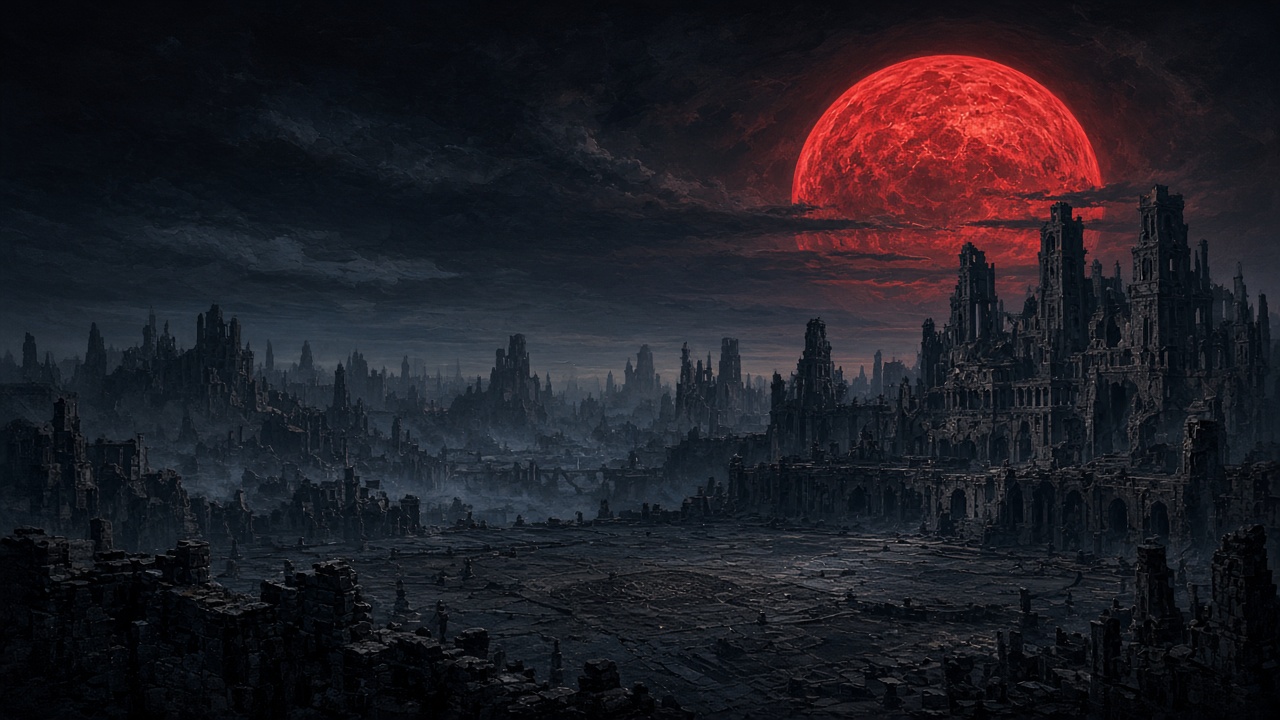
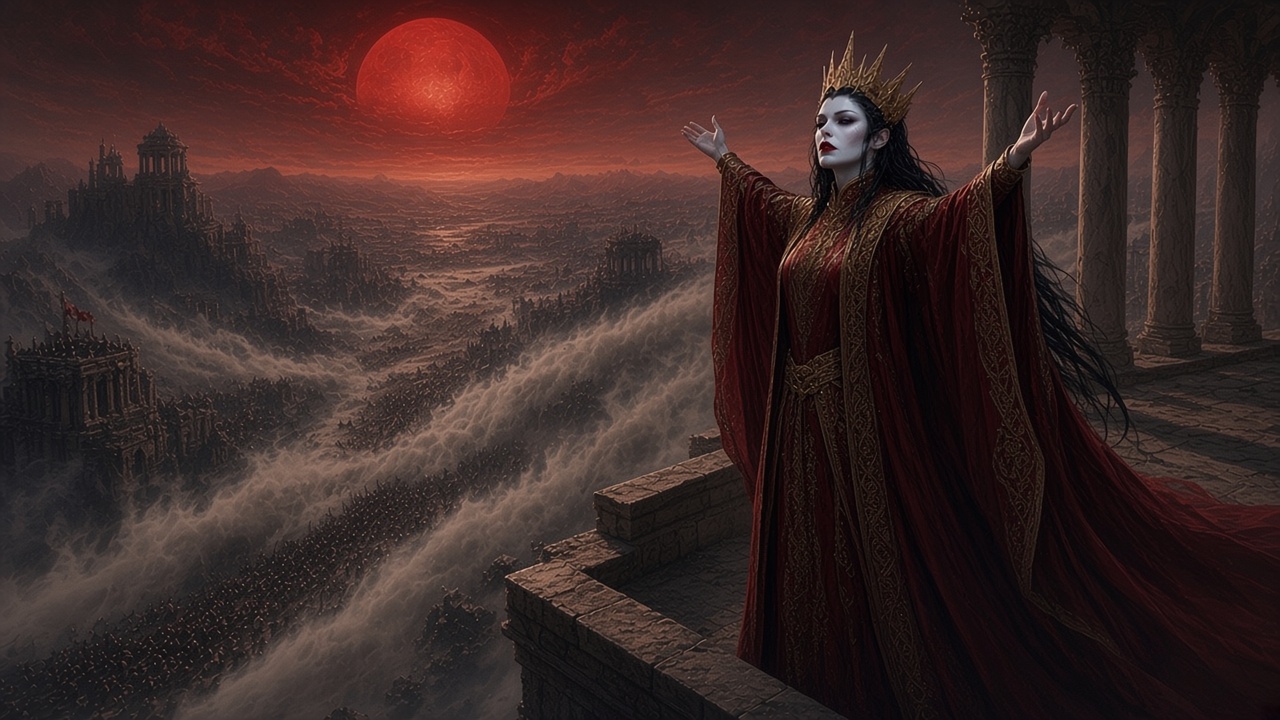
The last queen of Charn, who destroys her own world, enters Narnia at its creation and imposes a hundred years of winter.
Repères
- Espèce
- Humanoid from Charn (claimed descent from giants and jinns, according to Mr. Beaver)
- Nom original
- Jadis, the White Witch
- Autre traduction
- Queen Jadis; "Empress Jadis" (self-proclaimed title)
- Autres noms
- the White Witch · the Queen of Charn · "Queen of Narnia" (usurped title)
- Titres
- Last Queen of Charn
- Origine
- Charn
- Nationalité
- Charn; tyrant of Narnia
- Allégeance
- herself
- Famille
- a sister, his rival, whom he defeated at Charn (unknown name) · royal line of Charn
- Première apparition
- The Magician's Nephew, ch. 4-5 (Charn's Hall of Statues)
- Âge
- non-human; adult in appearance, immense
En bref
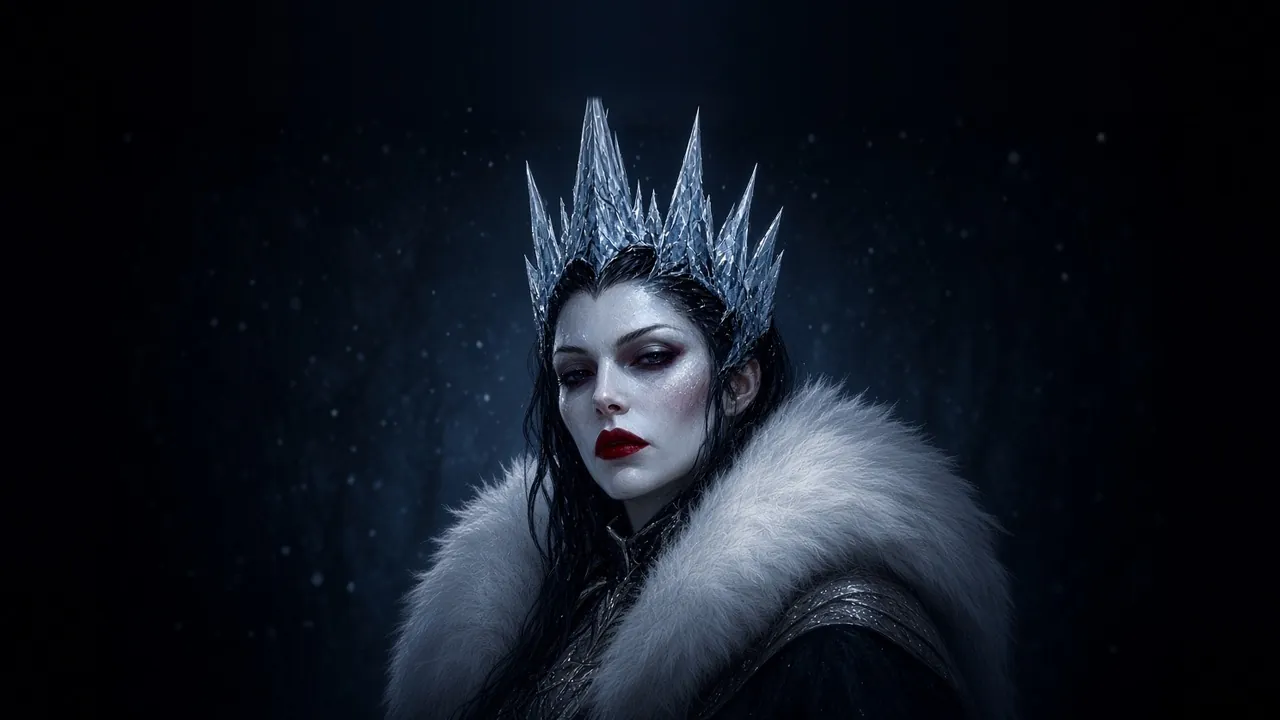
Jadis is the main antagonist of the series. She is tall, strikingly beautiful, with pale skin and a very red mouth. She is a queen who cannot imagine disobedience. Readers first encounter her as the White Witch, who imposes an eternal winter in Narnia where Christmas never comes. Her origin is revealed later : she comes from another world, Charn, which she herself destroyed.
« Our destiny is noble and solitary. »
Ours is a high and lonely destiny.
— Jadis, The Magician’s Nephew, ch. 5
Personality
Proud, intelligent, merciless, Jadis knows only domination. She is not a mindless monster : she has a logic, that of power which believes itself above all moral rules. She understands nothing of joy, and that is precisely what dooms her.
Insight and analysis
Jadis embodies tyranny and the temptation of absolute power. Her "Deplorable Word," which destroys an entire world, was interpreted after 1945 as an echo of the nuclear weapon, and Lewis warns against this danger at the end of The Magician’s Nephew. She has also been compared to the Snow Queen from Andersen or to Circe from mythology. In a Christian reading, she represents a power of accusation : she knows the law, but not grace.
Trivia
- Jadis and Uncle Andrew both use almost the same phrase about their "noble and lonely destiny." It is Lewis’s nod to tyrants, great and small.
- The lamppost that Lucy finds in the forest grew from the iron bar hurled by Jadis.
Relations
- Aslan : his enemy since the very beginning of Narnia.
- Edmund : his recruit, his victim, and then his conqueror at Beruna (he shatters her wand).
- Maugrim : the captain of her secret police.
- Uncle Andrew : his "slave" in London.
- Her sister : the rival queen of Charn, against whom she uttered the Deplorable Word.
Name and translations
In French, "Jadis" means "long ago," a fitting coincidence for a queen of a dead world. The name has also been linked to the Turkish cadı, meaning "witch." According to Mr. Tumnus, she descends from Lilith, Adam’s first wife in Jewish legend, and giants.
Inspirations
Critics cite the Snow Queen from Andersen, Ayesha (She, by H. Rider Haggard), the Queen of Babylon from The Story of the Amulet by E. Nesbit, and the figure of Satan in Milton : pride that prefers to rule over a dead world rather than serve.
Notable quotes (paraphrased)
- At Charn’s ruins, she justifies the Deplorable Word : her people were hers to command, and she had the right to do so.
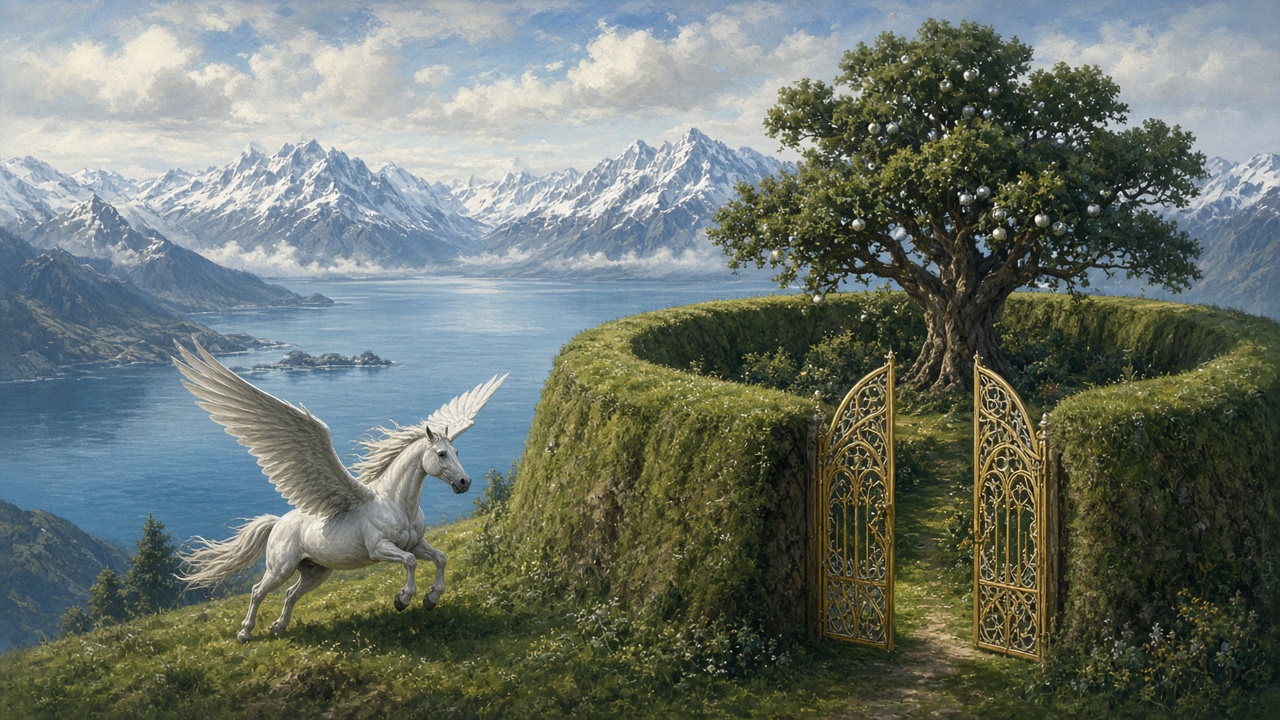
- In the West Garden, she tempts Digory by advising him to keep the apple for himself.
Dans les livres



Son histoire dans les livres (révèle l’intrigue)
The story
The Magician’s Nephew
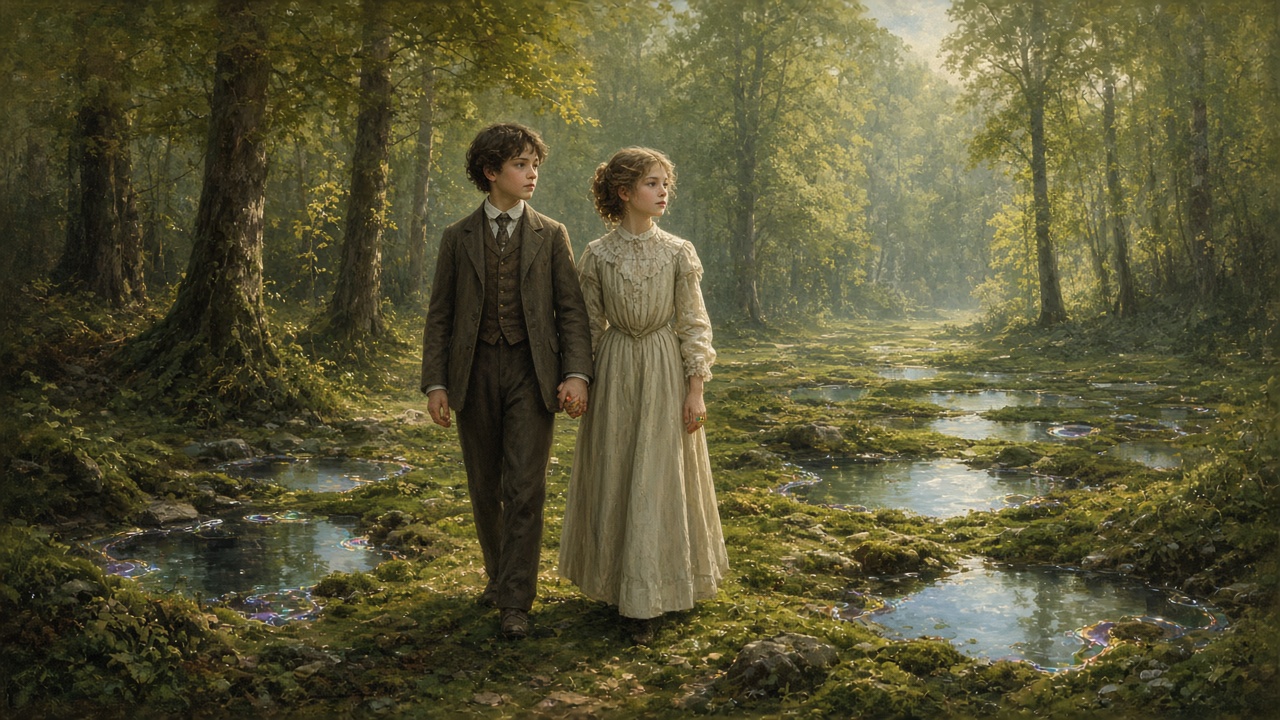
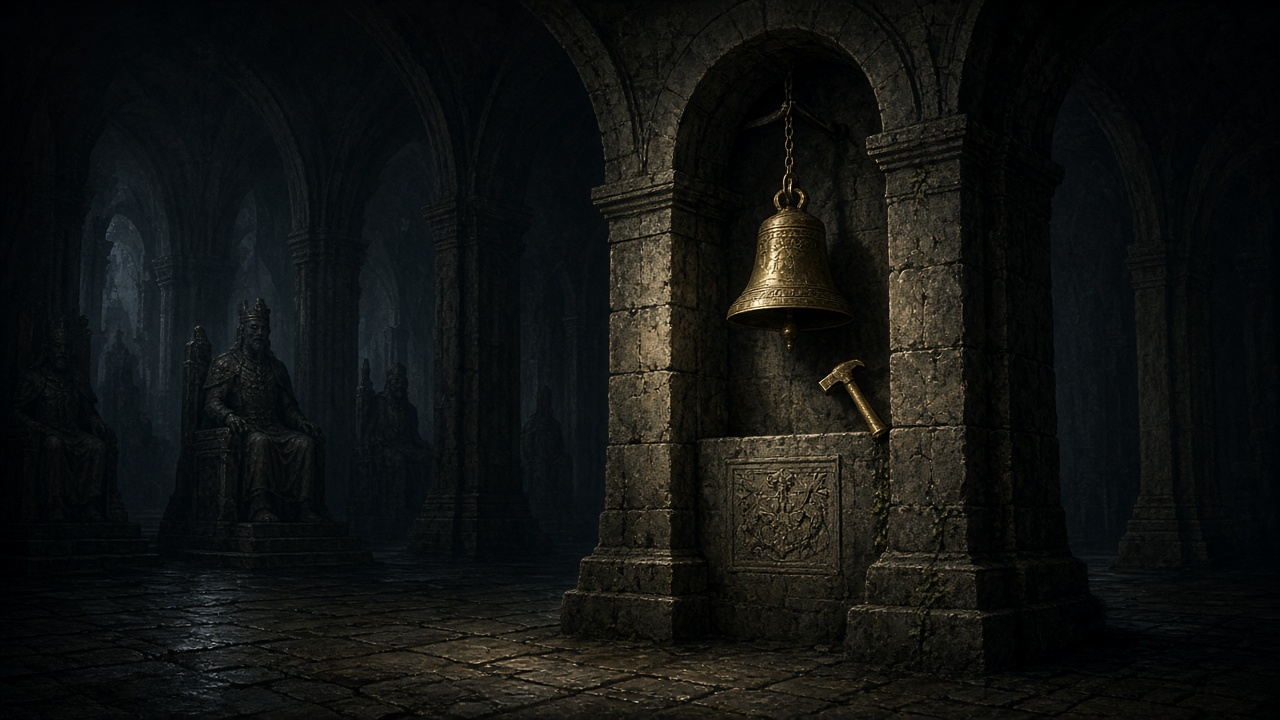
In the Hall of Statues in Charn, Digory strikes a bell out of curiosity and awakens Jadis, frozen by a spell. She explains, without the slightest remorse, that she uttered the "Deplorable Word," which destroyed all life in Charn rather than let her sister win the war. Clinging to the children, she arrives in London in 1900. There, she terrorizes Uncle Andrew, loots a store, and is then pulled by the rings into the void where Aslan is singing Narnia into existence. She immediately hates the song. She hurls a bar she tore from a London lamppost at Aslan, which bounces off harmlessly, then flees north. Later, she eats an apple she stole, which grants her endless youth but a miserable life.
The Lion, the Witch and the Wardrobe
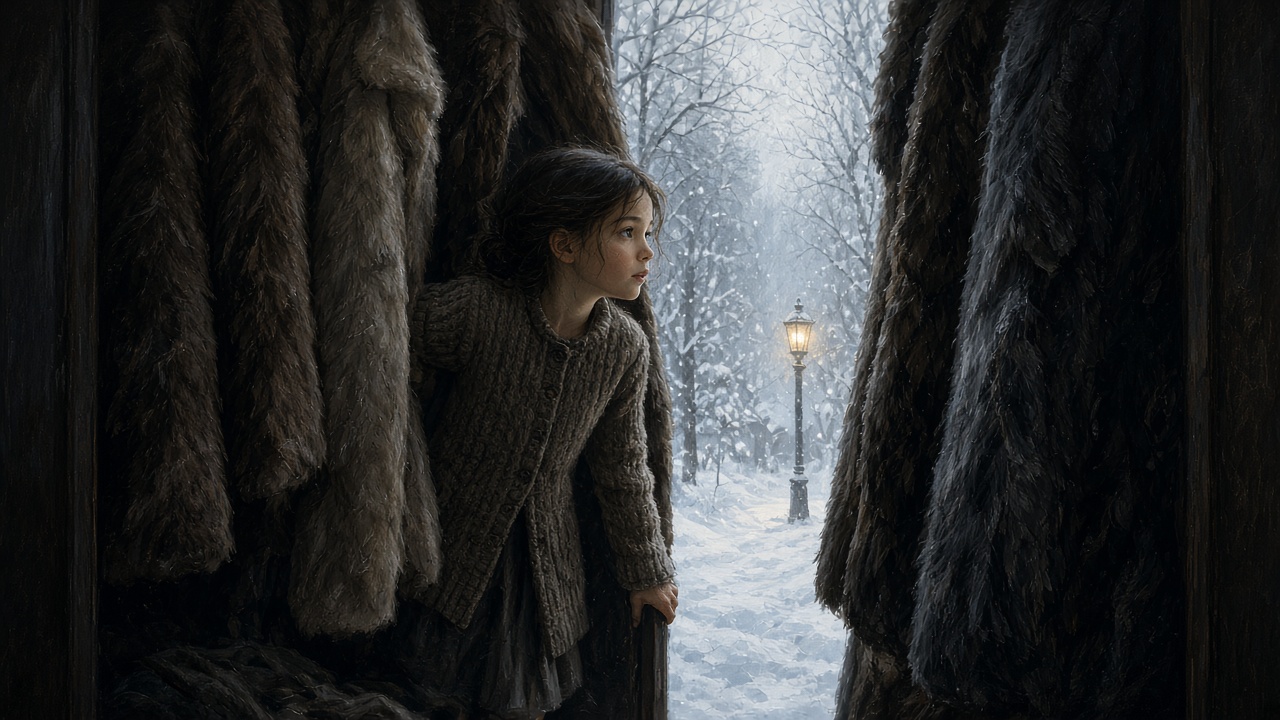
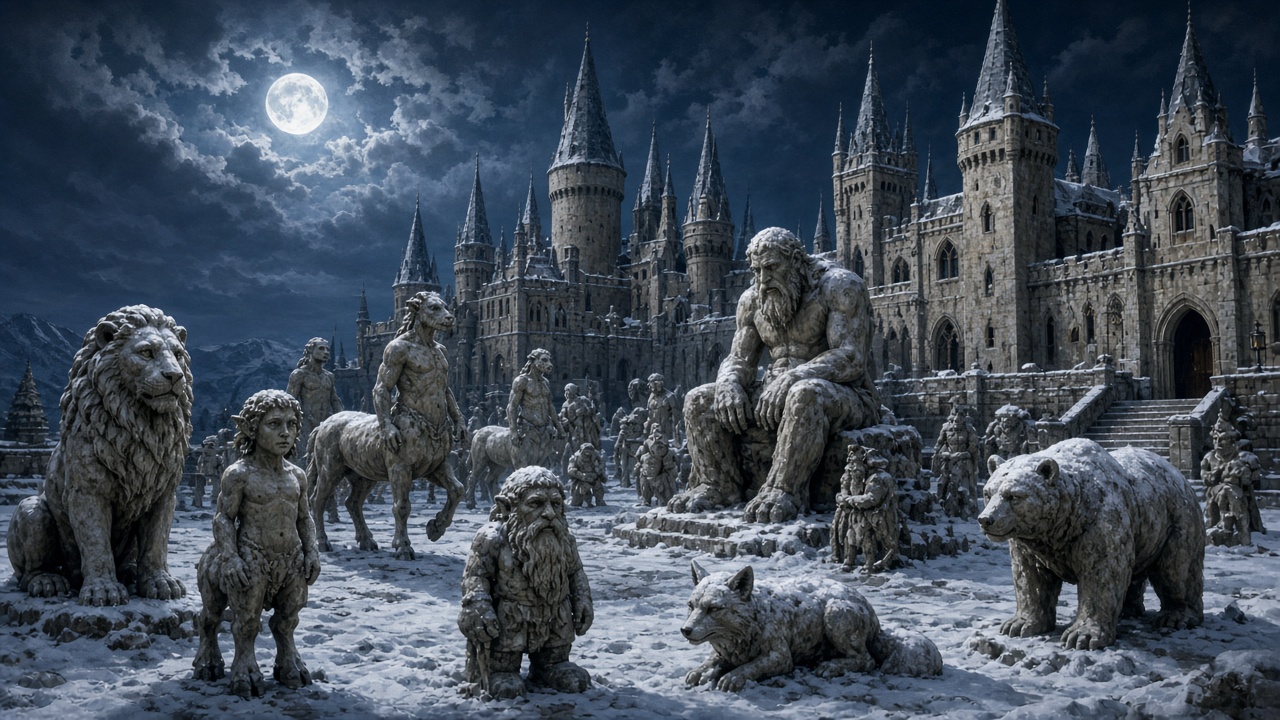
Nearly a thousand years later, the White Witch rules over Narnia. She imposes the eternal winter, a secret police of wolves, and stone statues for her opponents. She seduces Edmund, then claims his life in the name of Deep Magic, and kills Aslan on the Stone Table. She is unaware of an older magic : Aslan returns. She is defeated by him in the Battle of Beruna.
The Horse and His Boy
She no longer appears, but her shadow remains. A hag and a Marsh-wiggle attempt to resurrect her. The hag in green robes from The Silver Chair is said to belong to the same "breed" of northern witches.
Lieux liés
- Sur la carte
- Sur la carte
- Sur la carte


Objets liés




Peuples liés

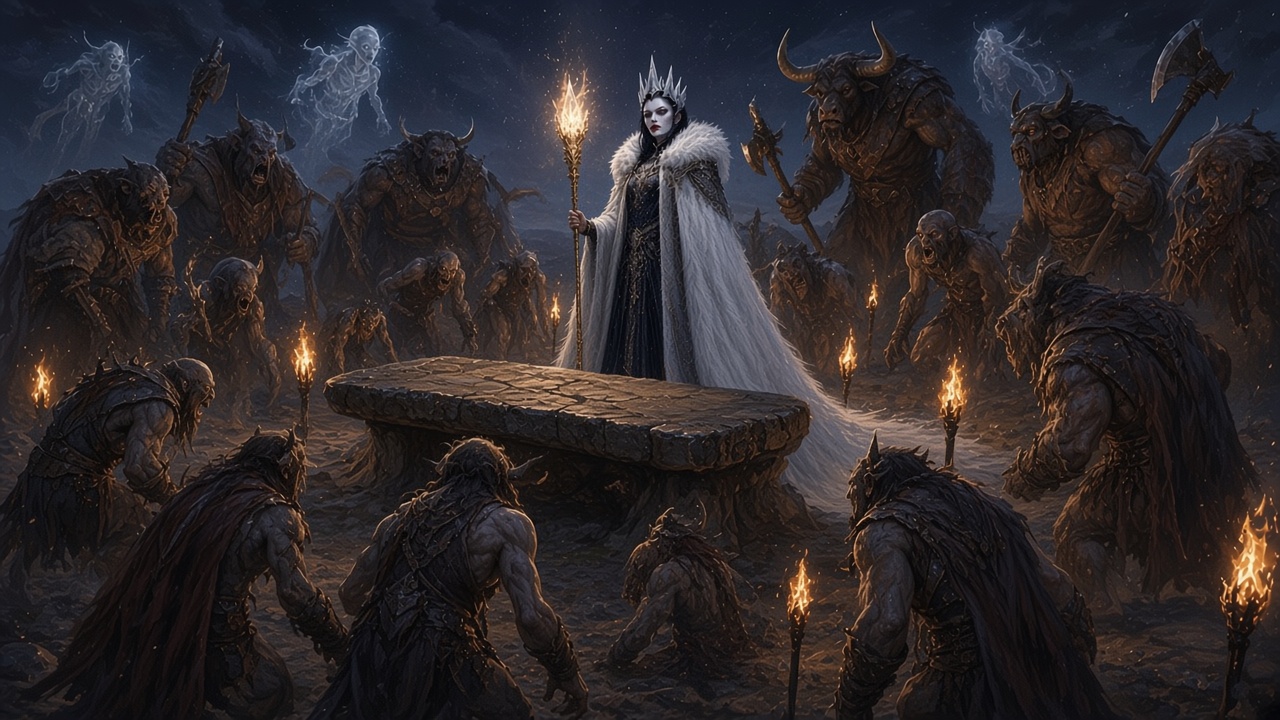


Galerie
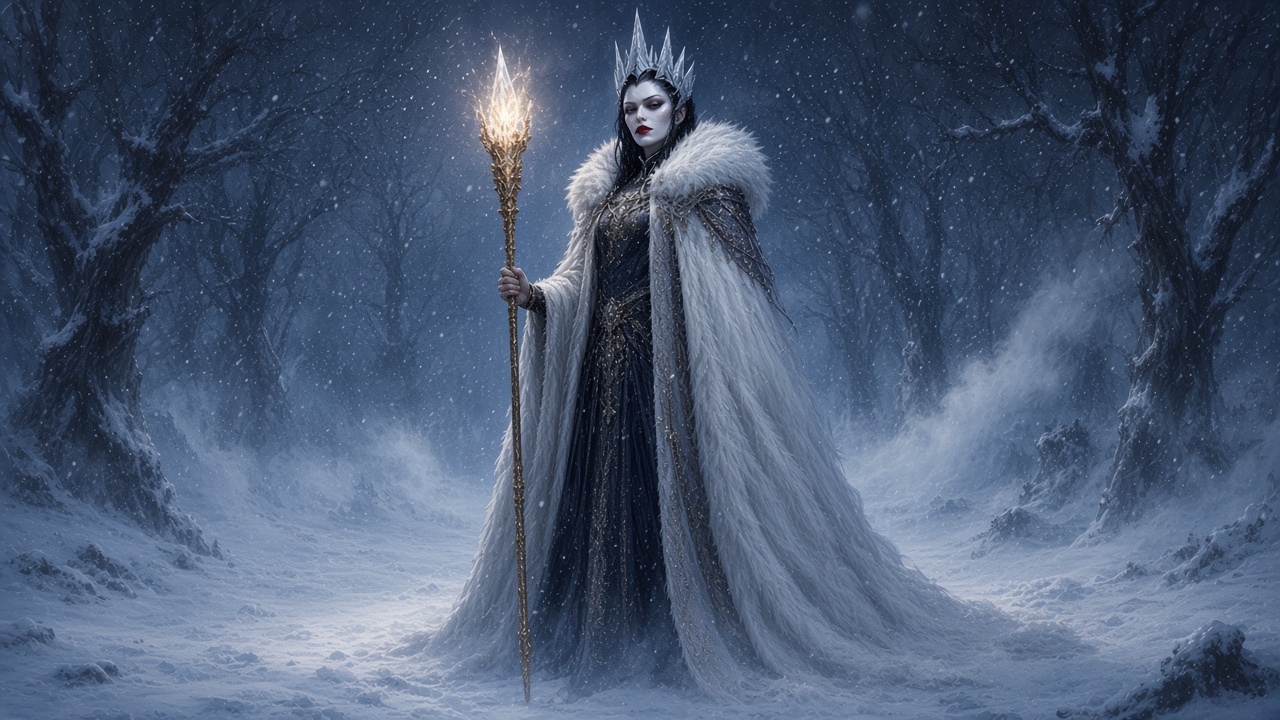
La Sorcière debout, immense, baguette d'or à la main 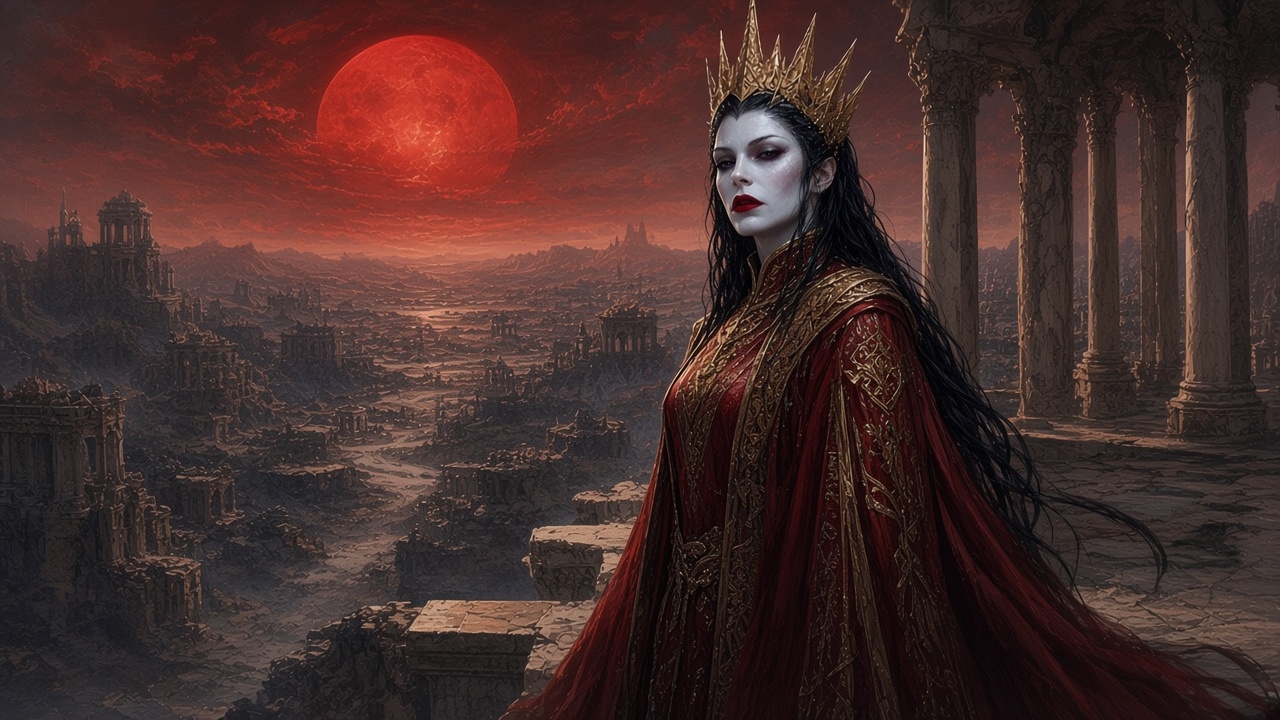
Jadis en robes pourpres dans les ruines de Charn 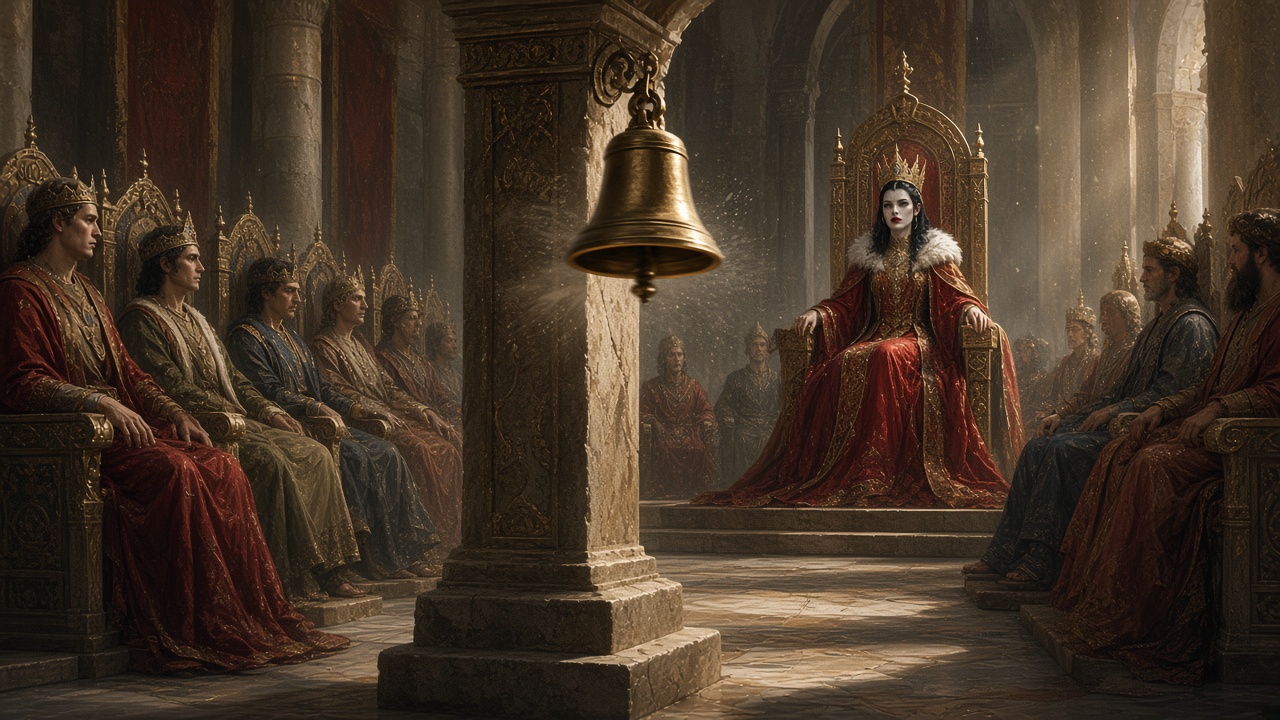
Jadis assise, figée parmi des statues de rois et reines 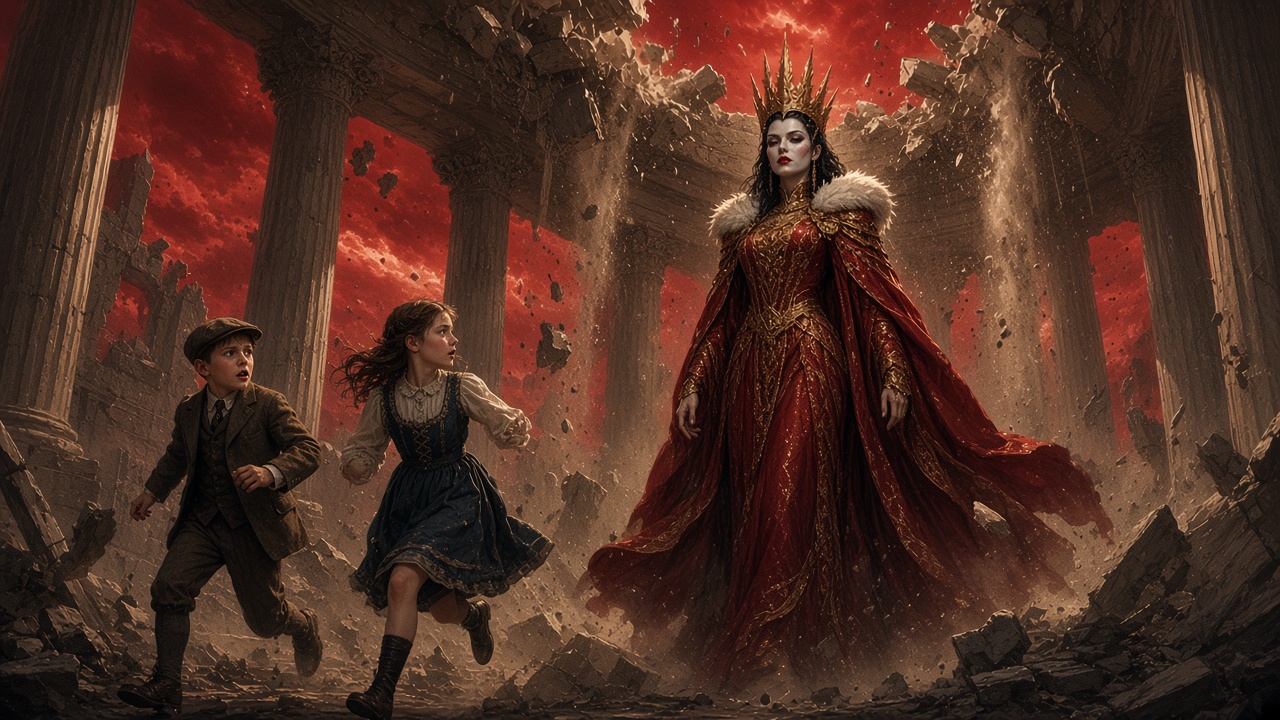
Jadis s'éveille et se lève, la salle s'écroule 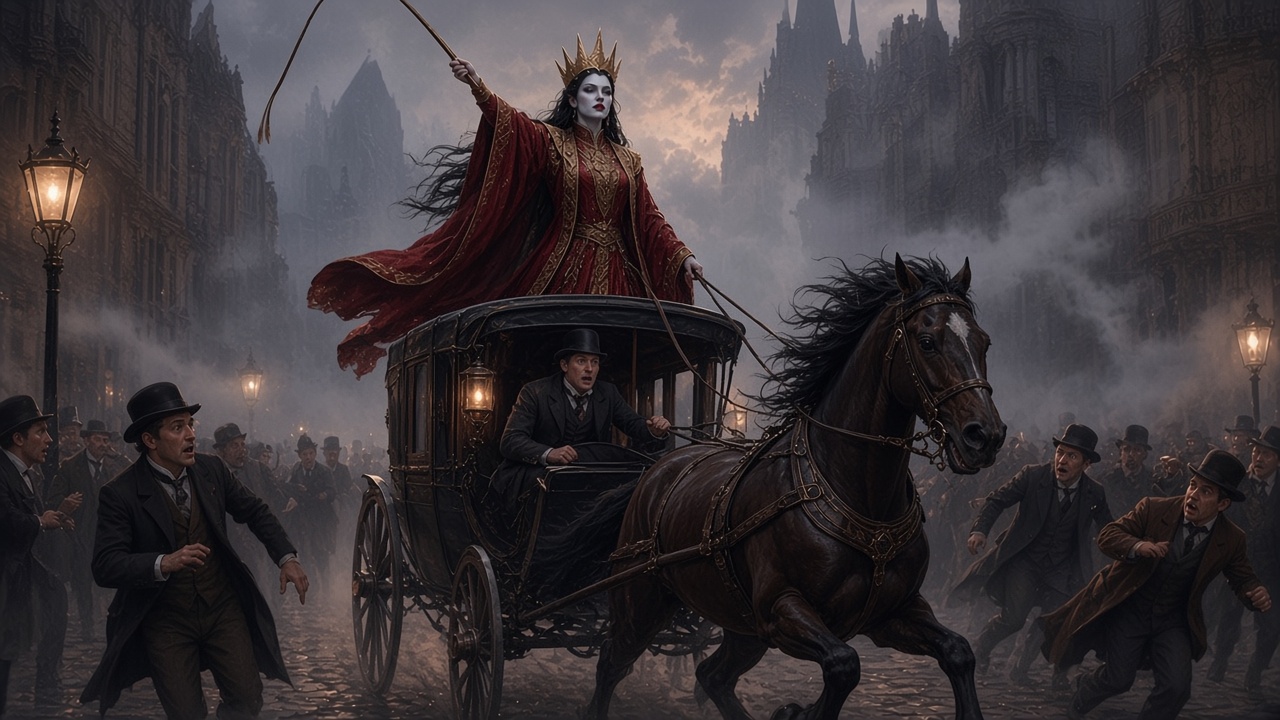
Jadis debout sur un fiacre lancé dans une rue de Londres en 1900 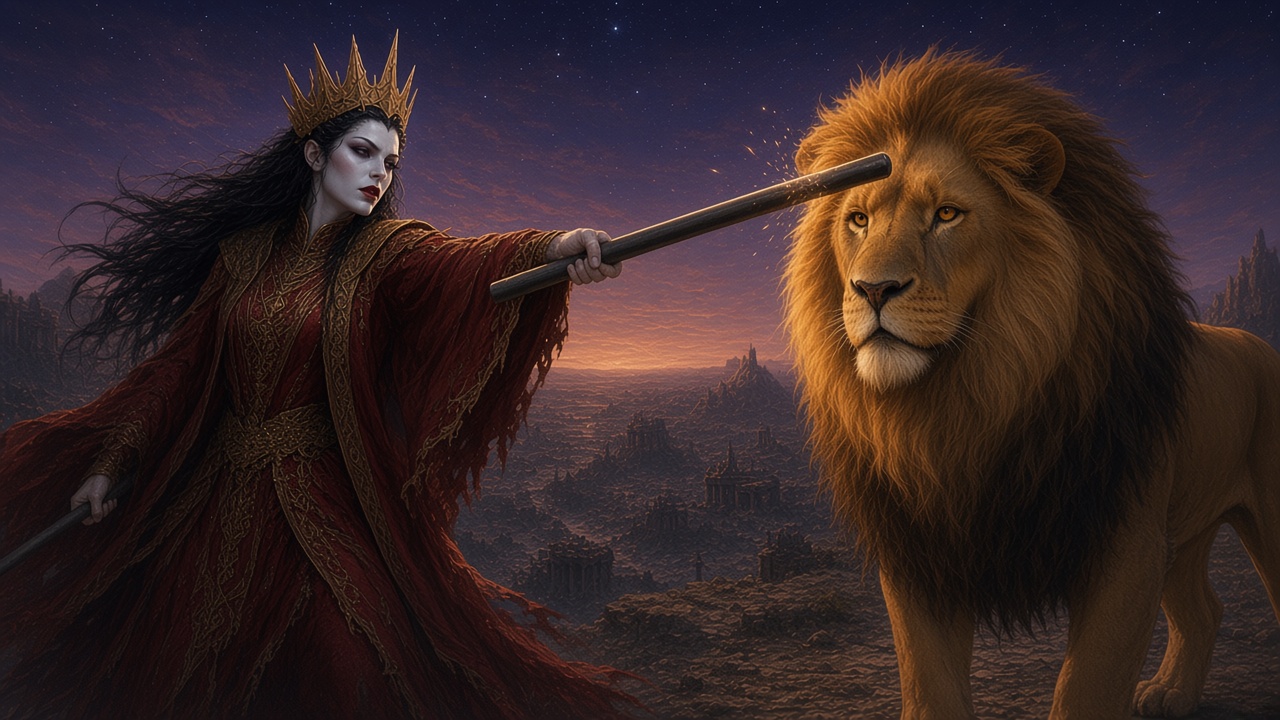
Jadis lance une barre de fer vers un lion dans un monde naissant 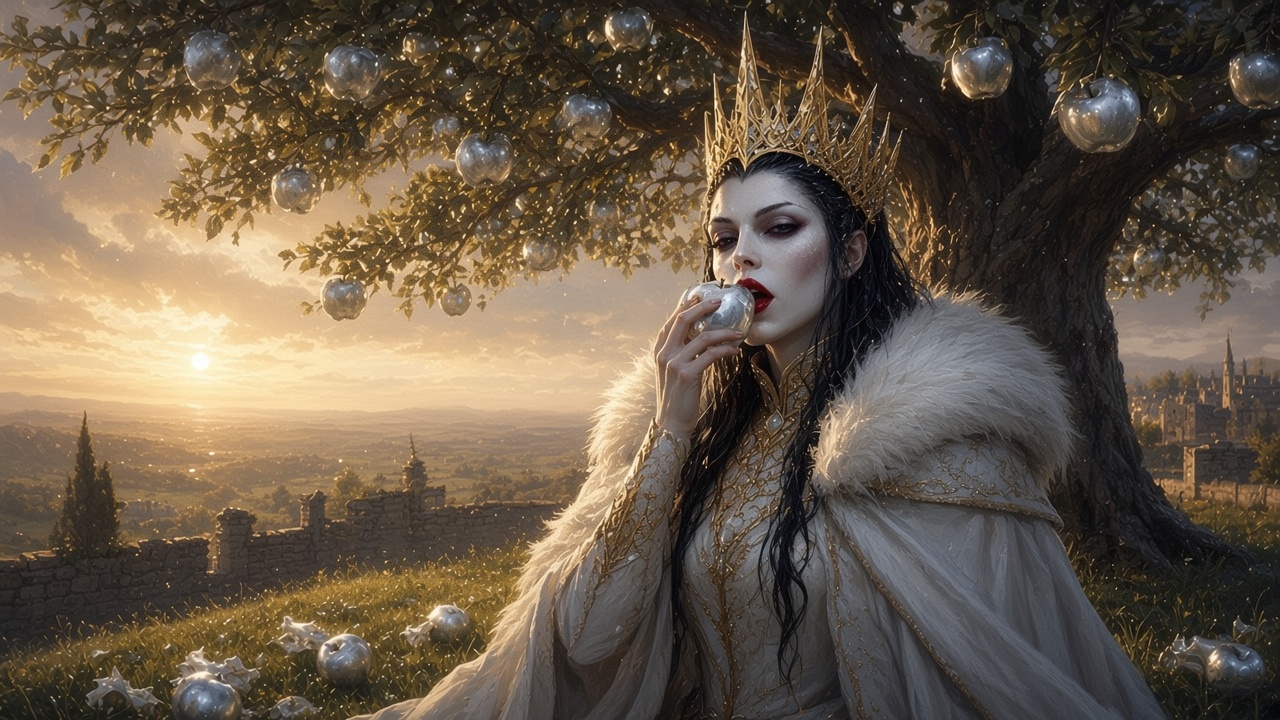
Jadis mange une pomme d'argent dans un jardin clos 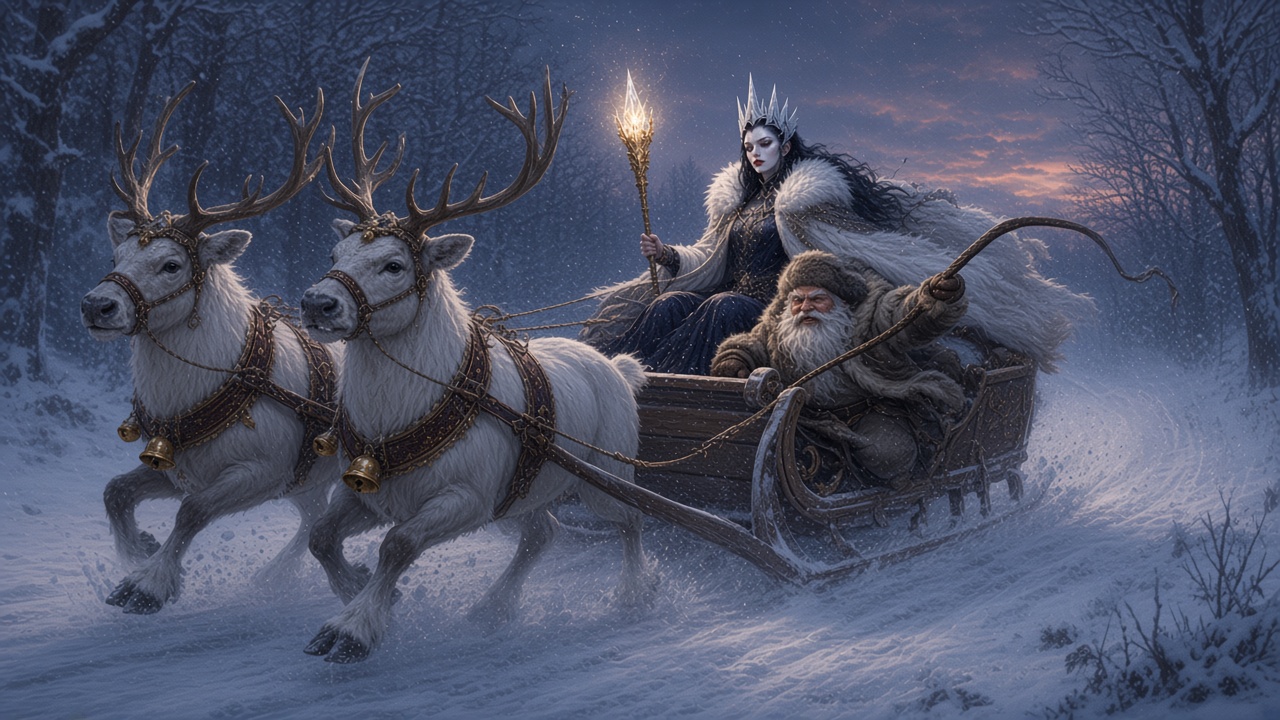
La Sorcière dans son traîneau tiré par des rennes blancs 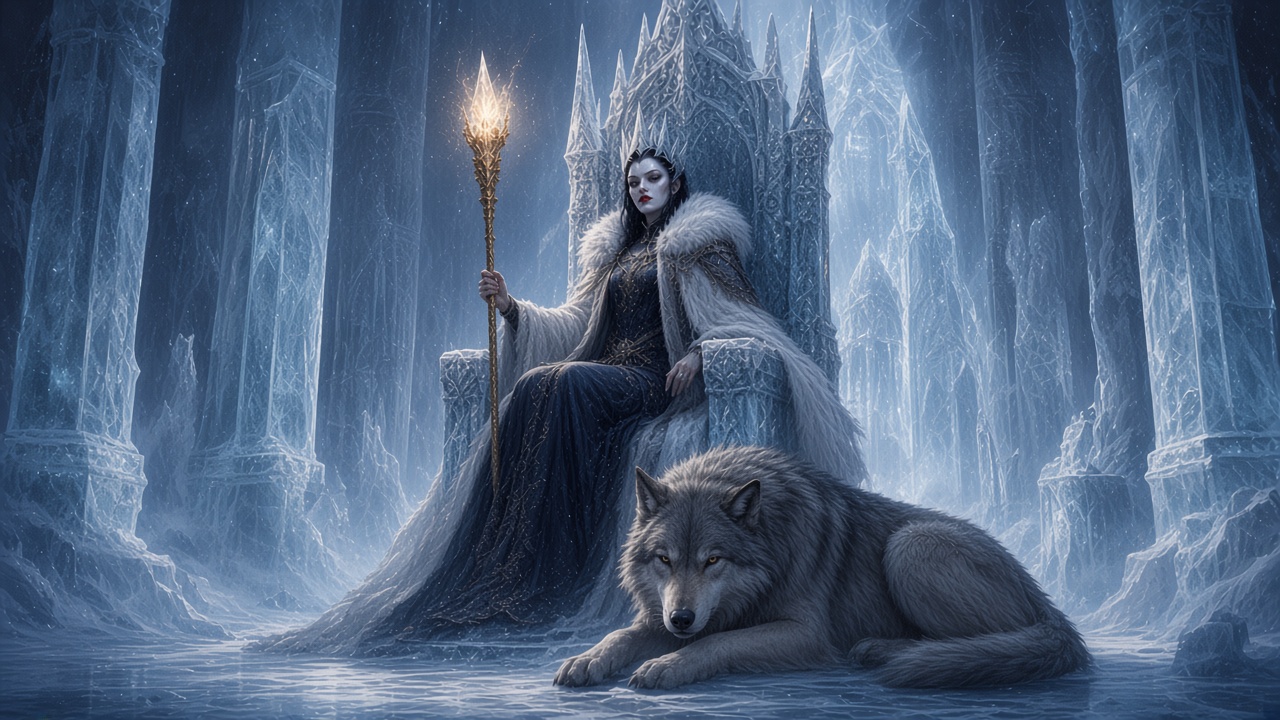
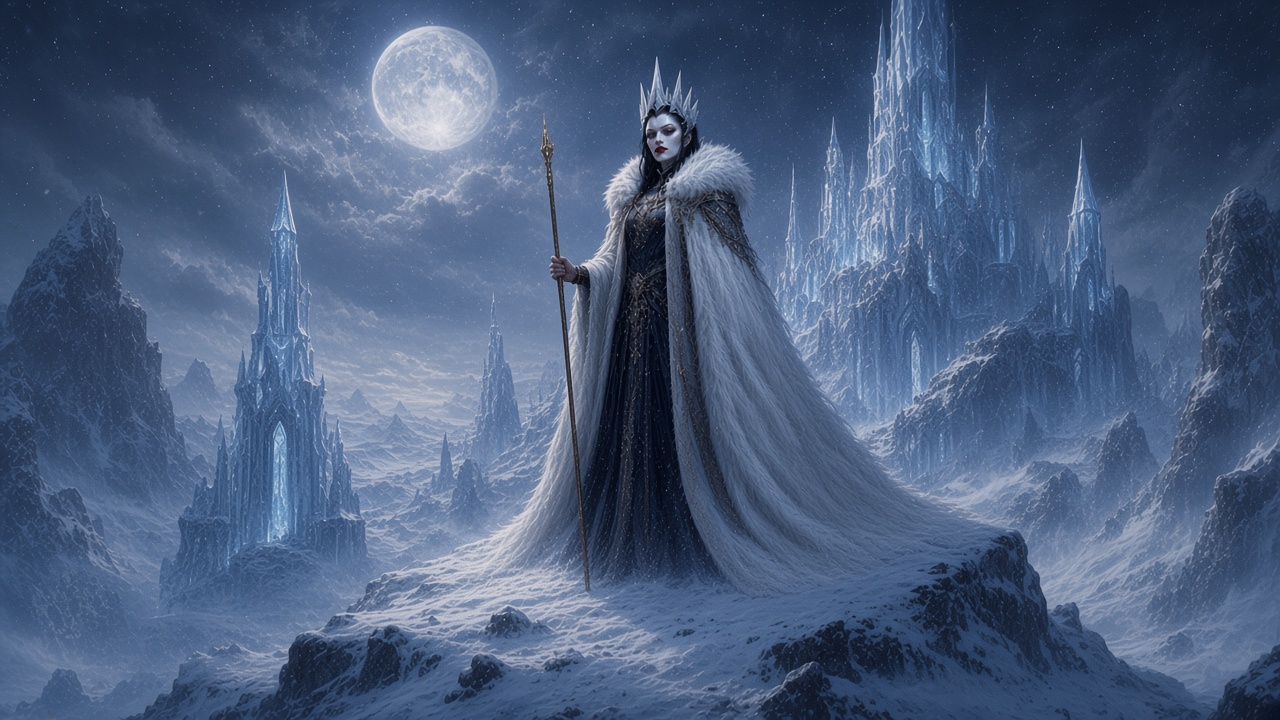
Le château de la Sorcière aux tours pointues sous la lune 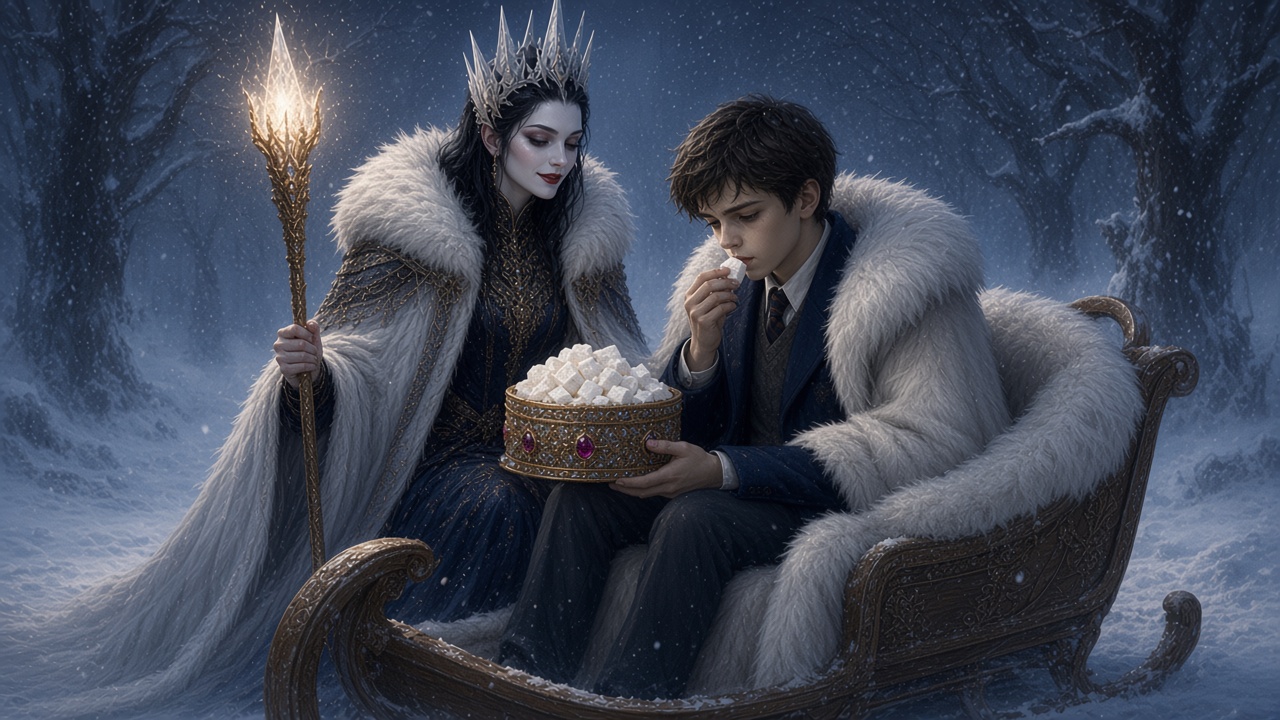
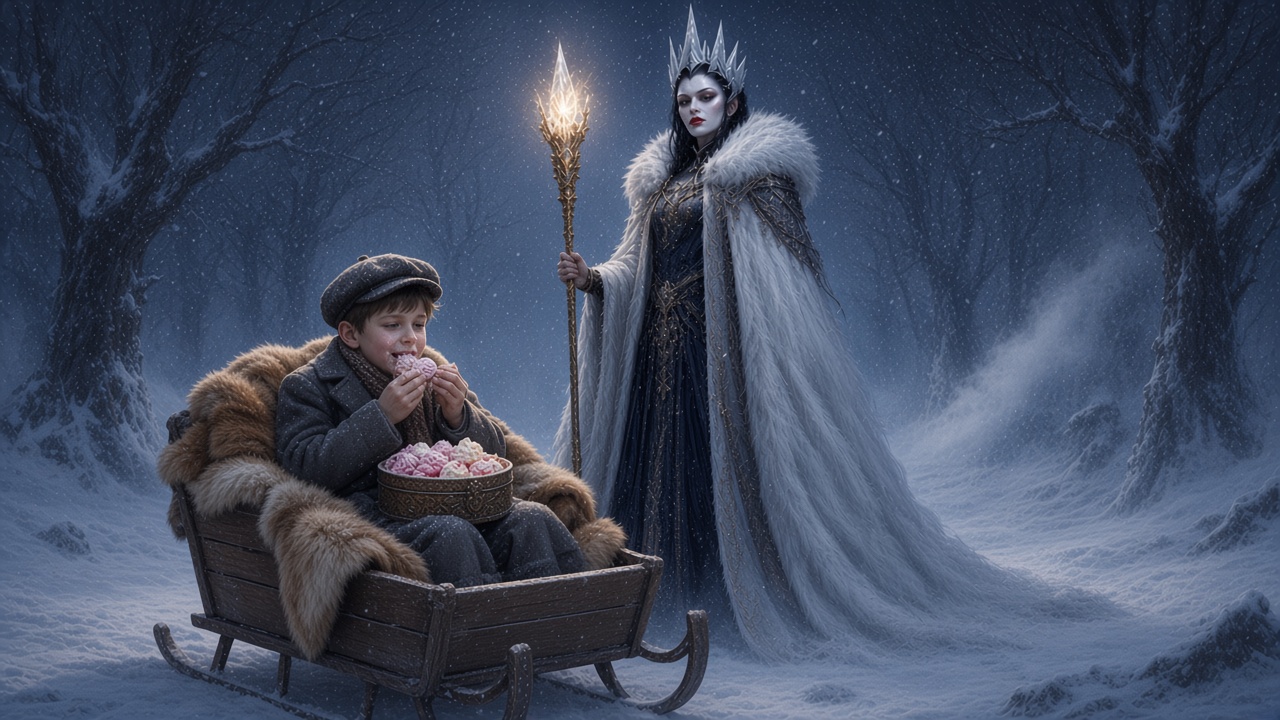
Jadis offre une boîte de loukoums à un garçon 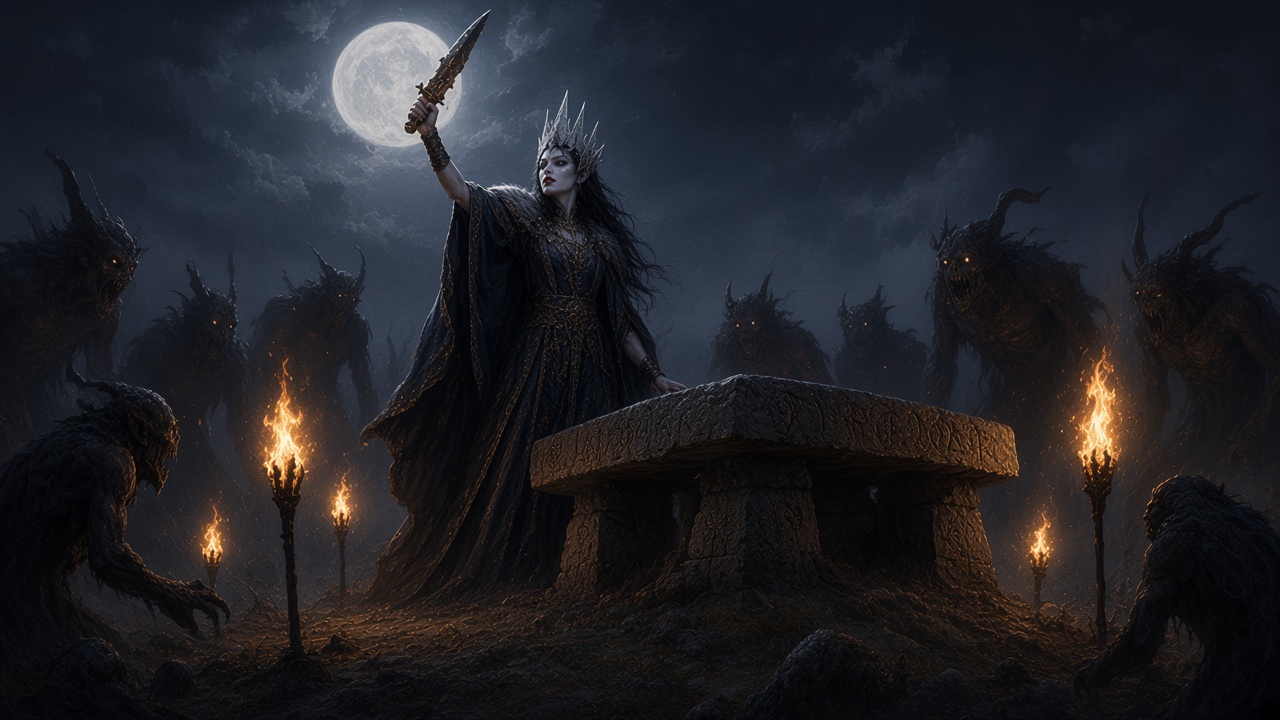
La Sorcière lève un couteau de pierre au-dessus d'Aslan ligoté (scène suggérée) 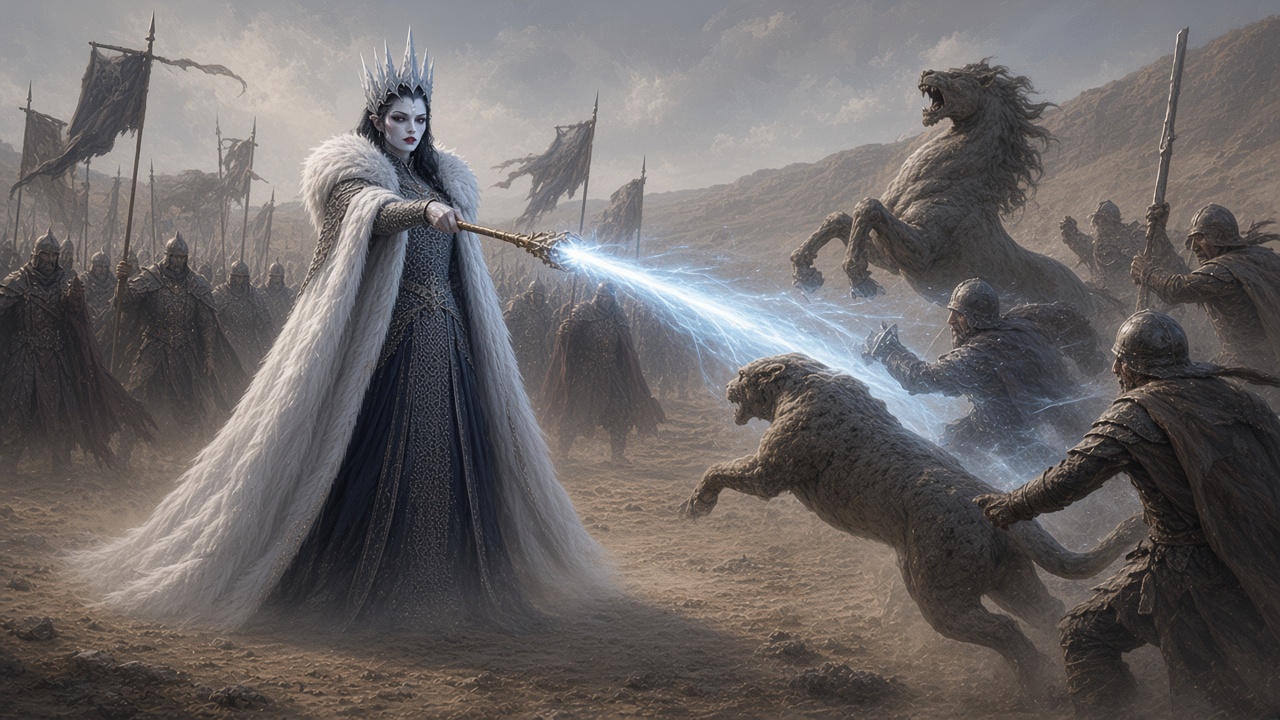
La Sorcière combat avec sa baguette, des statues se forment 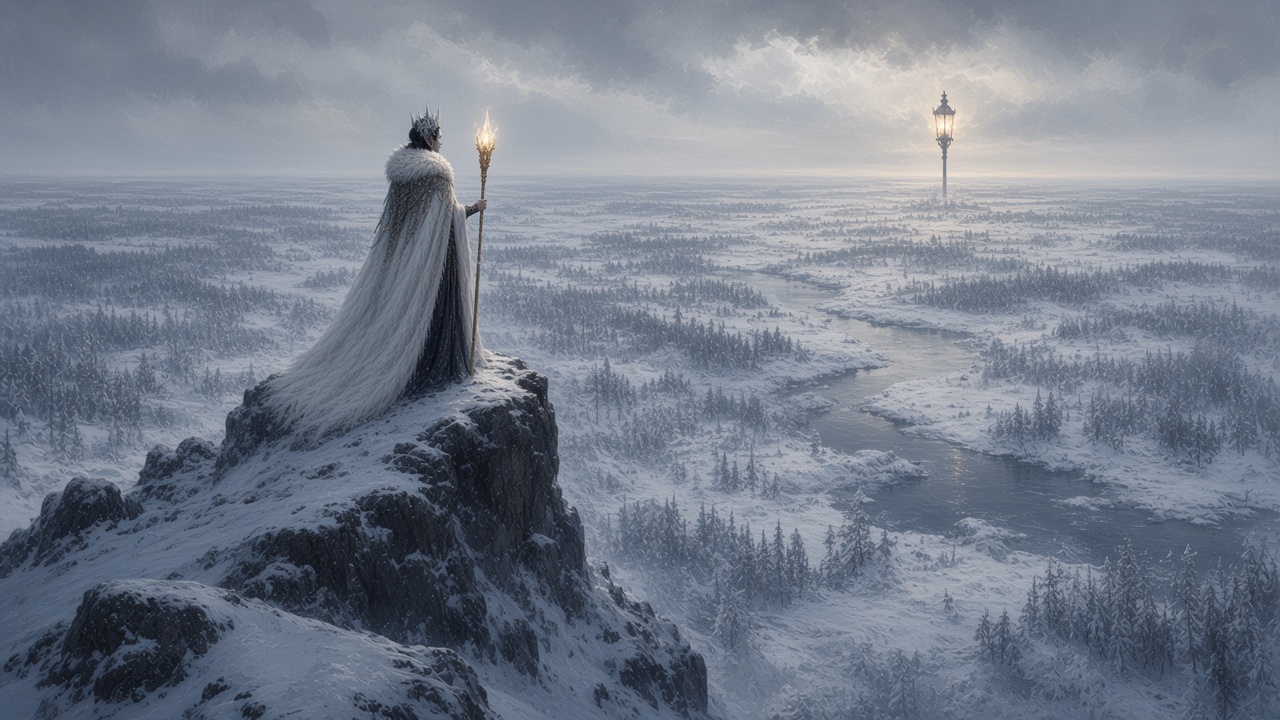
Paysage de Narnia sous l'hiver sans Noël 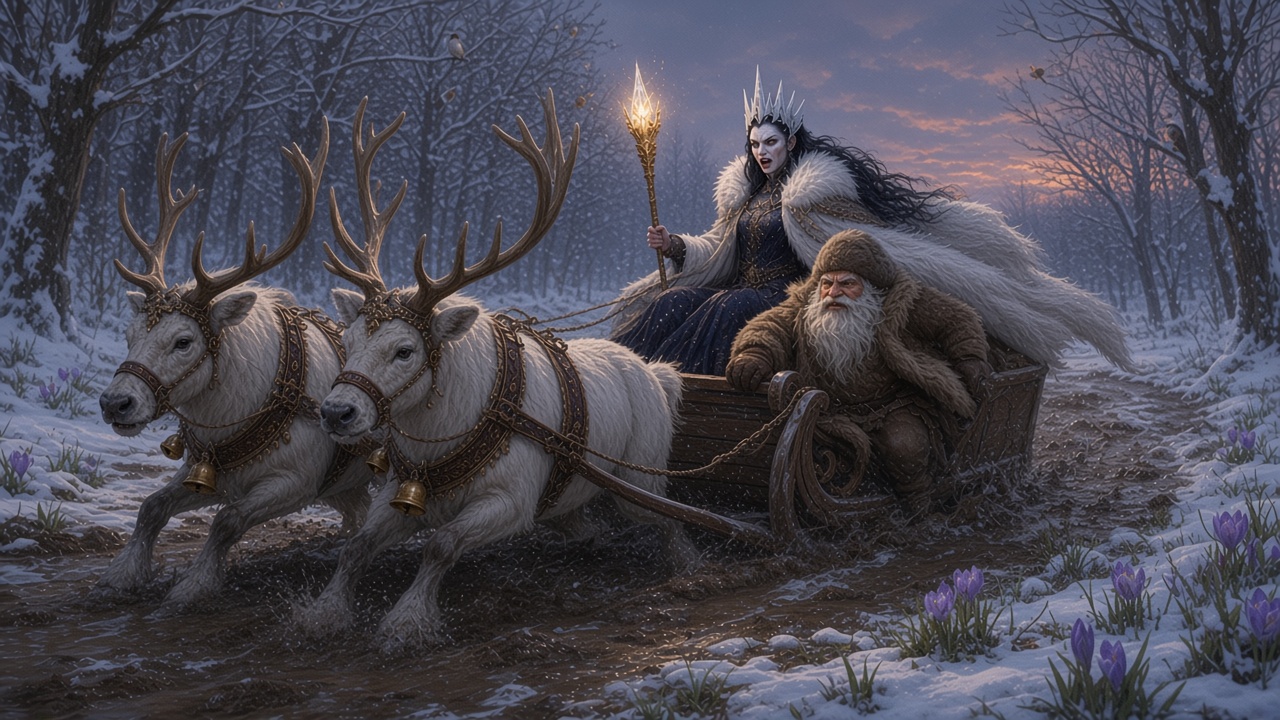
La Sorcière furieuse voit la neige fondre autour de son traîneau embourbé
Dans le même groupe




Archives de l’ancien site
Queen Jadis, the White Witch
The beautiful yet powerful and terrifying White Witch, Queen of Charn, is one of the most persistent villains in literature. Cold, cruel, eternal, and rebellious, she will lead an entire world to ruin... Fortunately, other forces have opposed her : Aslan the Lion, Emperor of Narnia, has repeatedly saved the land from her attacks.
She is a woman with an endless and tormented history : descended from giants and djinns, she once ruled another world before destroying its entire population. Later, she plunges Narnia into an endless winter where Edmund is ensnared, followed by Lucy, Susan, and Peter. Jadis means "witch" in Persian. Jadis, the Queen of Charn, is the same person as the White Witch. She is also called the Lady of the Green Kirtle by other witches.
Presentation in the book
*"They were still trembling when they heard a slight rustling from the part of the room that was unlit. They turned round and saw one of the figures moving : it was the woman who had been sitting at the far end of the row, the one Digory had thought so beautiful. Now that she stood up she looked even taller than they had imagined ; and the light shining on her face, not only from her robe and her crown, but also from her eyes and the curve of her lips, made them feel that she was a great queen."* (The Magician’s Nephew, p. 64)
Appearance in the books
The Magician’s Nephew ; The Lion, the Witch and the Wardrobe ; The Silver Chair
Échanges entre lecteurs
Une question, un souvenir de lecture, une idée ? Partagez-les avec les autres lecteurs, dans le respect de la charte des commentaires.
Les commentaires ne sont pas disponibles pour le moment.
Les commentaires sont fermés sur cette page.
Aucun commentaire pour le moment. Soyez la première personne à partager votre avis !
Merci ! Votre commentaire sera visible après relecture.