The Horse and His Boy
The flight
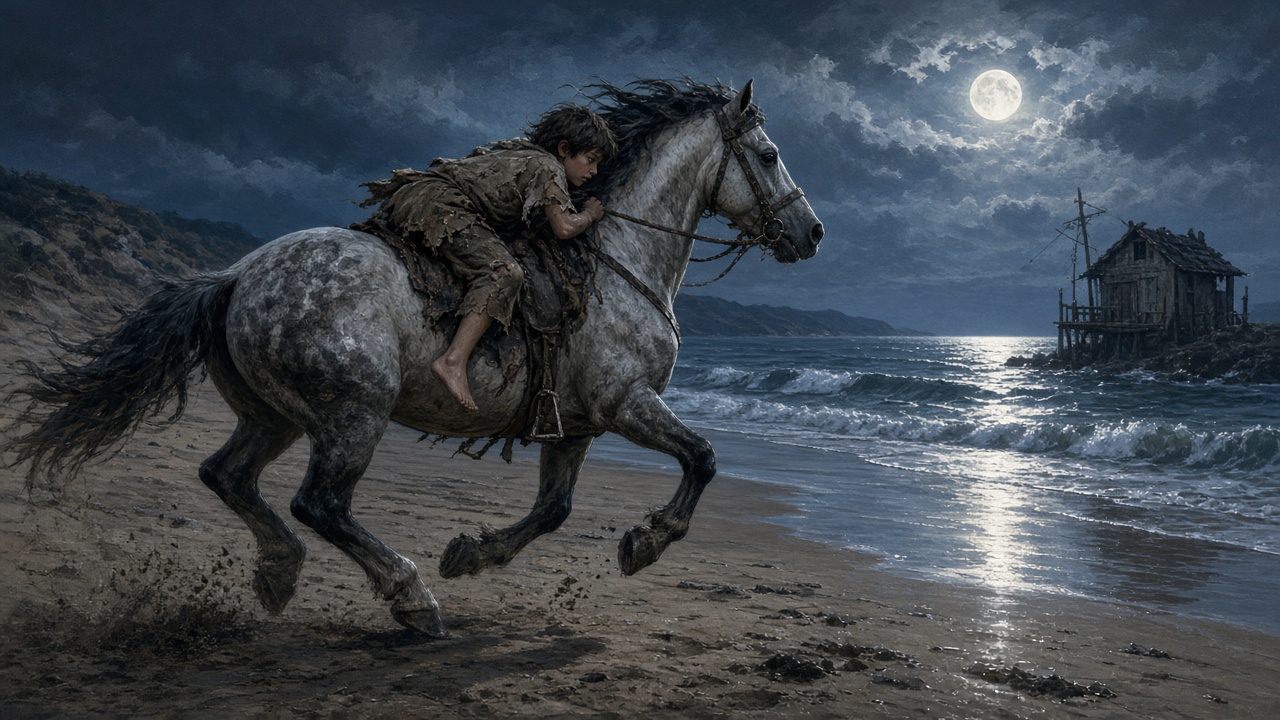
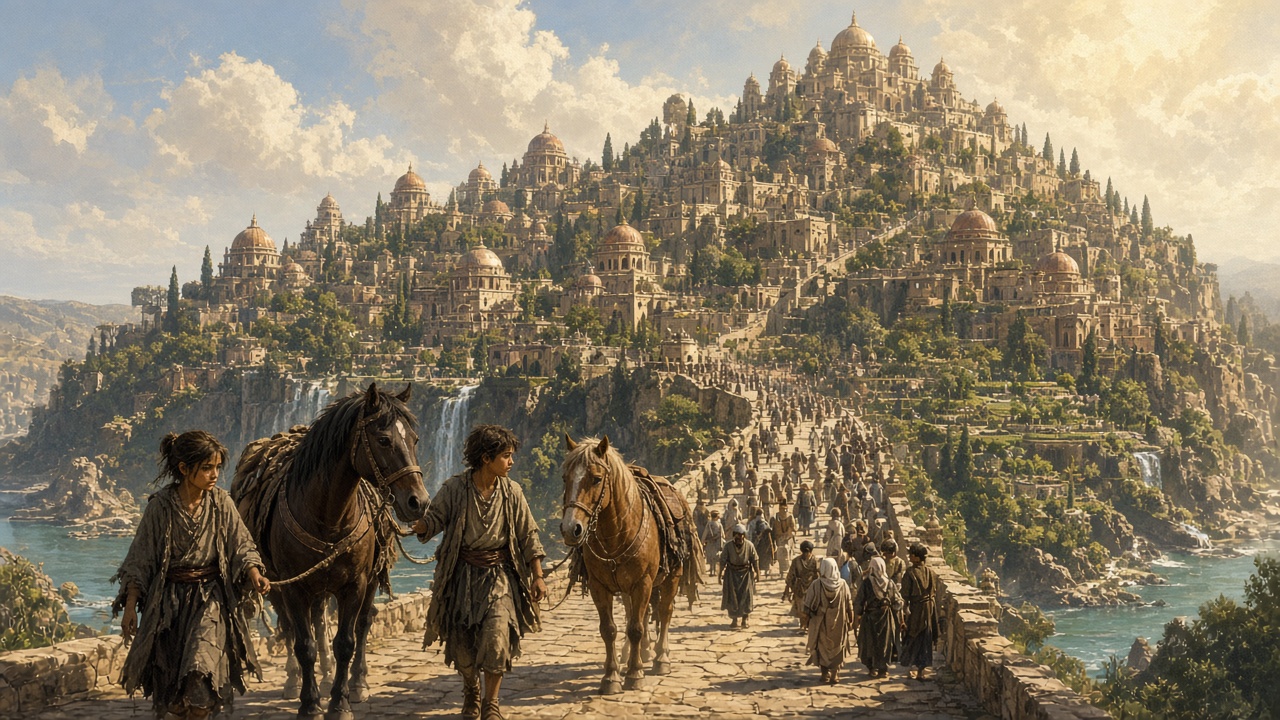
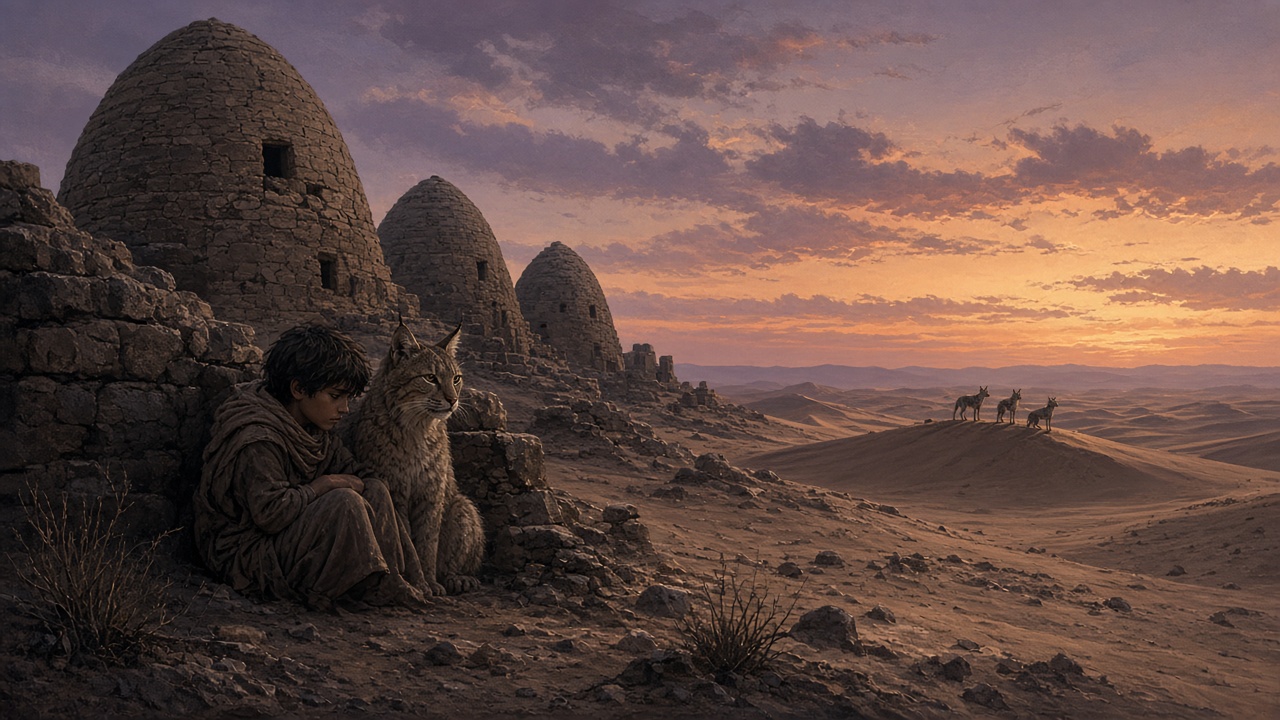
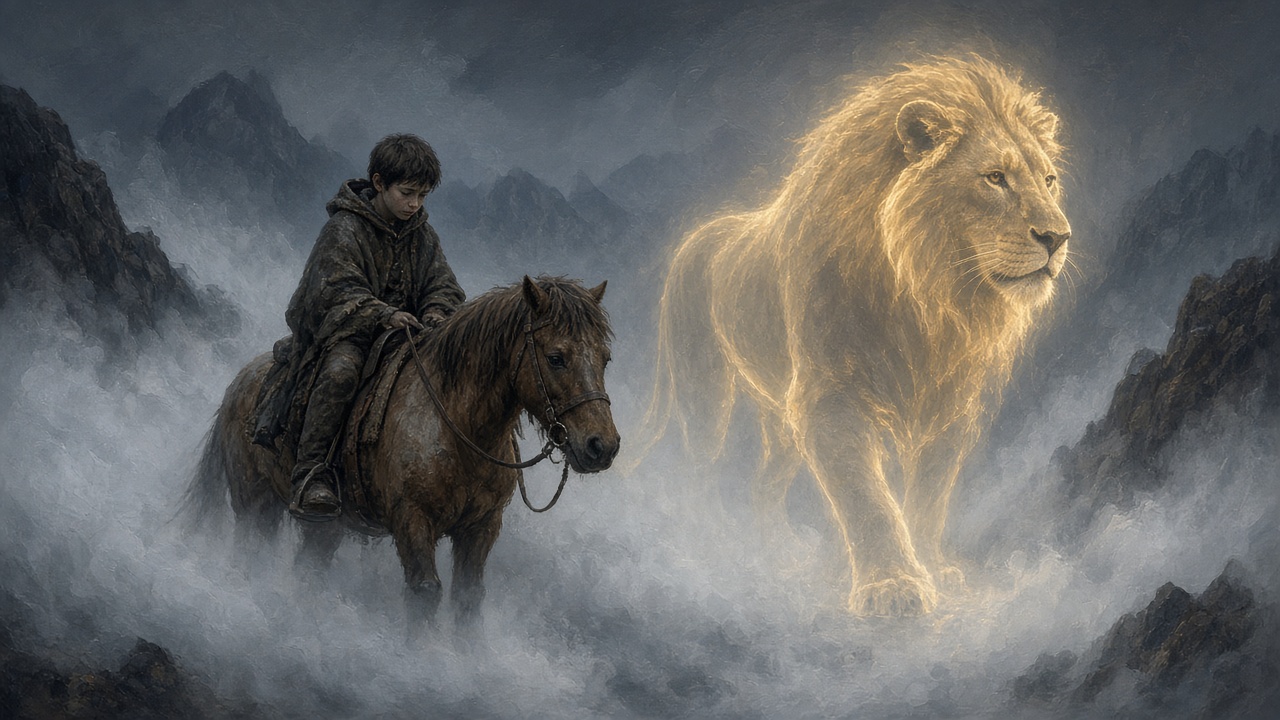
During the Golden Age, while the four Pevensies reign at Cair Paravel, a boy named Shasta grows up in the south, in Calormen, in the house of a fisherman who treats him as a servant. On the evening he learns that he is to be sold to a passing lord, he discovers that the lord's horse can talk. Bree, a Narnian horse captured as a foal, dreams of returning home. The two of them flee towards the North. On the way they meet Aravis, a young aristocrat fleeing a forced marriage, with her mare Hwin, who can speak as well. To reach Narnia they must cross Tashbaan, the teeming capital, and then the desert. And they will uncover a plot that threatens Archenland. It is the only novel lived entirely by characters of that world: a tale of travel and of identity, full of humour, in which one learns to cast off one's pride.
- In the story — 3
- Publication order — 5
- Original title — The Horse and His Boy
- First published — 6 September 1954
- Published in the United States — 5 October 1954 (Macmillan, New York)
- Dedication — To David and Douglas Gresham
- Translation — Philippe Morgaut
Abandoned titles
- Shasta and the North
- Narnia and the North
- The Desert Road to Narnia
- Cor of Archenland
- The Horse Stole the Boy
- Over the Border
- The Horse Bree
- The Horse and the Boy
Quotation
- Quotation — Narnia and the North!
Themes
- identity and freedom
- pride and humility (Bree, Aravis)
- providence: “I am telling you only your own story”
- the meeting of cultures
- friendship between humans and horses
Did you know?
- It is the only book whose action takes place entirely in the world of Narnia, with no journey from our world.
- Lewis dedicated it to the two sons of Joy Davidman, David and Douglas Gresham. Douglas would later be a co-producer of the films.
- It holds third place in chronological order, but it was published fifth.
- The book is often criticised for its portrait of Calormen. Yet Lewis places Aravis and Emeth (in The Last Battle) among the noblest characters.
Adaptations
- No adaptation for the cinema or for television to date.
Characters
- Shasta / Cor
- Bree (Breehy-hinny-brinny-hoohy-hah)
- Aravis Tarkheena
- Hwin, Aravis's mare
- Arsheesh, the fisherman
- Anradin Tarkaan
- Prince Corin (Corin Thunder-Fist)
- King Lune of Archenland
- Susan Pevensie
- Edmund Pevensie
- Lucy Pevensie
- Peter Pevensie
- Prince Rabadash (Rabadash the Ridiculous)
- The Tisroc (may he live for ever)
- Ahoshta Tarkaan, the Grand Vizier
- Lasaraleen Tarkheena
- The Hermit of the Southern March
- Aslan
- Aravis's family (Kidrash, Rishti, Ilsombreh, Ardeeb, Alimash)
- Lord Bar, the treacherous chancellor
- Dar, Darrin, Cole, Colin, Shar, Tran
- Azrooh, Chlamash, Corradin of Castle Tormunt, Ilgamuth
- Ram the Great
- King Olvin of Archenland
Places
- Cottage of Arsheesh
- Calormen
- Tashbaan
- Tombs of the Ancient Kings
- Great Desert
- Hermitage of the Southern March
- Archenland
- Anvard
- Mount Pire / Stormness Head
Objects
Peoples
- Talking Beasts
- Calormenes
- Talking Horses
- Ettins
- Fauns
- Giants
- Large beasts
- Humans
- Dwarfs
- Talking Birds
- Tash, Azaroth, Zardeenah
The story in a few words (no spoilers)
During the Golden Age, while the four Pevensies reign at Cair Paravel, a boy named Shasta grows up in the south, in Calormen, in the house of a fisherman who treats him as a servant. On the evening he learns that he is to be sold to a passing lord, he discovers that the lord's horse can talk. Bree, a Narnian horse captured as a foal, dreams of returning home. The two of them flee towards the North. On the way they meet Aravis, a young aristocrat fleeing a forced marriage, with her mare Hwin, who can speak as well. To reach Narnia they must cross Tashbaan, the teeming capital, and then the desert. And they will uncover a plot that threatens Archenland. It is the only novel lived entirely by characters of that world: a tale of travel and of identity, full of humour, in which one learns to cast off one's pride.
The full story (beware, spoilers)
Shasta overhears Arsheesh, who took him in, bargaining him away to a Tarkaan. He learns that he is not his son. The Tarkaan's war-horse, Bree, reveals that he is a Talking Horse from Narnia, and they flee together. Lions drive them to take the road with Aravis and her mare Hwin, who are fleeing as well.
In Tashbaan, Shasta is taken for Prince Corin of Archenland by the Narnian delegation: Queen Susan and King Edmund have come to consider Prince Rabadash's proposal of marriage. Shasta hears their plan of escape, then meets the real Corin, who resembles him in every feature. Aravis, hidden with her friend Lasaraleen in the palace, overhears Rabadash winning the Tisroc's permission to attack Archenland by surprise.
The fugitives meet again at the Tombs of the Ancient Kings, where Shasta spends the night watched over by a mysterious cat, then they cross the desert in a forced march. Pursued by a lion, they reach the Hermitage of the Southern March. Aravis is clawed. Shasta, exhausted, runs to warn King Lune.
Lost in the fog, Shasta walks beside an immense presence. It is Aslan: he reveals that he was the lion who drove them on, the cat of the tombs, and the one who saved him as a baby. The Narnian army arrives, and Rabadash is defeated before Anvard.
Shasta is revealed to be Cor, Corin's twin, abducted at birth. Aslan turns Rabadash into a donkey: he will become a man again only in the temple of Tash, before all his people. Bree learns humility, Aravis is reconciled with Shasta, and in the end they marry. Their son will be Ram the Great.
The great themes
- identity and freedom
- pride and humility (Bree, Aravis)
- providence: “I am telling you only your own story”
- the meeting of cultures
- friendship between humans and horses
Did you know?
- It is the only book whose action takes place entirely in the world of Narnia, with no journey from our world.
- Lewis dedicated it to the two sons of Joy Davidman, David and Douglas Gresham. Douglas would later be a co-producer of the films.
- It holds third place in chronological order, but it was published fifth.
- The book is often criticised for its portrait of Calormen. Yet Lewis places Aravis and Emeth (in The Last Battle) among the noblest characters.
On screen
- No adaptation for the cinema or for television to date.
See also
- The seven Chronicles of Narnia
- In what order to read the Chronicles of Narnia?
- Map of Shasta and Aravis's flight
- Neither a pacifist nor a warmonger: Lewis, a former soldier, and the nine battles of Narnia
- The right to reign: crowned by Aslan, usurpers and kings in spite of themselves
- Lewis at the bar: the reproaches made against Narnia, and what his own writings answer to them
- Two ages for every hero: the one on the calendar and the one lived in Narnia
- From Puddleglum to Puddlegum: what the names of Narnia say in English, and what they become in French