The Lion, the Witch and the Wardrobe
The wardrobe
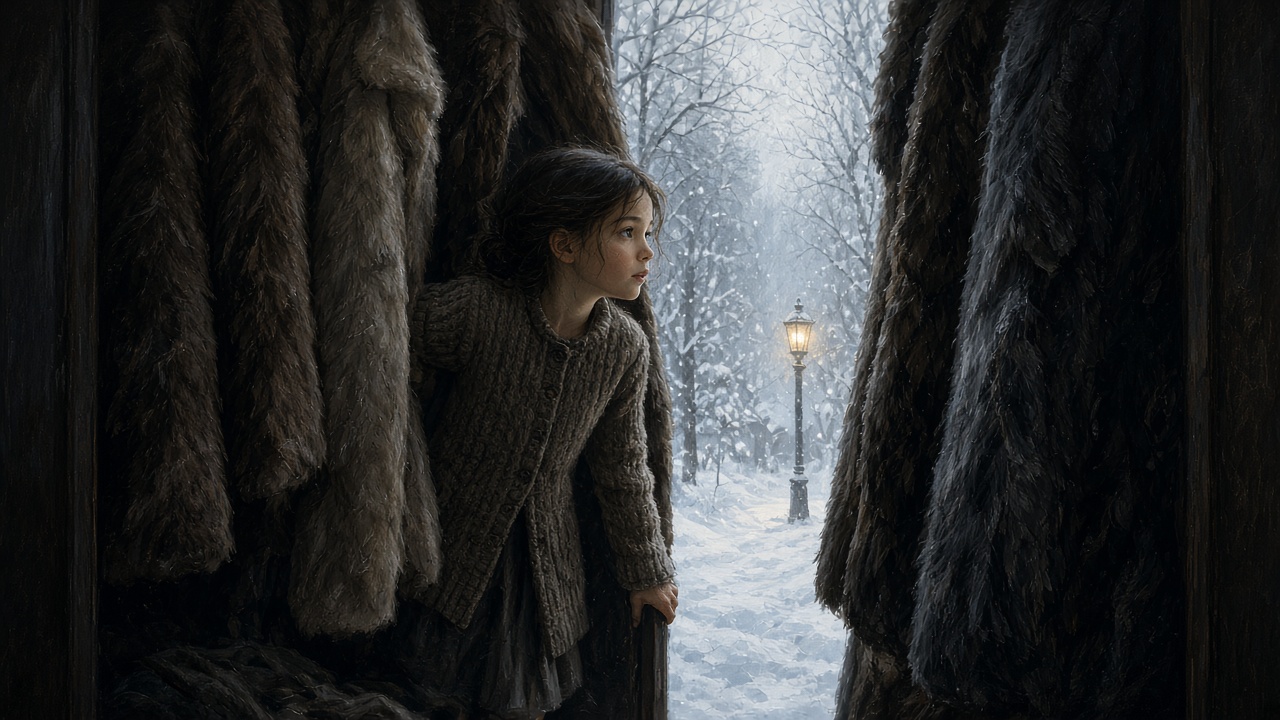
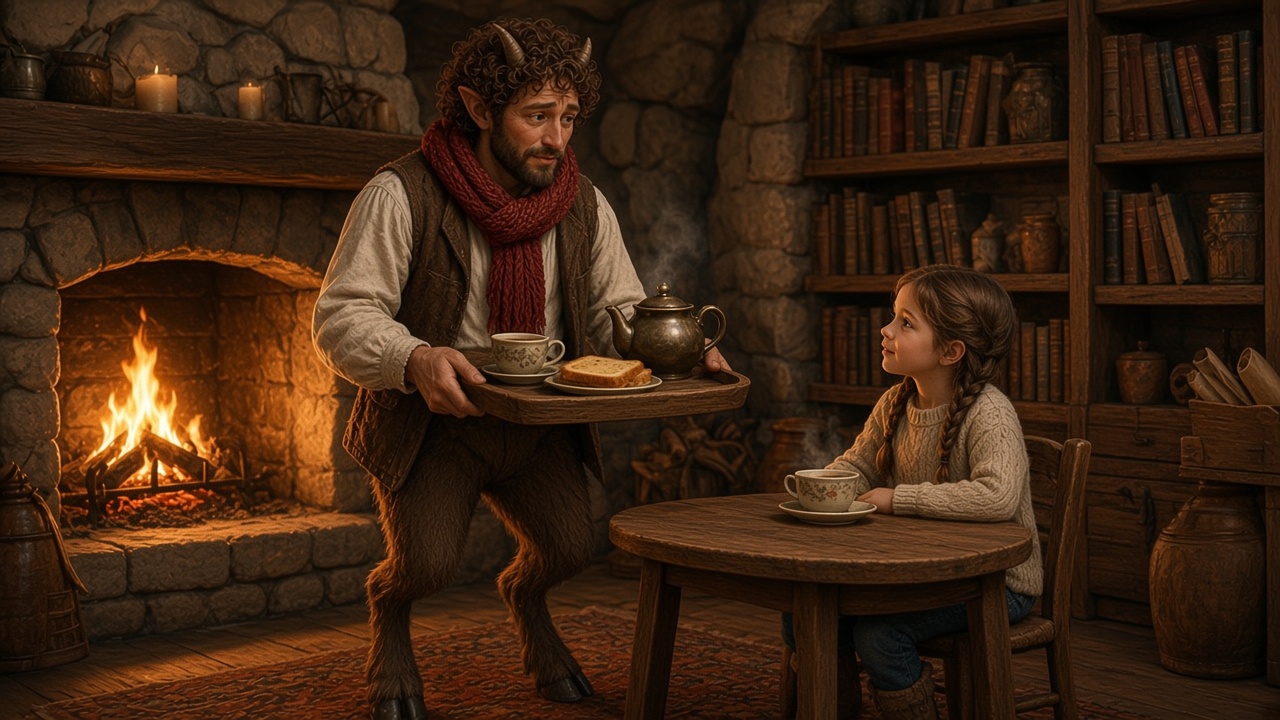
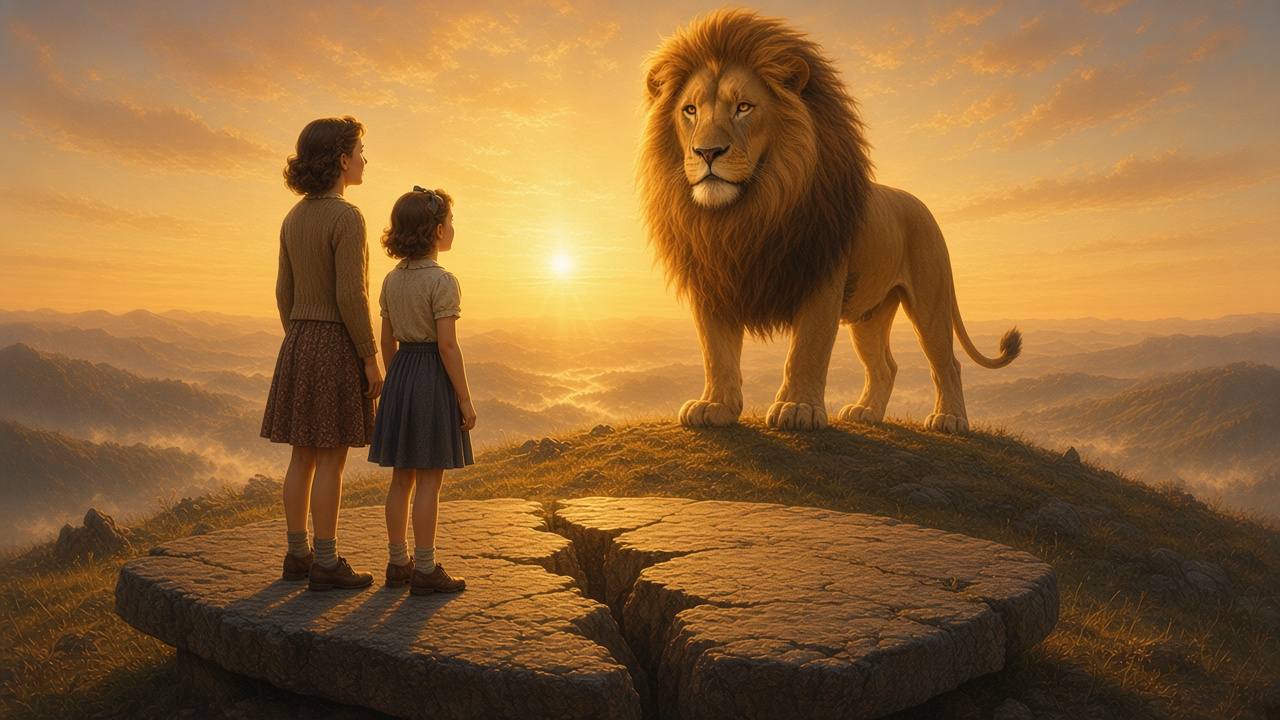
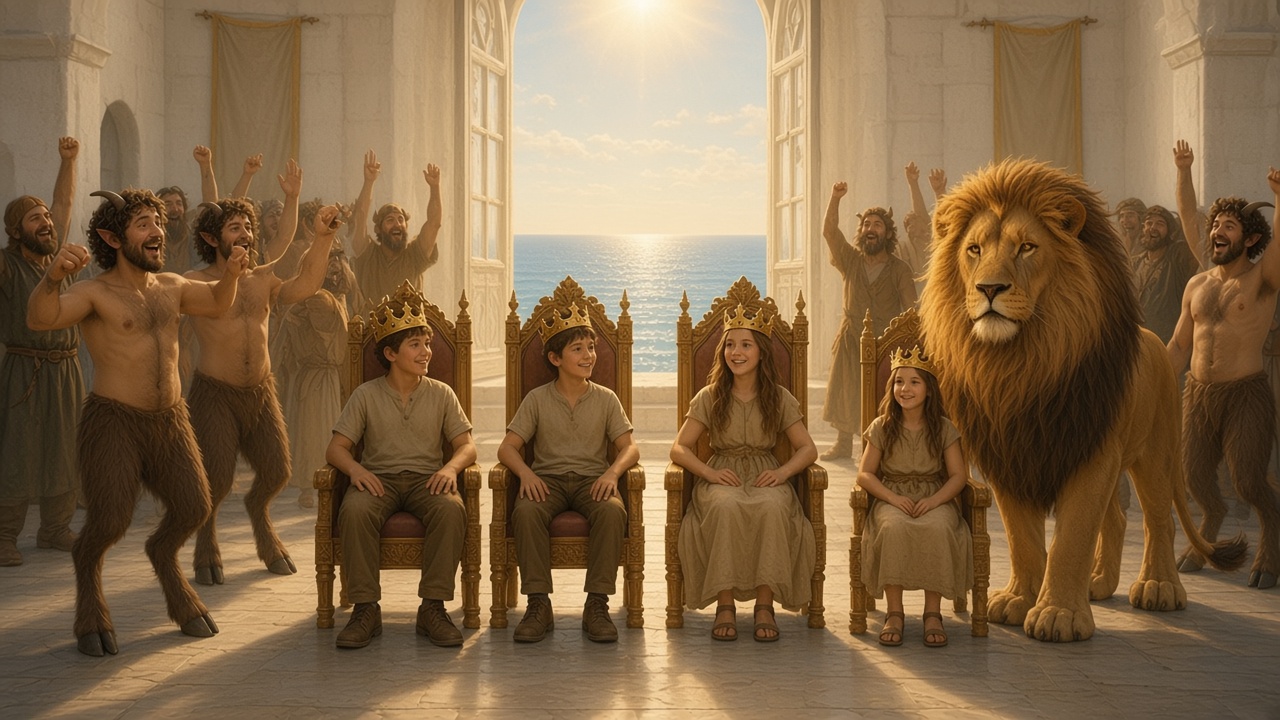
1940. To escape the bombing of London, Peter, Susan, Edmund and Lucy Pevensie are sent to the country, to stay with an old professor. The house is enormous and full of empty rooms. One rainy day, while playing hide-and-seek, Lucy slips into a large wardrobe and comes out in a forest under the snow, at the foot of a lamp-post. There she meets a faun, Mr Tumnus, who tells her where she is: in Narnia, a country that the White Witch has held for a hundred years in an endless winter. No one believes Lucy when she returns. Soon, though, the four children go through the wardrobe and find themselves caught in a struggle that is beyond them, where it is whispered that Aslan is on the move. This is the book through which millions of readers entered Narnia. In it one meets talkative Beavers, a faun seized with remorse, a lion that cannot be tamed, and the sweet temptation of Turkish Delight.
- In the story — 2
- Publication order — 1
- Original title — The Lion, the Witch and the Wardrobe
- First published — 16 October 1950
- Published in the United States — 7 November 1950 (Macmillan, New York)
- Dedication — To Lucy Barfield
- Translation — Anne-Marie Dalmais
Quotation
- Quotation — Always winter, and never Christmas.
Themes
- betrayal and forgiveness
- sacrifice and resurrection
- fear and courage
- the passage from childhood to royalty
- temptation (Turkish Delight)
- the end of winter as an image of liberation
Did you know
- It all began with an image that Lewis had carried within him since the age of sixteen: a faun walking in the snow with an umbrella and parcels.
- In 1939, Lewis housed schoolgirls evacuated from London at his house, the Kilns, near Oxford.
- The dedication is addressed to his goddaughter, Lucy Barfield: he writes to her that one day she will be old enough to start reading fairy tales again.
- Tolkien did not like this book, which he found too disparate, mixing fauns, Father Christmas and lions.
Adaptations
- ITV television series (1967), now largely lost.
- Animated cartoon by Bill Melendez (1979).
- BBC series (1988).
- The Chronicles of Narnia: The Lion, the Witch and the Wardrobe, by Andrew Adamson (Disney/Walden Media, 2005).
Characters
- Lucy Pevensie
- Edmund Pevensie
- Susan Pevensie
- Peter Pevensie
- Digory Kirke
- Mrs Macready, the Professor's housekeeper
- Mr Tumnus
- Jadis, the White Witch
- Aslan
- Mr and Mrs Beaver
- Maugrim (Fenris Ulf), chief of the secret police
- Father Christmas
- The White Witch's dwarf (unnamed); Ginarrbrik (2005 film)
- Giant Rumblebuffin
- The Emperor-beyond-the-Sea
- Ivy, Margaret and Betty, the Professor's maids
- The Hag and the Wer-Wolf
Places
- The Professor's House
- Lantern Waste
- Tumnus's Cave
- Beavers' Dam
- White Witch's Castle
- Stone Table
- Beruna
- Cair Paravel
Objects
- The Wardrobe
- Lamp-post
- Turkish Delight
- White Witch's wand
- Rhindon, Peter's sword, and the lion shield
- Susan's bow and arrows
- Susan's Horn
- Lucy's cordial
- Lucy's dagger
- Stone Knife
- Deep Magic / Deeper Magic
- Four Thrones
- Crowns
Peoples
- Witch's army
- Dumb beasts
- Talking Beasts
- Beavers
- Centaurs
- Winged horses
- Dryads, Hamadryads
- Squirrels
- Fauns
- Giants
- Large beasts
- Gryphons
- Humans
- Unicorns
- Wolves
- Minotaurs
- Naiads
- Dwarfs
- Talking Birds
- Bears
- Sea People
- Satyrs
- Witches, hags
- Talking Mice
The story in a few words (no spoilers)
- To escape the bombing of London, Peter, Susan, Edmund and Lucy Pevensie are sent to the country, to stay with an old professor. The house is enormous and full of empty rooms. One rainy day, while playing hide-and-seek, Lucy slips into a large wardrobe and comes out in a forest under the snow, at the foot of a lamp-post. There she meets a faun, Mr Tumnus, who tells her where she is: in Narnia, a country that the White Witch has held for a hundred years in an endless winter. No one believes Lucy when she returns. Soon, though, the four children go through the wardrobe and find themselves caught in a struggle that is beyond them, where it is whispered that Aslan is on the move. This is the book through which millions of readers entered Narnia. In it one meets talkative Beavers, a faun seized with remorse, a lion that cannot be tamed, and the sweet temptation of Turkish Delight.
The full story (warning: spoilers)
Lucy discovers Narnia through the wardrobe and has tea at Mr Tumnus's. He confesses that he was supposed to hand her over to the Witch, then lets her leave. No one believes her. Later, Edmund goes through the wardrobe in his turn. He meets the Witch, who stuffs him with enchanted Turkish Delight and promises him a kingdom if he brings her his brother and sisters.
The four children enter Narnia together. They find Tumnus's house ransacked: he has been arrested for treason. Mr and Mrs Beaver welcome them and tell them of Aslan and of the prophecy of the four thrones of Cair Paravel. During the meal, Edmund slips away and goes to the Witch's castle, where he finds a courtyard full of statues.
The flight of the Beavers and the children coincides with the beginning of the thaw: Father Christmas reappears and gives presents, a sword and a shield for Peter, a bow and a horn for Susan, a cordial and a dagger for Lucy. Spring breaks out. At the Stone Table they meet Aslan. Peter kills Maugrim, chief of the Witch's police. Edmund, set free, asks for forgiveness.
Jadis reminds them that, according to the Deep Magic, every traitor belongs to her. Aslan negotiates with her alone. When night comes, followed in secret by Susan and Lucy, he gives himself up and dies on the Stone Table in Edmund's place. At dawn the Table breaks and Aslan comes back to life, by virtue of a still Deeper Magic: when an innocent victim gives himself in a traitor's place, death itself recoils.
Aslan brings the statues in the castle back to life by breathing on them, then leads this reinforcement to Beruna, where Peter and Edmund are standing up to the Witch's army. Jadis is killed. The four children are crowned at Cair Paravel. Years later, grown up, they hunt the white stag, find the lamp-post again and fall back into the wardrobe, children once more, at the very moment they had left.
The great themes
- betrayal and forgiveness
- sacrifice and resurrection
- fear and courage
- the passage from childhood to royalty
- temptation (Turkish Delight)
- the end of winter as an image of liberation
Did you know?
- It all began with an image that Lewis had carried within him since the age of sixteen: a faun walking in the snow with an umbrella and parcels.
- In 1939, Lewis housed schoolgirls evacuated from London at his house, the Kilns, near Oxford.
- The dedication is addressed to his goddaughter, Lucy Barfield: he writes to her that one day she will be old enough to start reading fairy tales again.
- Tolkien did not like this book, which he found too disparate, mixing fauns, Father Christmas and lions.
On screen
- ITV television series (1967), now largely lost.
- Animated cartoon by Bill Melendez (1979).
- BBC series (1988).
- The Chronicles of Narnia: The Lion, the Witch and the Wardrobe, by Andrew Adamson (Disney/Walden Media, 2005).
See also
- The seven Chronicles of Narnia
- In what order should you read The Chronicles of Narnia?
- Neither a pacifist nor a warmonger: Lewis, a former soldier, and the nine battles of Narnia
- One volcano too many: the Narnia films judged by Lewis's criteria
- General map of Narnia and its neighbours
- Recipe for the White Witch's Turkish Delight
- How Lewis created Narnia
- Two ages for each hero: the one on the calendar and the one lived in Narnia
- From Puddleglum to Puddlegum: what the names of Narnia say in English, and what they become in French