The Last Battle
The false Aslan
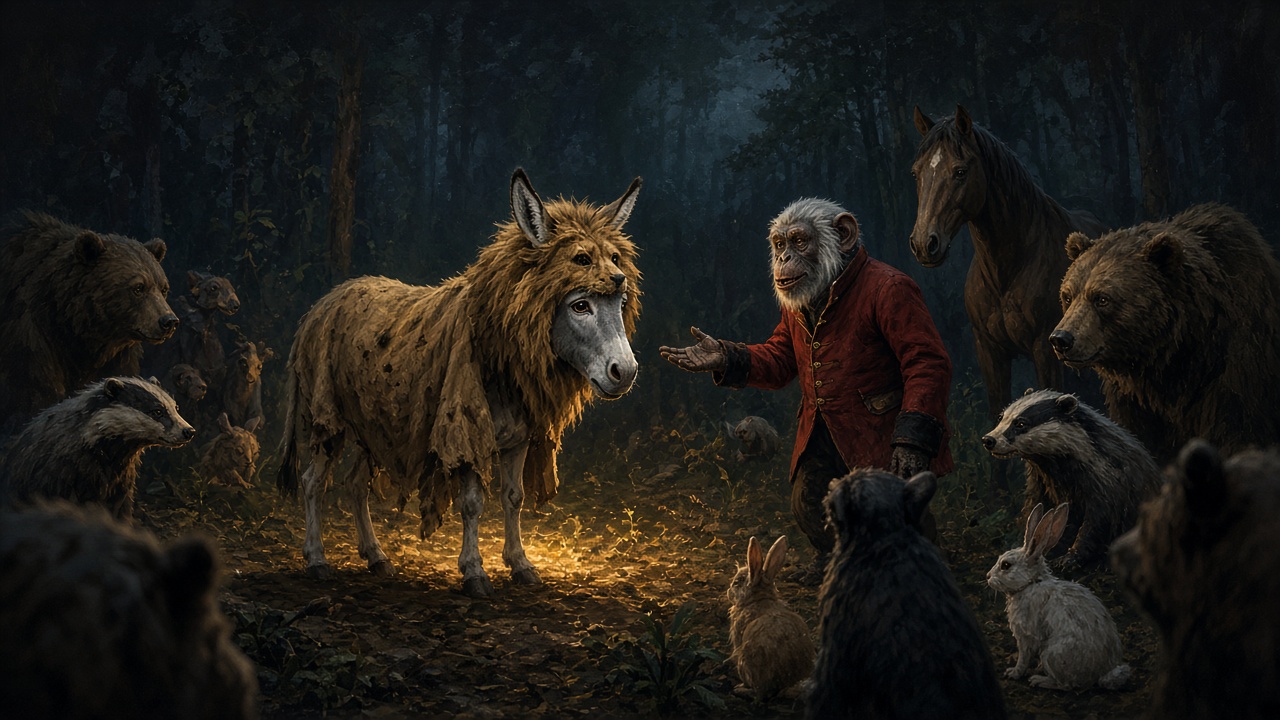
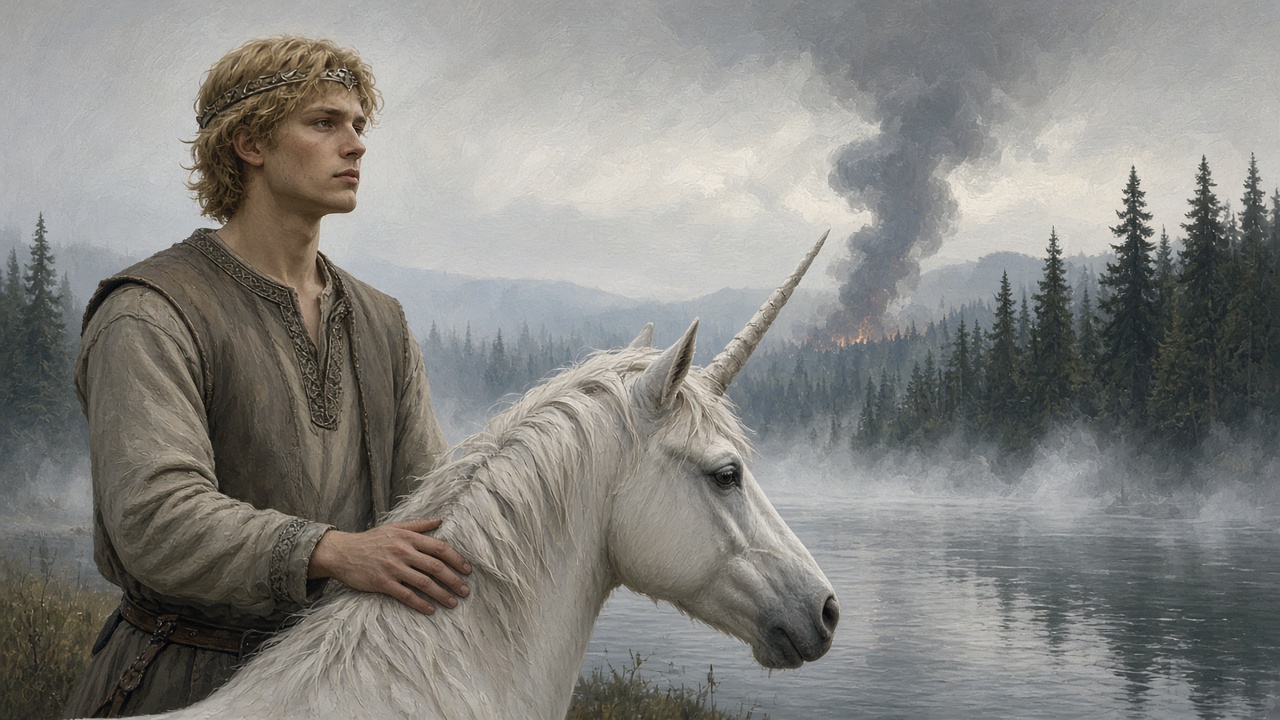
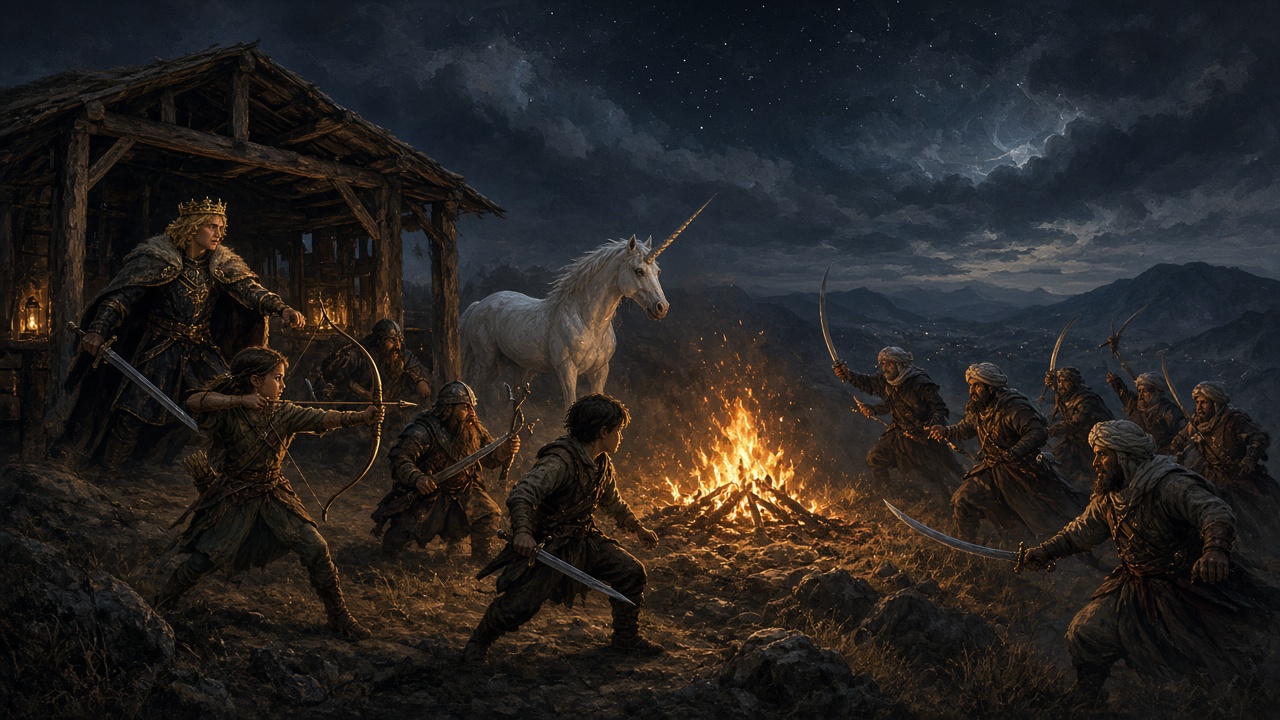
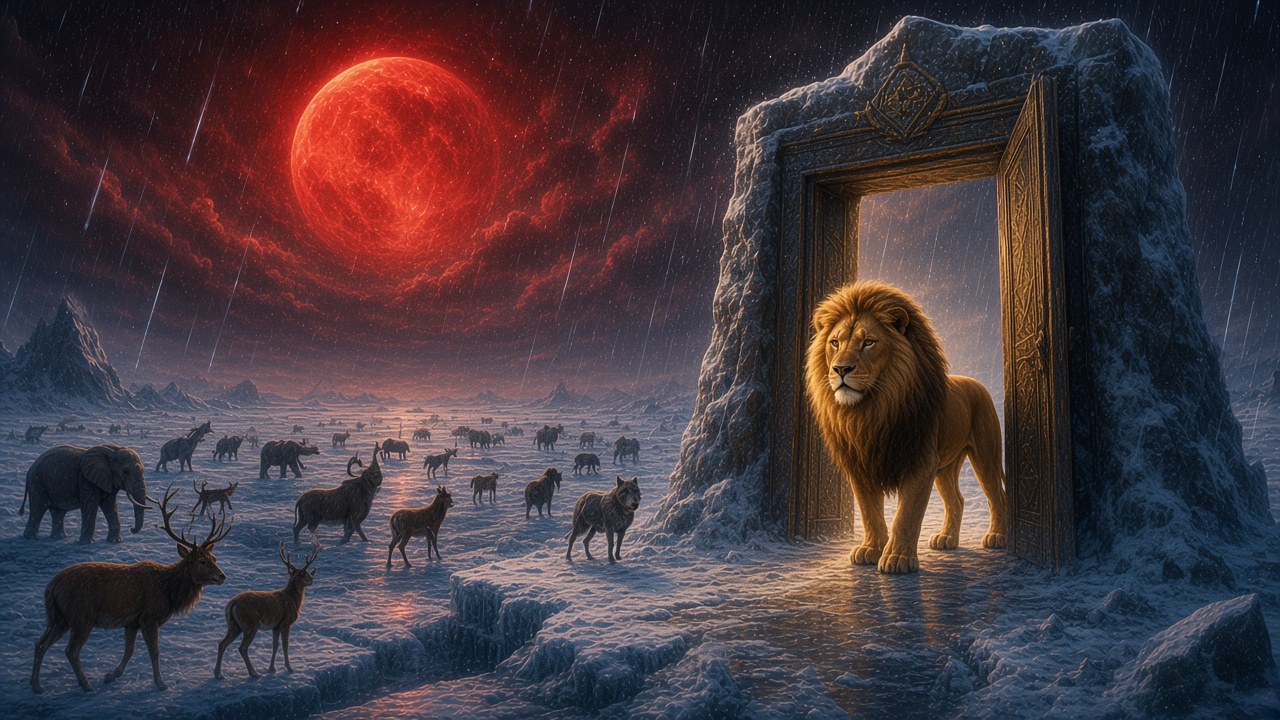
In the last days of Narnia, near Caldron Pool, in the west, there lives a cunning old ape, Shift, with his friend the donkey Puzzle, who never dares to contradict him. One day they fish a lion skin out of the water. Shift has an idea: by disguising Puzzle, he could make people believe that Aslan had returned, and speak in his name. Soon the false Aslan orders the talking trees to be felled and the beasts to be sold as slaves to the Calormenes. The young King Tirian and his friend the unicorn Jewel refuse to believe that the true Lion could demand such a thing. Tirian calls the friends of Narnia to his aid, and Eustace and Jill answer. The last novel in the series is the darkest and the most overwhelming. It is a story of lies, of resistance and of faithfulness, and a meditation on the end of things and on what comes afterwards.
- In the story — 7
- Publication order — 7
- Original title — The Last Battle
- First published — 19 March 1956
- Published in the United States — 4 September 1956 (Macmillan, New York)
- Dedication — No dedication
- Translation — Philippe Morgaut
Abandoned titles
- The Last King of Narnia
- Night Falls on Narnia
- The Last Chronicle of Narnia
Quotation
- Quotation — Further up and further in!
Themes
- religious falsehood and manipulation
- faithfulness in defeat
- the end of the world, and hope
- Emeth's salvation: a reading still debated
- the question of Susan
- “further up and further in”
Did you know
- The novel was awarded the Carnegie Medal (for 1956), the most prestigious British prize for children's literature. It is the only major distinction won by a Narnian book in Lewis's lifetime.
- The phrase “further up and further in” is one of the most quoted of Lewis's lines.
- Susan's absence has had a great deal of ink spilt over it. Lewis would answer that there was still time for her, and that she might, one day, find her way back to Aslan's country.
- The very title of the last chapter, “Farewell to Shadowlands”, takes up a Platonic phrase dear to Lewis.
Adaptations
- No screen adaptation to date.
Characters
- Tirian
- Shift
- Puzzle
- Jewel the Unicorn
- Farsight the Eagle
- Eustace Clarence Scrubb
- Jill Pole
- Rishda Tarkaan
- Emeth, the loyal Calormene
- Poggin, the faithful dwarf
- Griffle, Diggle and the Dwarfs
- Roonwit the Centaur
- Tash, the god of the Calormenes
- Father Time
- Aslan
- Peter Pevensie
- Edmund Pevensie
- Lucy Pevensie
- Susan Pevensie
- Digory Kirke
- Polly Plummer
- Mr and Mrs Pevensie, the parents
- King Erlian, Tirian's father
- Ginger the Cat
- The Narrator
- Mr Tumnus
- Reepicheep
- Puddleglum
- Caspian X
- Prince Rilian
- Mr and Mrs Beaver
- Bree (Breehy-hinny-brinny-hoohy-hah)
- Hwin, Aravis's mare
- Aravis Tarkheena
- Shasta / Cor
- Queen Swanwhite
- Moonwood the Hare
Places
- Caldron Pool
- Tirian's Tower / Hunting lodge
- Stable Hill
- Cair Paravel
- Railway station
- Real Narnia
- Aslan's Country
- Shadowlands
Objects
Peoples
- Dumb beasts
- Talking Beasts
- Badgers
- Calormenes
- Centaurs
- Talking Cats
- Winged horses
- Talking Horses
- Dryads, Hamadryads
- Squirrels
- Stars
- Fauns
- Giants
- Large beasts
- Humans
- Unicorns
- Dwarfs
- Talking Birds
- Bears
- Phoenix
- Satyrs
- Apes, Donkeys
- Talking Mice
- Tash, Azaroth, Zardeenah
- Moles
- Telmarines
The story in a few words (no spoilers)
In the last days of Narnia, near Caldron Pool, in the west, there lives a cunning old ape, Shift, with his friend the donkey Puzzle, who never dares to contradict him. One day they fish a lion skin out of the water. Shift has an idea: by disguising Puzzle, he could make people believe that Aslan had returned, and speak in his name. Soon the false Aslan orders the talking trees to be felled and the beasts to be sold as slaves to the Calormenes. The young King Tirian and his friend the unicorn Jewel refuse to believe that the true Lion could demand such a thing. Tirian calls the friends of Narnia to his aid, and Eustace and Jill answer. The last novel in the series is the darkest and the most overwhelming. It is a story of lies, of resistance and of faithfulness, and a meditation on the end of things and on what comes afterwards.
The full story (warning: spoilers)
Shift disguises Puzzle as a lion and allies himself with Rishda Tarkaan, who secretly brings in Calormene soldiers. Tirian, outraged by the slaughter of the dryads, kills two Calormenes and gives himself up. Tied to a tree, he calls the friends of Narnia. In a vision he sees them gathered round a table, and Eustace and Jill appear.
The children set the king free. Jill, who has practised with the bow, frees Puzzle and brings the donkey back. Tirian wants to show the dwarfs the deception, but they, disillusioned, no longer believe anyone. The eagle Farsight announces the fall of Cair Paravel and the death of the centaur Roonwit.
The lie takes a terrible turn: Shift and Rishda declare that Aslan and Tash are one and the same, “Tashlan”. They call upon this god, and Tash really comes: a ravenous shadow with the arms of a bird of prey. Before the stable on the hill, the last battle begins. Those who are thrown in, dead or alive, do not come out again.
Tirian, cornered, drags Rishda into the stable. Inside, Tash carries off the Tarkaan. Tirian finds a country of light where the kings and queens of Narnia are waiting for him: Peter, Edmund, Lucy, Digory, Polly, Eustace and Jill. Only Susan is absent. Aslan opens the door: the stars fall, the beasts pass before him, the sea swallows everything and Father Time puts out the sun.
Beyond the door stretches a truer Narnia, of which the old one was only the shadow. The Calormene Emeth is welcomed there, because he sought the good while believing that he served Tash. The dwarfs remain shut in the darkness they have chosen for themselves. Further up and further in, the heroes climb as far as Aslan's garden. They learn then that a railway accident has killed them in our world: for them, the true story is only just beginning.
The great themes
- religious falsehood and manipulation
- faithfulness in defeat
- the end of the world, and hope
- Emeth's salvation: a reading still debated
- the question of Susan
- “further up and further in”
Did you know?
- The novel was awarded the Carnegie Medal (for 1956), the most prestigious British prize for children's literature. It is the only major distinction won by a Narnian book in Lewis's lifetime.
- The phrase “further up and further in” is one of the most quoted of Lewis's lines.
- Susan's absence has had a great deal of ink spilt over it. Lewis would answer that there was still time for her, and that she might, one day, find her way back to Aslan's country.
- The very title of the last chapter, “Farewell to Shadowlands”, takes up a Platonic phrase dear to Lewis.
On screen
- No screen adaptation to date.
See also
- The seven Chronicles of Narnia
- In which order should you read the Chronicles of Narnia?
- Neither a pacifist nor a warmonger: Lewis, a former soldier, and the nine battles of Narnia
- From the first dawn to the last night: the history of Narnia
- Lewis in the dock: the criticisms levelled at Narnia, and what his own writings reply to them
- Two ages for every hero: the one on the calendar, and the one lived in Narnia
- From Puddleglum to Puddlegum: what the names of Narnia say in English, and what they become in French