The world of Narnia
A land of fauns and talking beasts, a lion who sings the world, and seven books with which to explore it: welcome to Narnia.
Entering Narnia
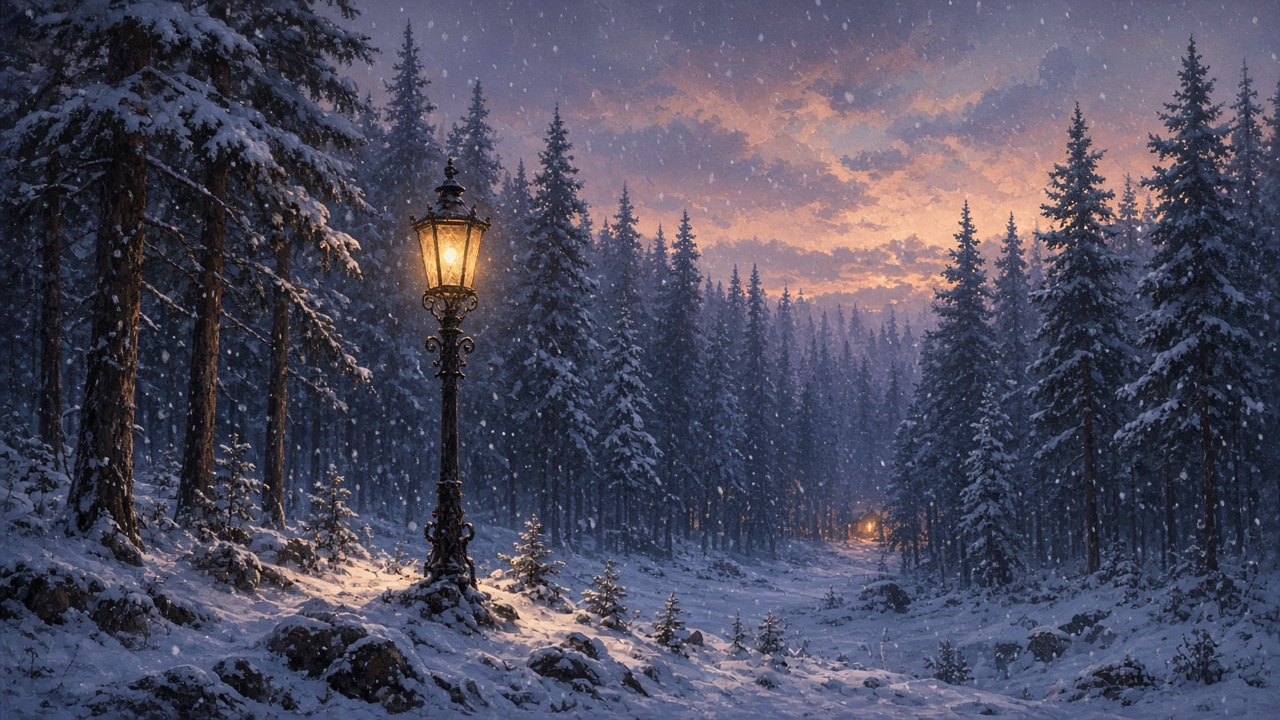
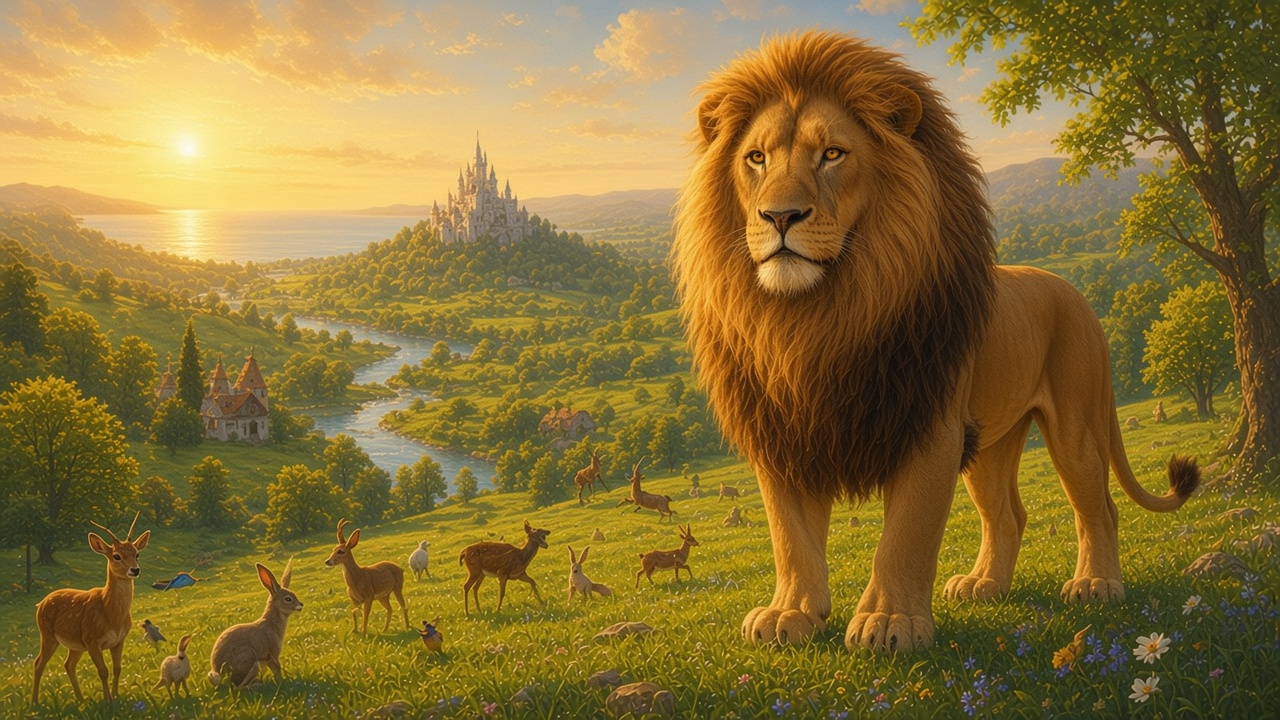
- Narnia is at once a country, a world and a series of seven books.
- Aslan, the Lion, is its creator and its king.
- The history of Narnia lasts 2,555 years, but only 49 earthly years (1900-1949).
Narnia is first of all a country: a land of forests and hills, of rivers and castles, bordered to the east by the sea and to the south by the mountains of Archenland. There you meet fauns, dryads, dwarfs, centaurs, giants and, above all, Talking Beasts. Their creator and their king is Aslan, the great Lion, son of the Emperor-beyond-the-Sea.
Narnia is also an entire world. It is flat, it has an edge in the east, its stars are living beings, and it has a history of 2,555 years, from the creation sung by Aslan to the last night. This world communicates with ours only through rare and unpredictable passages: magic rings, a wardrobe, a horn, a picture, a door in a school wall. And time does not flow there at the same pace.
Finally, Narnia is seven books written by C.S. Lewis between 1949 and 1954 and published from 1950 to 1956. Children from our world, Digory and Polly, the four Pevensies, Eustace and Jill, have adventures there that change them. Each volume can be read on its own, but together they tell the birth, the life and the end of a world.
Exploring the world
- Places and maps: every place entry by region, and four original maps.
- The marvellous objects: rings, horn, cordial, silver chair… arranged by what they do.
- Peoples and creatures: from fauns to Marsh-wiggles.
- The history of Narnia: the great ages, the timeline from year 1 to year 2555, the royal lines and the great battles.
- The portals between the worlds.
New to Narnia? It is better to follow the Start here path first.
What makes the magic of Narnia
Lewis wanted neither to preach nor to build a perfectly consistent world, as his friend Tolkien did. He wanted to tell stories that haunted him. He therefore mixed Graeco-Roman mythology, Norse tales, medieval legends, childhood memories and his Christian faith, in a storyteller's tone that speaks directly to the reader. The result reads at 8 as an adventure and at 40 as a meditation. It speaks of courage and betrayal, of forgiveness, of the fear of growing up and of hope.
See also
- The Magician's Nephew
- From the first dawn to the last night: the history of Narnia
- Index of places
- Which order to read the Chronicles of Narnia?
- Aslan
- The inventory of wonders: the objects of Narnia according to their power
- The creatures of Narnia
- The right to reign: crowned by Aslan, usurpers and kings in spite of themselves
- Neither a pacifist nor a warmonger: Lewis, a former soldier, and the nine battles of Narnia
- The portals between the worlds
- Start here: discovering Narnia
- General map of Narnia and its neighbours
- Map of the flight of Shasta and Aravis
- Map of the voyage of the Dawn Treader
- Map of the quest of Jill and Eustace