The Voyage of the Dawn Treader
The picture
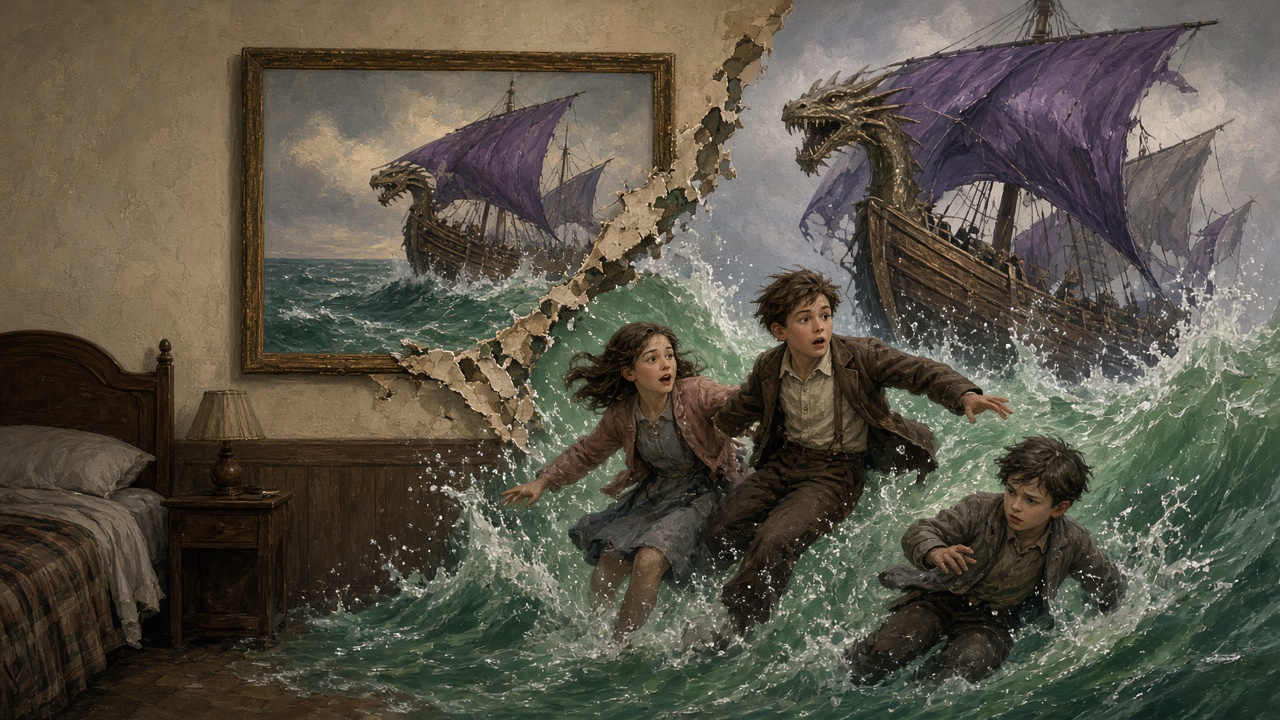
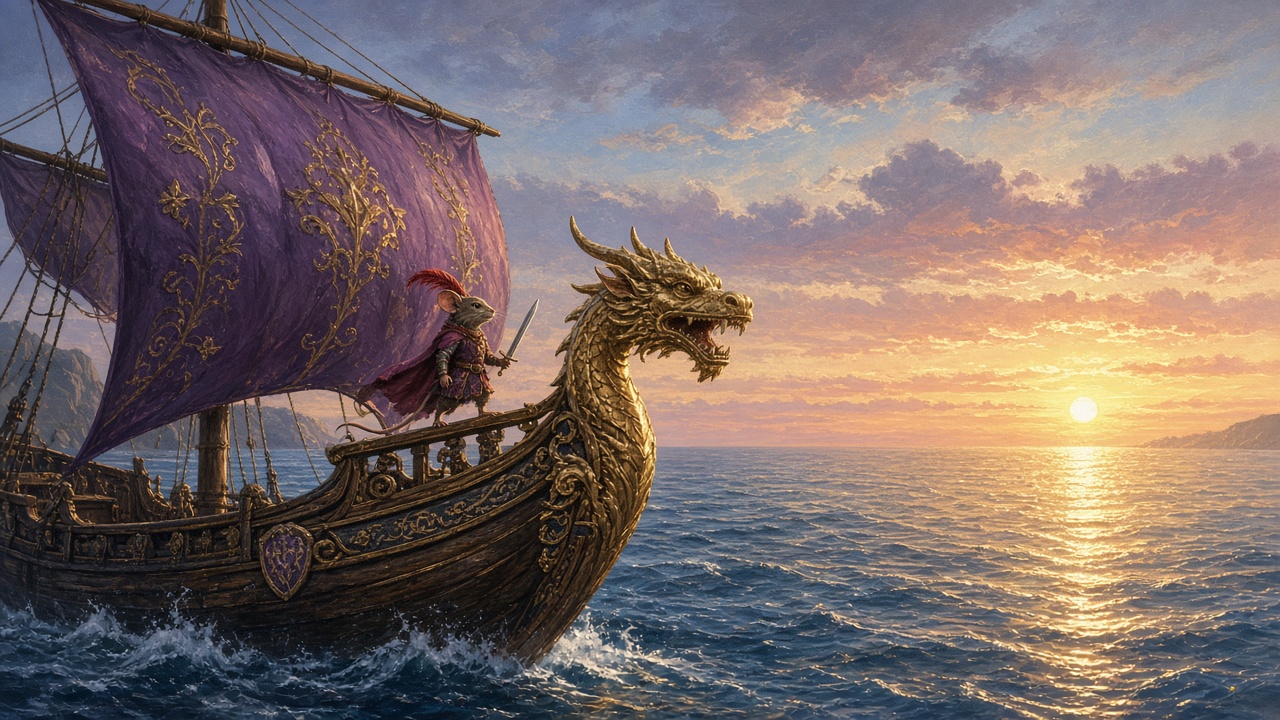
The opening sentence sets the tone: there was once a boy called Eustace Clarence Scrubb, and he almost deserved the name. His cousins Edmund and Lucy have to spend the summer with him, and they have only one regret: they miss Narnia. One day the picture of a ship hanging in a bedroom begins to move, the water spills out of it, and the three children are flung into the open sea beside the Dawn Treader. On board, King Caspian, now sixteen, is sailing towards the unknown East. He is looking for the seven lords whom his uncle had banished. The mouse Reepicheep has only one dream: to reach Aslan's country at the World's End. Island after island, the crew faces slave traders, a dragon, enchantments and nightmares made real. It is the most seafaring and the most contemplative of the Narnian novels, and one of the best loved. It also tells of the transformation, in the literal sense, of an unbearable boy.
- In the story — 5
- Publication order — 3
- Original title — The Voyage of the Dawn Treader
- First published — 15 September 1952
- Published in the United States — 30 September 1952 (Macmillan, New York)
- Dedication — To Geoffrey Barfield
- Translation — Philippe Morgaut
Quotation
- Quotation — Where sky and water meet, where the waves grow sweet…
Themes
- the voyage as an inner quest
- conversion (Eustace the dragon)
- the temptation of gold, power and beauty
- the longing to go “further” (Reepicheep)
- fear of the darkness, and trust
Did you know
- The tale follows the pattern of the legendary voyages westward of the Irish monks, such as that of Saint Brendan. Lewis turns it about and sends it east.
- Lewis revised a few passages, notably the end of the Dark Island episode, for the British edition. The American editions kept the original text until 1994, so the two versions differ slightly.
- The dedicatee, Geoffrey Barfield, is the adopted son of Owen Barfield, a lifelong friend of Lewis.
- The lamb that changes into a lion, at the end of the book, is one of the most explicitly Christian images in the whole series.
Adaptations
- BBC series (1989, with Prince Caspian).
- The Chronicles of Narnia: The Voyage of the Dawn Treader, by Michael Apted (Fox/Walden Media, 2010).
Characters
- Edmund Pevensie
- Lucy Pevensie
- Eustace Clarence Scrubb
- Alberta and Harold Scrubb, Eustace's parents
- Caspian X
- Reepicheep
- Lord Drinian, captain of the Dawn Treader
- The crew of the Dawn Treader (Rhince, Rynelf, Pittencream)
- The Seven Great Lords of Narnia
- Pug, the slave trader
- Governor Gumpas
- Coriakin, the magician of the Island of the Voices
- The Chief Duffer and Clipsie
- Ramandu, the star at rest
- Ramandu's Daughter, Queen of Narnia
- Aslan
Places
- Terebinthia, Galma, Seven Isles
- Lone Islands
- Narrowhaven
- Dragon Island / Burnt Island
- Deathwater Island
- Island of the Voices
- Dark Island
- Ramandu's Island
- Silver Sea / Utter East
- Aslan's Country
Objects
- The painting
- Dawn Treader
- Eustace's armlet
- Magician's book
- Aslan's Table
- Swords of the Seven Lords
- Sweet water
- Lucy's cordial
Peoples
- Talking Beasts
- Calormenes
- Dragons
- Stars
- Humans
- Lone Islanders
- Dufflepuds
- Talking Birds
- Sea People
- Sea serpent
- Talking Mice
- Telmarines
The story in a few words (no spoilers)
The opening sentence sets the tone: there was once a boy called Eustace Clarence Scrubb, and he almost deserved the name. His cousins Edmund and Lucy have to spend the summer with him, and they have only one regret: they miss Narnia. One day the picture of a ship hanging in a bedroom begins to move, the water spills out of it, and the three children are flung into the open sea beside the Dawn Treader. On board, King Caspian, now sixteen, is sailing towards the unknown East. He is looking for the seven lords whom his uncle had banished. The mouse Reepicheep has only one dream: to reach Aslan's country at the World's End. Island after island, the crew faces slave traders, a dragon, enchantments and nightmares made real. It is the most seafaring and the most contemplative of the Narnian novels, and one of the best loved. It also tells of the transformation, in the literal sense, of an unbearable boy.
The full story (warning: spoilers)
The children are hauled aboard by Caspian. At the Lone Islands, Caspian, Lucy, Edmund and Reepicheep are captured by the slave trader Pug. Lord Bern, the first of the seven lords to be found, helps them depose Governor Gumpas: the islands return to their allegiance to Narnia.
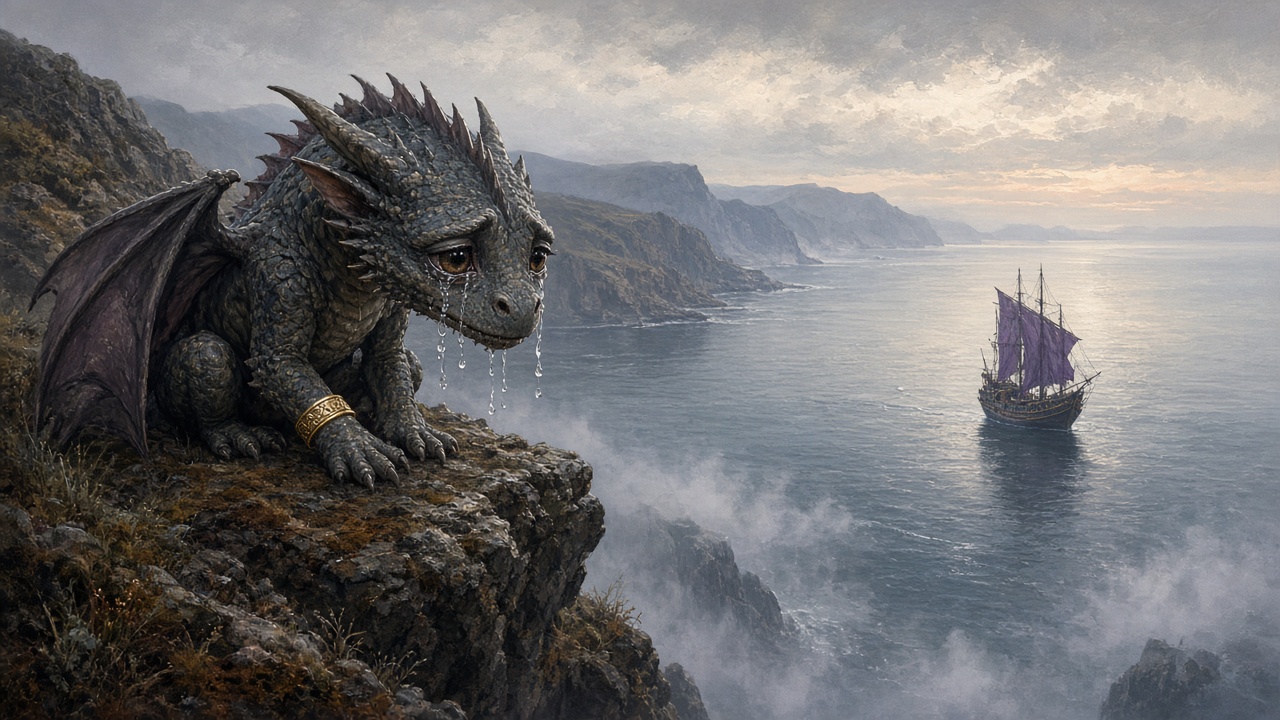
After a storm, the ship puts in at a mountainous island. Eustace, dodging a chore, takes refuge in a dying dragon's lair. He falls asleep on the treasure with a bracelet on his arm, and wakes a dragon. Then he discovers loneliness and remorse. Aslan sets him free by peeling off his dragon skin, layer after layer. Eustace becomes a boy again, and a better boy.
A sea serpent attacks the ship. On Deathwater Island a spring turns everything to gold, and the remains of a lord lie there. On the Island of the Voices, the invisible Dufflepuds force Lucy to read the book of the magician Coriakin so as to make them visible again. There Lucy is tempted by a spell for beauty, then reads a story she will never be able to forget.
The ship sails into a darkness where dreams come true. Lucy calls to Aslan for help, an albatross guides them, and they rescue Lord Rhoop. On Ramandu's Island, three lords sleep around Aslan's Table. Ramandu's Daughter explains how to break the spell: they must go all the way to the World's End and leave one of the travellers there.
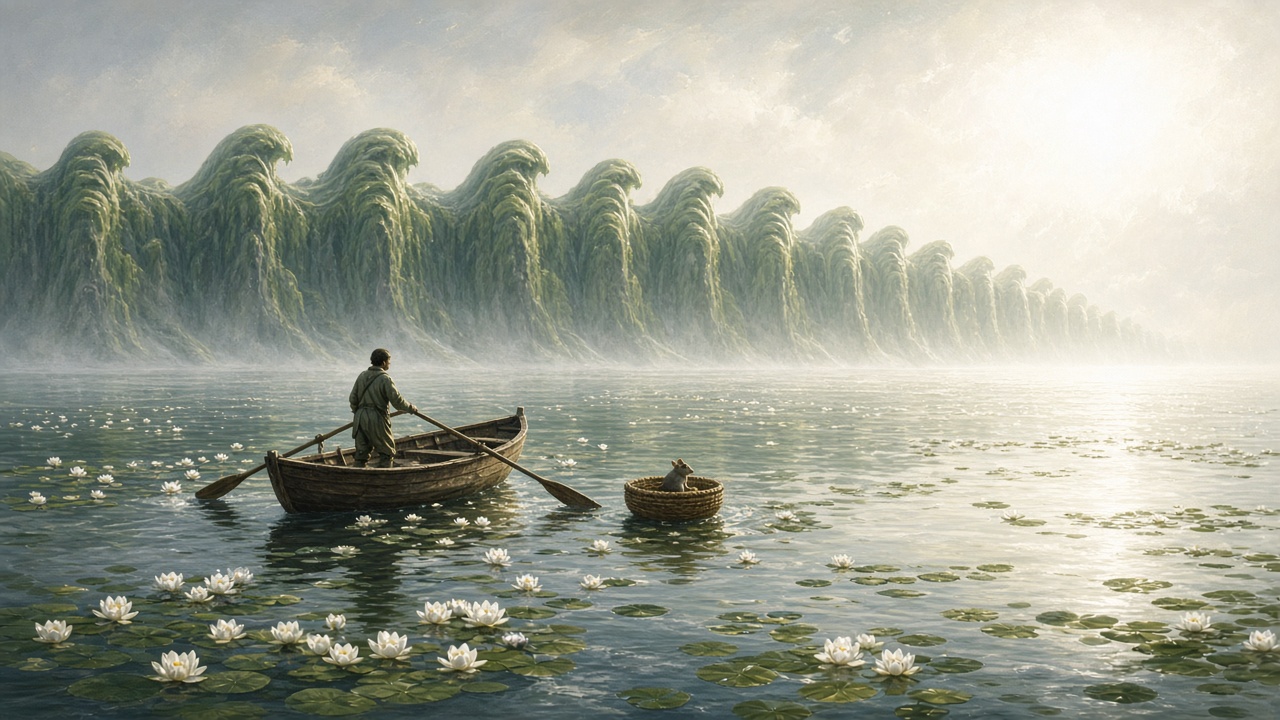
The sea grows sweet and is covered with white lilies. Caspian would like to go all the way, but he must go back and reign. Edmund, Lucy and Eustace go with Reepicheep as far as the wall of water that closes the horizon. The mouse goes off in his little coracle towards Aslan's country. A lamb that becomes a lion tells the children that they will not come back, and that they must learn to know him by another name in their own world.
The great themes
- the voyage as an inner quest
- conversion (Eustace the dragon)
- the temptation of gold, power and beauty
- the longing to go “further” (Reepicheep)
- fear of the darkness, and trust
Did you know?
- The tale follows the pattern of the legendary voyages westward of the Irish monks, such as that of Saint Brendan. Lewis turns it about and sends it east.
- Lewis revised a few passages, notably the end of the Dark Island episode, for the British edition. The American editions kept the original text until 1994, so the two versions differ slightly.
- The dedicatee, Geoffrey Barfield, is the adopted son of Owen Barfield, a lifelong friend of Lewis.
- The lamb that changes into a lion, at the end of the book, is one of the most explicitly Christian images in the whole series.
On screen
- BBC series (1989, with Prince Caspian).
- The Chronicles of Narnia: The Voyage of the Dawn Treader, by Michael Apted (Fox/Walden Media, 2010).
See also
- The seven Chronicles of Narnia
- In which order should you read the Chronicles of Narnia?
- Map of the voyage of the Dawn Treader
- One volcano too many: the Narnia films judged by Lewis's standards
- The portals between the worlds
- Two ages for every hero: the one on the calendar, and the one lived in Narnia
- From Puddleglum to Puddlegum: what the names of Narnia say in English, and what they become in French