Captive Minds
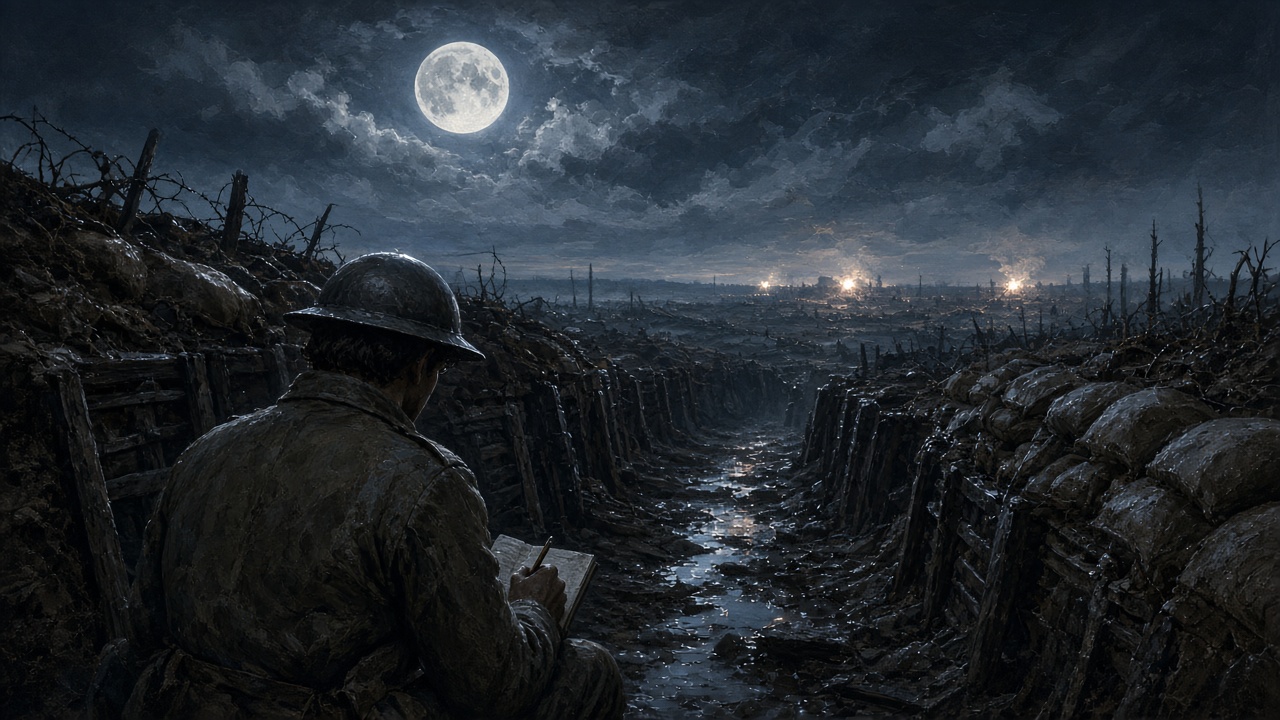
Lewis’s first book, published when he was twenty under a pseudonym: forty poems by a young atheist returned from the trenches, accusing a cruel god while yearning for beauty.
The collection is divided into three parts: “The Prison,” “Hesitation,” and “Escape.” The young poet describes a world ruled by an indifferent nature or a malevolent god, filled with war imagery (French Nocturne, written at the front), before turning to beauty, myths, and distant lands as places of refuge. The “Joy” is already present, but without hope.
- Original title — Spirits in Bondage: A Cycle of Lyrics
- First published — 1919
- Genre — Poetry
- First English edition — Heinemann, London, March 1919, under the pseudonym Clive Hamilton
- Availability in bookstores — Not translated into French; public domain in many countries, readable online in English.
- Reading level — Intermediate
- For whom — For those curious about young Lewis and war poetry.
- Year — 1919
Themes
- Rebellion against a cruel god.
- War.
- Beauty as escape.
- Longing for elsewhere.
Family
Poetry
Other names
- Spirits in Bondage: A Cycle of Lyrics
- Poetry
Lewis’s first book, published when he was twenty under a pseudonym: forty poems by a young atheist returned from the trenches, accusing a cruel god while yearning for beauty.
In brief
How to approach it
Reading level: Intermediate. For those curious about young Lewis and war poetry.
The story in a few lines
The collection is divided into three parts: “The Prison,” “Hesitation,” and “Escape.” The young poet describes a world ruled by an indifferent nature or a malevolent god, filled with war imagery (French Nocturne, written at the front), before turning to beauty, myths, and distant lands as places of refuge. The “Joy” is already present, but without hope.
In Lewis’s workshop
Partly written in Malvern and at Kirkpatrick’s, partly during the war and convalescence. Lewis adopts as his pseudonym the maiden name of his mother, Hamilton.
What announces Narnia
The contrast is striking: the young man who cursed the heavens would, thirty years later, write the song of Aslan.
What a modern reader retains
These poems, partly written at the front, belong to the great poetry of the Great War. The modern reader discovers a young, rebellious man and measures the distance between the poet of twenty and the author of Narnia. The collection, in the public domain in many countries, can be read online in English.
The mark it left
Almost unnoticed. It is now read as a document about the generation of 1914–1918 and Lewis’s youthful atheism.
Going further
- Rebellion against a cruel god.
- War.
- Beauty as escape.
- Longing for elsewhere.
See also
- Dymer (untranslated)
- Poems (posthumous collections)
- Lewis in France: war, translations, readers
- From the trenches of Artois to the evacuated children of the Kilns: how two wars opened the wardrobe
Sources
- https://en.wikipedia.org/wiki/Spirits_in_Bondage
Échanges entre lecteurs
Une question, un souvenir de lecture, une idée ? Partagez-les avec les autres lecteurs, dans le respect de la charte des commentaires.
Les commentaires ne sont pas disponibles pour le moment.
Les commentaires sont fermés sur cette page.
Aucun commentaire pour le moment. Soyez la première personne à partager votre avis !
Merci ! Votre commentaire sera visible après relecture.