Poems (posthumous collections)
Lewis wrote poetry throughout his life, often published in magazines under initials. His posthumous collections reveal a learned, playful poet, sometimes deeply moving.
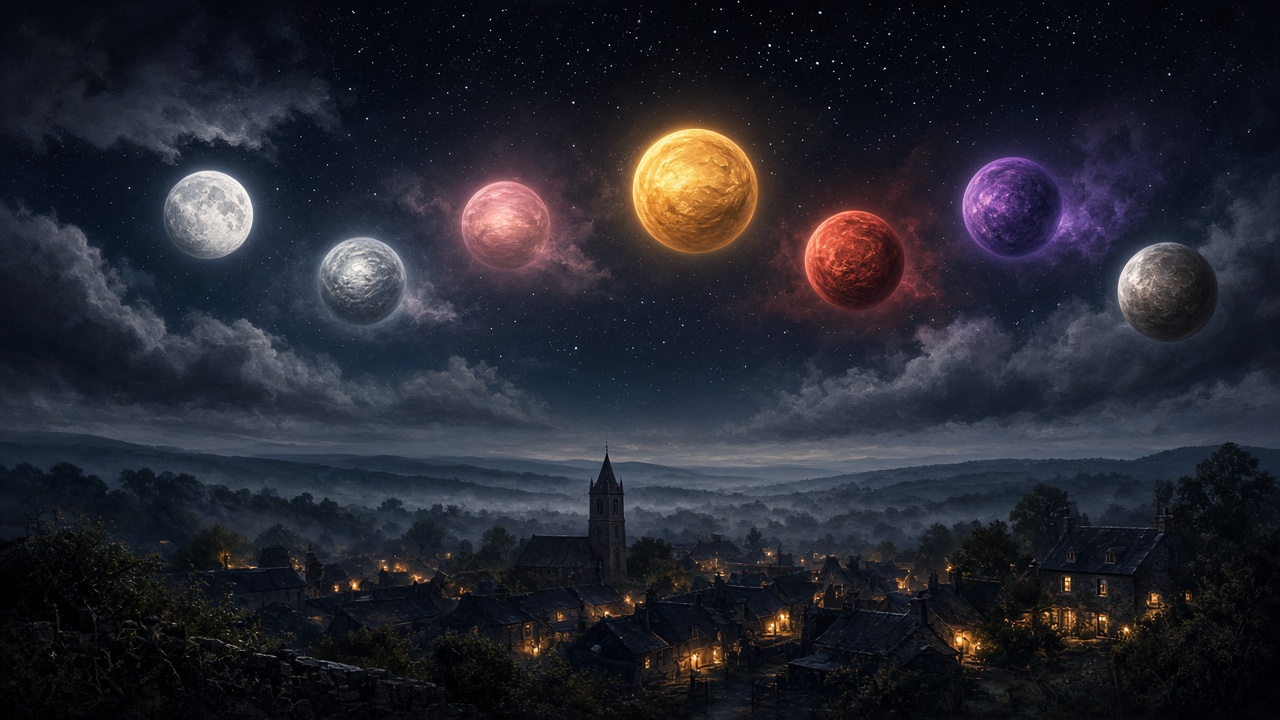
Poems (1964) gathers the short poems he wrote after his conversion: religious poems, satires, poems about the planets (including The Planets, which inspired Michael Ward’s *Chronicles of Narnia* hypothesis), love poems and elegies for Joy. Narrative Poems (1969) adds Dymer and unfinished verse narratives, including The Queen of Drum. Lost Aeneid (2011) publishes what remains of his translation of Virgil’s Aeneid, saved from the fire. The 2015 critical edition collects over 250 poems.
- Original title — Poems (1964) ; Narrative Poems (1969) ; The Collected Poems of C.S. Lewis (1994) ; C.S. Lewis's Lost Aeneid (2011)
- First English publication — 1964-2015
- Genre — Poetry
- First English edition — Geoffrey Bles, 1964 (ed. Walter Hooper) ; critical edition by Don W. King, Kent State University Press, 2015
- Available in bookstores — Not translated into French.
- Reading level — Variable
- For whom — For lovers of English poetry.
- Year — 1964
themes
- Faith and doubt.
- Medieval cosmos.
- Love and grief.
- Playing with old forms.
Family
Poetry
Other names
- Poems (1964)
- Narrative Poems (1969)
- The Collected Poems of C.S. Lewis (1994)
- C.S. Lewis's Lost Aeneid (2011)
- Poetry
Quick facts
How to approach it
Reading level: Variable. For lovers of English poetry.
Summary in a few lines
Poems (1964) gathers the short poems he wrote after his conversion: religious poems, satires, poems about the planets (including The Planets, which inspired Michael Ward’s *Chronicles of Narnia* hypothesis), love poems and elegies for Joy. Narrative Poems (1969) adds Dymer and unfinished verse narratives, including The Queen of Drum. Lost Aeneid (2011) publishes what remains of his translation of Virgil’s Aeneid, saved from the fire. The 2015 critical edition collects over 250 poems.
In Lewis’s workshop
Lewis wanted to be a poet above all. He continued to write verses after 1926, but published them discreetly, often under the initials N.W. in the magazine Punch.
What announces Narnia
The poem The Planets (1935) describes the seven planets that Michael Ward identifies in the seven Chronicles.
What a modern reader retains
For a French-speaking reader, this poetry remains inaccessible due to lack of translation, which is unfortunate: it contains Lewis’s most intimate side, the one revealed in his poems for Joy. The poem The Planets even inspired one of the most discussed hypotheses about Narnia, Michael Ward’s.
His legacy
His poetry, long considered old-fashioned, has been rediscovered by critics since the 2000s.
Key ideas
- Faith and doubt.
- Medieval cosmos.
- Love and grief.
- Playing with old forms.
See also
Sources
- https://en.wikipedia.org/wiki/C._S._Lewis_bibliography
- https://fr.wikipedia.org/wiki/C._S._Lewis
Échanges entre lecteurs
Une question, un souvenir de lecture, une idée ? Partagez-les avec les autres lecteurs, dans le respect de la charte des commentaires.
Les commentaires ne sont pas disponibles pour le moment.
Les commentaires sont fermés sur cette page.
Aucun commentaire pour le moment. Soyez la première personne à partager votre avis !
Merci ! Votre commentaire sera visible après relecture.