Perelandra
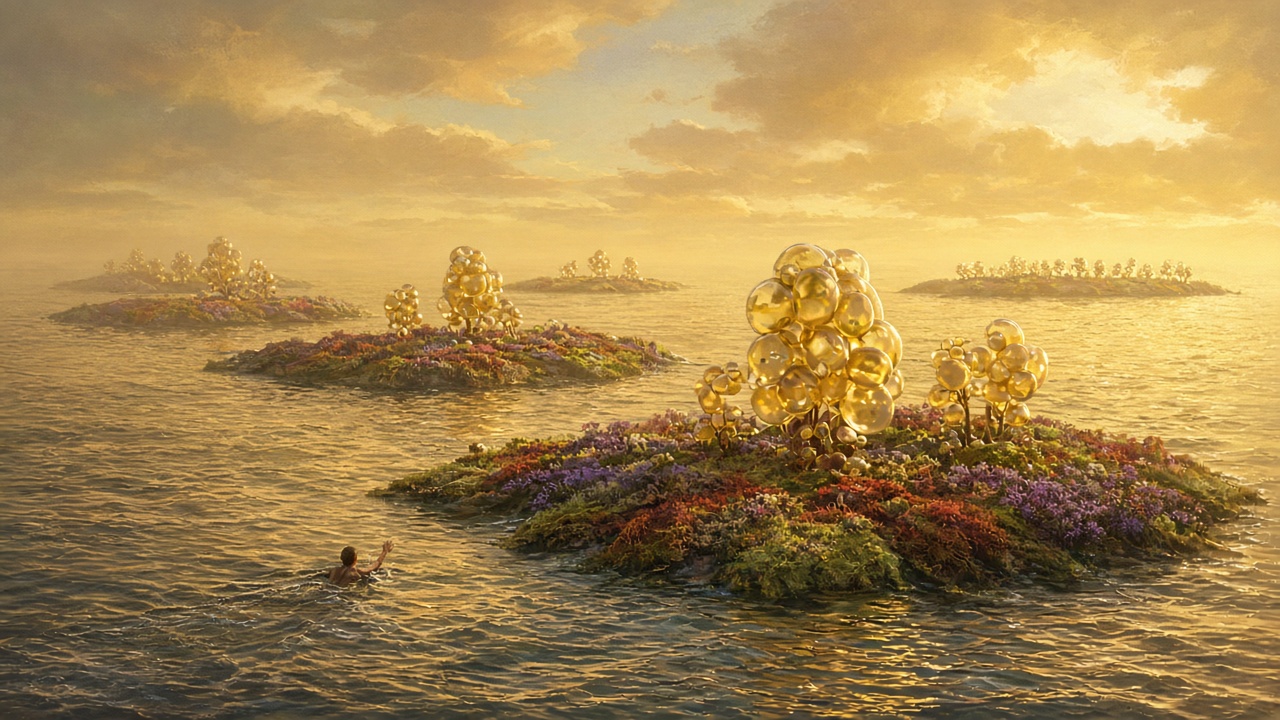
On Venus, a world of warm oceans and floating islands, a new Eve has just been born. A tempter arrives from Earth. Ransom has been sent to stop him. Lewis considered this novel one of his best.
Did you know
Lewis held this novel to be one of his best.
The narrator, a certain Lewis, helps his friend Ransom travel to Perelandra, the planet Venus, in a strange box resembling a coffin. Ransom discovers a world of unparalleled beauty: a golden ocean, floating islands that sway with the waves, and fruits whose taste is revelatory. There he meets the Green Lady, the first woman of this world, innocent and curious, separated from her King. She has only one prohibition: not to spend the night on the solid land. Weston, the physicist from the first book, now possessed by an evil force, arrives. Ransom soon calls him the “Anti-Man.” Day after day, Weston argues with the Green Lady to push her to disobey, with speeches about grandeur, independence, and self-sacrifice. Ransom realizes that words alone will not suffice. The second half of the novel shifts into physical combat, then into a long cosmic vision, the “Great Dance.”
- Original title — Perelandra
- First published — 1943
- Genre — Science-fiction novel, theological allegory
- First English edition — The Bodley Head, London, 1943
- Availability in bookshops — Out of print (as of 2024); second-hand.
- Reading level — Intermediate — demanding philosophical passages
- For whom — For those who enjoyed the first book and are not afraid of philosophy. The last fifty pages are among Lewis’s most lyrical.
Other French titles
- Voyage à Vénus
[{title, publisher, year, translator?, note?, source?}]
- Voyage à Vénus, in Le Silence de la Terre ; Voyage à Vénus ; Cette hideuse puissance — Club du livre d'anticipation (Opta) — Paris — 1967 — Frank Straschitz — first French translation, the trilogy in one volume (introduction by Sam Moskowitz)
- Voyage à Vénus — Retz — Paris — 1976 — Frank Straschitz — illustrations by Christian Broutin
- Voyage à Vénus — Oswald (Nouvelles éditions Oswald) — Paris — 1981 — Frank Straschitz
- La Trilogie cosmique — L'Âge d'Homme — Lausanne — 1997 — Maurice Le Péchoux
- Perelandra: voyage à Vénus — Gallimard, Folio SF — 2008 — Maurice Le Péchoux
themes
- A new Genesis: what if the temptation of Eve had failed?
- The seduction of evil: it presents itself as noble, heroic, “adult.”
- Freedom and trusting obedience.
- The sensory beauty of creation.
- The place of each within a vast “Great Dance.”
- A new Genesis: what if Eve's temptation had failed?
- The seduction of evil: it presents itself as noble, heroic, "adult."
- Freedom and trusting obedience.
- The sensual beauty of creation.
- One's place in a vast cosmic "dance."
- Voyage à Vénus, dans Le Silence de la Terre ; Voyage à Vénus ; Cette hideuse puissance, Club du livre d'anticipation (Opta), Paris, 1967, trans. Frank Straschitz — first French translation, the trilogy in one volume (introduction by Sam Moskowitz)
- Voyage à Vénus, Retz, Paris, 1976, trans. Frank Straschitz — illustrations by Christian Broutin
- Voyage à Vénus, Oswald (Nouvelles éditions Oswald), Paris, 1981, trans. Frank Straschitz
- La Trilogie cosmique, L'Âge d'Homme, Lausanne, 1997, trans. Maurice Le Péchoux
- Perelandra : voyage à Vénus, Gallimard, Folio SF, 2008, trans. Maurice Le Péchoux
See Also
## Sourceshttps://en.wikipedia.org/wiki/Perelandra
https://www.pintswithjack.com/csl-in-france/

Échanges entre lecteurs
Une question, un souvenir de lecture, une idée ? Partagez-les avec les autres lecteurs, dans le respect de la charte des commentaires.
Les commentaires ne sont pas disponibles pour le moment.
Les commentaires sont fermés sur cette page.
Aucun commentaire pour le moment. Soyez la première personne à partager votre avis !
Merci ! Votre commentaire sera visible après relecture.