The English Literature of the 16th Century
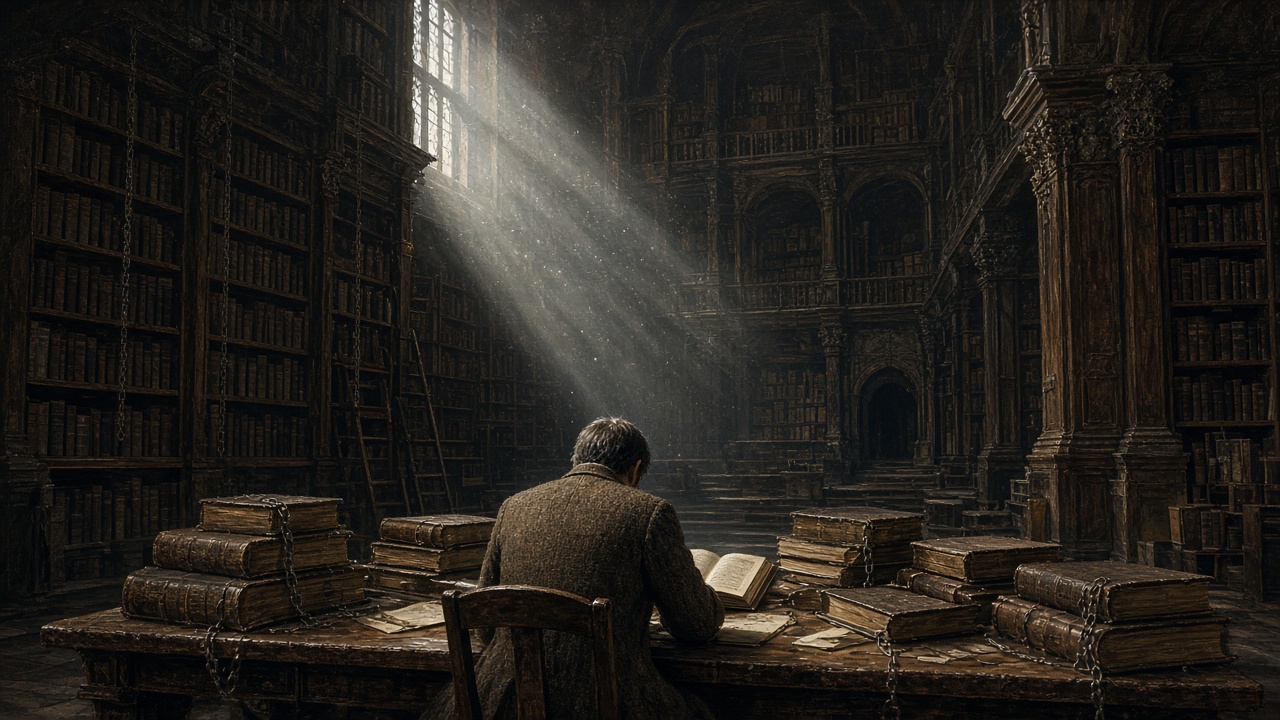
An overview of nearly 700 pages, fifteen years of work, and a provocative thesis: the English Renaissance was not the light succeeding the darkness. Lewis’s great scholarly work.
Lewis reviews all English and Scottish literature of the 16th century, excluding drama: poetry, religious prose, translations, scientific and political treatises. He divides the period into three parts: the end of the Middle Ages, a “dull” age (Drab) with laborious style, then a “golden” age (Golden), that of Sidney and Spenser. He contests the idea of a sudden break between the Middle Ages and the Renaissance, and shows that humanism also impoverished certain things. His long introductory chapter, “New Knowledge and New Ignorance,” is famous.
- Original title — English Literature in the Sixteenth Century, Excluding Drama
- First published — 1954
- Genre — Literary history
- First English edition — Clarendon Press, Oxford, 1954 (volume III of the Oxford History of English Literature)
- Availability in bookstores — Not translated into French.
- Reading level — Challenging — reference work
- For whom — For specialists. The introduction stands alone.
- Year — 1954
themes
- Medieval-Renaissance continuity.
- Critique of triumphant humanism.
- Enjoyment of literary history.
Family
Literary criticism
Other names
- English Literature in the Sixteenth Century, Excluding Drama
- Literary history
- Literary criticism
A tome of nearly 700 pages, fifteen years of work, and a provocative thesis: the English Renaissance was not the light succeeding the darkness. Lewis’s great scholarly work.
Quick facts
How to approach it
Level: Challenging — reference work. For specialists. The introduction stands alone.
The book in a few lines
Lewis reviews all English and Scottish literature of the 16th century, excluding drama: poetry, religious prose, translations, scientific and political treatises. He divides the period into three parts: the end of the Middle Ages, a “dull” age (Drab) with laborious style, then a “golden” age (Golden), that of Sidney and Spenser. He contests the idea of a sudden break between the Middle Ages and the Renaissance, and shows that humanism also impoverished certain things. His long introductory chapter, “New Knowledge and New Ignorance,” is famous.
In Lewis’s workshop
Lewis called this collection “O Hell” (a pun on his title OHEL) because the work overwhelmed him. He read almost everything printed in English in the 16th century to write it. The book was published the year he left for Cambridge.
What announces Narnia
It was while writing this book that Lewis created Narnia: the medieval world of Narnia, its knights and its cosmologies, emerges from this library.
What today’s readers retain
Few readers will open this tome, but its introduction on “new knowledge” that also brings “new ignorance” remains worth reading. It invites caution against overly simple progress narratives that pit dark ages against enlightened ones.
What remains of it
Praised as a monument of scholarship, with a remarkably lively style for a textbook. His judgments on the “dull” age have been debated.
Key ideas to remember
- Medieval-Renaissance continuity.
- Critique of triumphant humanism.
- Enjoyment of literary history.
See also
- The Last Battle: An Oxford and Cambridge Medievalist, and What Narnia Owes to His Library
- The Image of the World (title not translated into French)
Sources
- https://en.wikipedia.org/wiki/English_Literature_in_the_Sixteenth_Century,_Excluding_Drama
Échanges entre lecteurs
Une question, un souvenir de lecture, une idée ? Partagez-les avec les autres lecteurs, dans le respect de la charte des commentaires.
Les commentaires ne sont pas disponibles pour le moment.
Les commentaires sont fermés sur cette page.
Aucun commentaire pour le moment. Soyez la première personne à partager votre avis !
Merci ! Votre commentaire sera visible après relecture.