The Allegory of Love
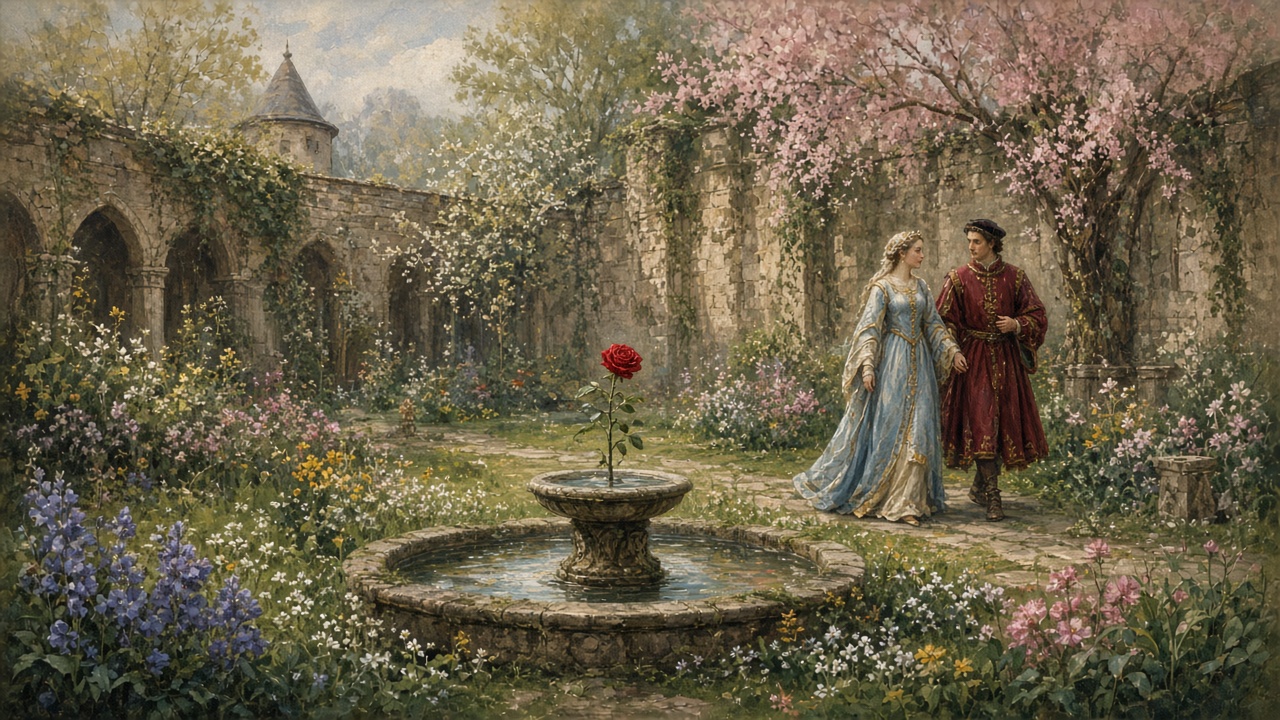
The book that established Lewis as a major figure in literary criticism: a study of courtly love and allegorical poetry, from the Roman de la Rose to Spenser’s The Faerie Queene. It earned him a prestigious award and the admiration of his peers.
Lewis explores a revolution in sentiment: in the 12th century, Provençal poets invented a new way of speaking about love, characterized by humility, courtesy, adultery, and a “religion of love.” He traces this tradition through the Roman de la Rose, Chaucer, Gower, and up to Spenser, where courtly love reconciles with marriage. At the same time, he rehabilitates allegory, a genre despised in his day: for him, it is a natural way to represent inner struggles (virtues and vices as characters), not a pedantic disguise.
- Original title — The Allegory of Love: A Study in Medieval Tradition
- First published — 1936
- Genre — Literary criticism
- First English edition — Clarendon Press (Oxford University Press), 1936
- Availability in bookstores — Not translated into French.
- Reading level — Advanced — academic
- For whom — For literature students and lovers of the Middle Ages, in English.
- Year — 1936
Themes
- The invention of courtly love.
- Allegory as the language of the soul.
- Continuity between the Middle Ages and the Renaissance.
- The joy of reading old books.
Family
Literary criticism
Other names
- The Allegory of Love: A Study in Medieval Tradition
- Literary criticism
The book that established Lewis as a major figure in literary criticism: a study of courtly love and allegorical poetry, from the Roman de la Rose to Spenser’s The Faerie Queene. It earned him a prestigious award and the admiration of his peers.
Quick facts
How to approach it
Reading level: Advanced — academic. For literature students and lovers of the Middle Ages, in English.
the book in a few lines
Lewis explores a revolution in sentiment: in the 12th century, Provençal poets invented a new way of speaking about love, characterized by humility, courtesy, adultery, and a “religion of love.” He traces this tradition through the Roman de la Rose, Chaucer, Gower, and up to Spenser, where courtly love reconciles with marriage. At the same time, he rehabilitates allegory, a genre despised in his day: for him, it is a natural way to represent inner struggles (virtues and vices as characters), not a pedantic disguise.
In Lewis’s workshop
Result of nearly ten years of research, begun around 1928. Lewis worked on it during his conversion. The book is dedicated to Owen Barfield.
What announces Narnia
The chivalry of Narnia, the code of honor of Reepicheep, Peter, and the taste for tournaments come from this world. Lewis also saw, in medieval allegory, the difference with what he was doing in Narnia: not an allegory, but a “supposal.”
What a modern reader retains
For a French-speaking reader, there is an irony: this major book on a tradition born in Provence and in the Roman de la Rose has never been translated into French. It remains a stimulating read to understand how our ways of speaking about love have a history, and why Narnia should not be read as an allegory.
Its lasting influence
Warm reception; in 1937 he received the Israel Gollancz Prize from the British Academy. Some theses on “courtly love” are still debated by medievalists today, but the book remains a living reference and highly readable.
Key ideas
- The invention of courtly love.
- Allegory as the language of the soul.
- Continuity between the Middle Ages and the Renaissance.
- The joy of reading old books.
To cite
“Humanity does not pass through phases like a train passes through stations: it carries with it everything it has been.”
— The Allegory of Love, ch. 1 — paraphrase translated by the site
See also
- The Last of the Dinosaurs: A Medievalist in Oxford and Cambridge, and What Narnia Owes to His Library
- The Discarded Image
- Is Narnia an Allegory? Arthur Greeves and Owen Barfield: The Two Friendships That Made Lewis
Sources
- https://en.wikipedia.org/wiki/The_Allegory_of_Love
- https://www.pintswithjack.com/csl-in-france/
Échanges entre lecteurs
Une question, un souvenir de lecture, une idée ? Partagez-les avec les autres lecteurs, dans le respect de la charte des commentaires.
Les commentaires ne sont pas disponibles pour le moment.
Les commentaires sont fermés sur cette page.
Aucun commentaire pour le moment. Soyez la première personne à partager votre avis !
Merci ! Votre commentaire sera visible après relecture.