Surprised by Joy
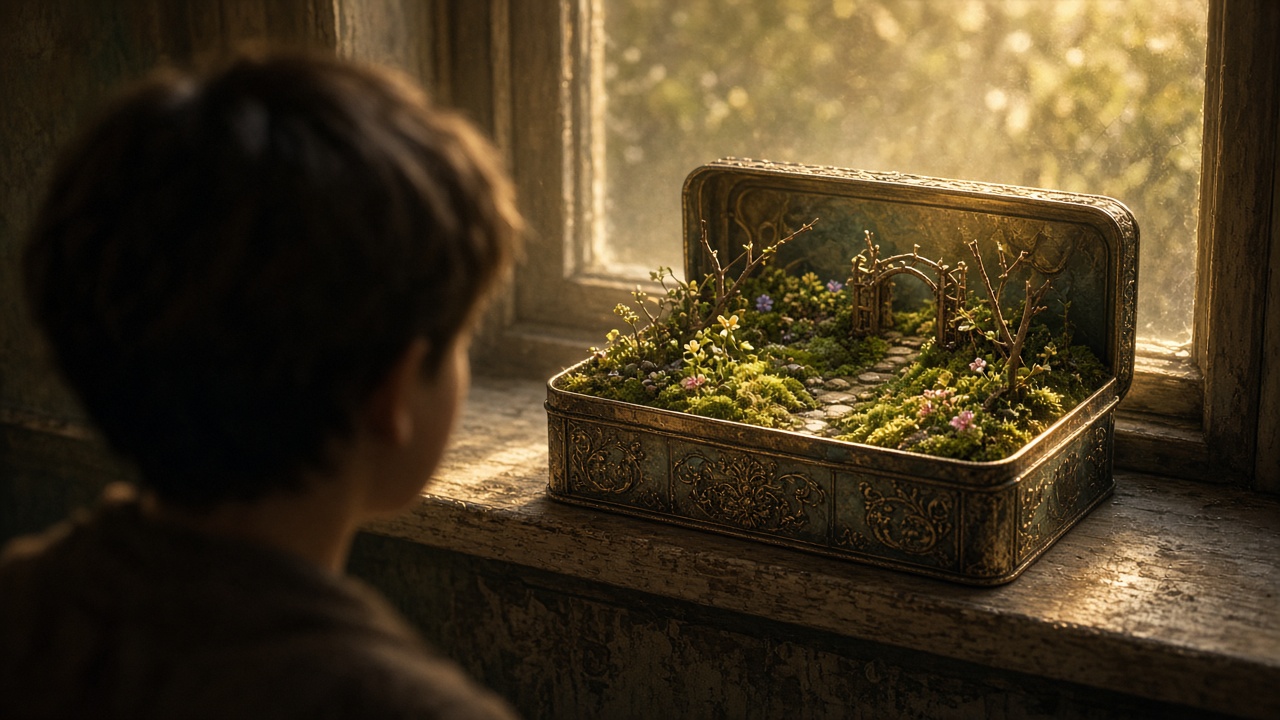
Childhood in Belfast, the death of his mother, hated boarding schools, war, books, and the long journey of an atheist to faith. Lewis recounts his life up to 1931, guided by a thread: the "Joy," a desire that no earthly thing can satisfy.
- Original title — Surprised by Joy: The Shape of My Early Life
- First published — 1955
- Genre — Spiritual autobiography
- First English edition — Geoffrey Bles, London, 19 September 1955
- Available in bookshops — Out of print in new editions: no editions after the 1955 reprint in the catalogues; second-hand and in libraries.
- Reading level — Intermediate
- For whom — For those who want to meet the man. The chapters on childhood are a delight, those on philosophy more difficult.
- Year — 1955
Other French titles
- Subtitle of the Raphaël edition: The profile of my early years
[{title, publisher, year, translator?, note?, source?}]
- Surprised by Joy — Éditions du Seuil — Paris — 1964 — Marie Tadié
- Surprised by Joy: The profile of my early years — Raphaël — Le Mont-Pèlerin — 1998 — reprinted around 2006; Denis Ducatel, the translator, ran the Raphaël publishing house — Denis Ducatel
Themes
- Joy (Sehnsucht), desire for something more.
- Baptized imagination (reading *Phantastes*).
- School and its cruelties.
- Conversion as surrender, "the most reluctant convert in England."
Short quotes with source
- A longing that is never satisfied, more desirable than any satisfaction. — Surprised by Joy, ch. 1 (definition of Joy) — translation from the website
Family
Letters and autobiography
Other names
- Surprised by Joy: The profile of my early years
- Subtitle of the Raphaël edition: The profile of my early years
- Spiritual autobiography
- Autobiography
Childhood in Belfast, the death of his mother, hated boarding schools, war, books, and the long journey of an atheist to faith. Lewis recounts his life up to 1931, guided by a thread: the "Joy," a desire that no earthly thing can satisfy.
Quick facts
## How to Approach It Level: Intermediate. For those who want to meet the man. The chapters on childhood are a delight, while those on philosophy are more challenging. ## The Book in a Few Lines Lewis does not write a conventional autobiography: he follows the story of an experience. In his childhood, a miniature garden made by his brother in a biscuit tin, a passage from Beatrix Potter, a line about Balder the beautiful dead give him a longing for something more precious than any satisfaction: it is Joy. The book then recounts the death of his mother in 1908, the Wynyard School which he compares to a concentration camp, Malvern and its cruel hierarchies, and finally the happiness of the years spent with his tutor Kirkpatrick, an unrelenting logician. The war is briefly mentioned, followed by Oxford, friendships with Barfield and Tolkien, and the steps of his conversion: in 1929, he admits that God is God; in 1931, he believes in Christ, visiting Whipsnade Zoo. The book ends there, and Joy loses its importance: it was only a signpost. ## In Lewis's Workshop Written in the early 1950s, partly in response to the many letters from readers who questioned him about his conversion. The title comes from a sonnet by Wordsworth. It was published the year Lewis befriended Joy Davidman, hence a joke often repeated: he would soon be, literally, "surprised by Joy". ## What Announces Narnia Lewis's Joy is what children feel when they first hear the name of Aslan in *The Lion, the Witch and the Wardrobe*. ## What a Modern Reader Retains Today's reader will be surprised by what the book does not say: almost nothing about Mrs Moore, little about the war. It is a selective account, focused on a single question. Its chapters on childhood and his tutor remain among Lewis's most vivid pages, and speak to anyone who has experienced the exile of school. ## The Legacy He Left Behind An essential text for understanding Lewis, but very selective: it almost completely ignores the war, Mrs Moore and his father. Biographers have supplemented and sometimes corrected it, particularly regarding the date of his conversion to God (some place it in 1930 rather than 1929). ## Key Ideas to Remember * Joy (Sehnsucht), longing for something else. * Baptized imagination (the reading of *Phantastes*). * School and its violence. * Conversion as surrender, "the most reluctant convert in England". ## To Quote > “An unsatisfied desire which is itself more desirable than any other satisfaction.” > — *Surprised by Joy*, ch. 1 (definition of Joy) — translation from the website ## Read It in English * *Surprised by Joy*, HarperCollins, 1955, trans. Walter Hooper * *Surprised by Joy: The Shape of My Early Life*, HarperOne, 1998, trans. Walter Hooper — reprinted around 2006
Échanges entre lecteurs
Une question, un souvenir de lecture, une idée ? Partagez-les avec les autres lecteurs, dans le respect de la charte des commentaires.
Les commentaires ne sont pas disponibles pour le moment.
Les commentaires sont fermés sur cette page.
Aucun commentaire pour le moment. Soyez la première personne à partager votre avis !
Merci ! Votre commentaire sera visible après relecture.