C.S. Lewis writes to children
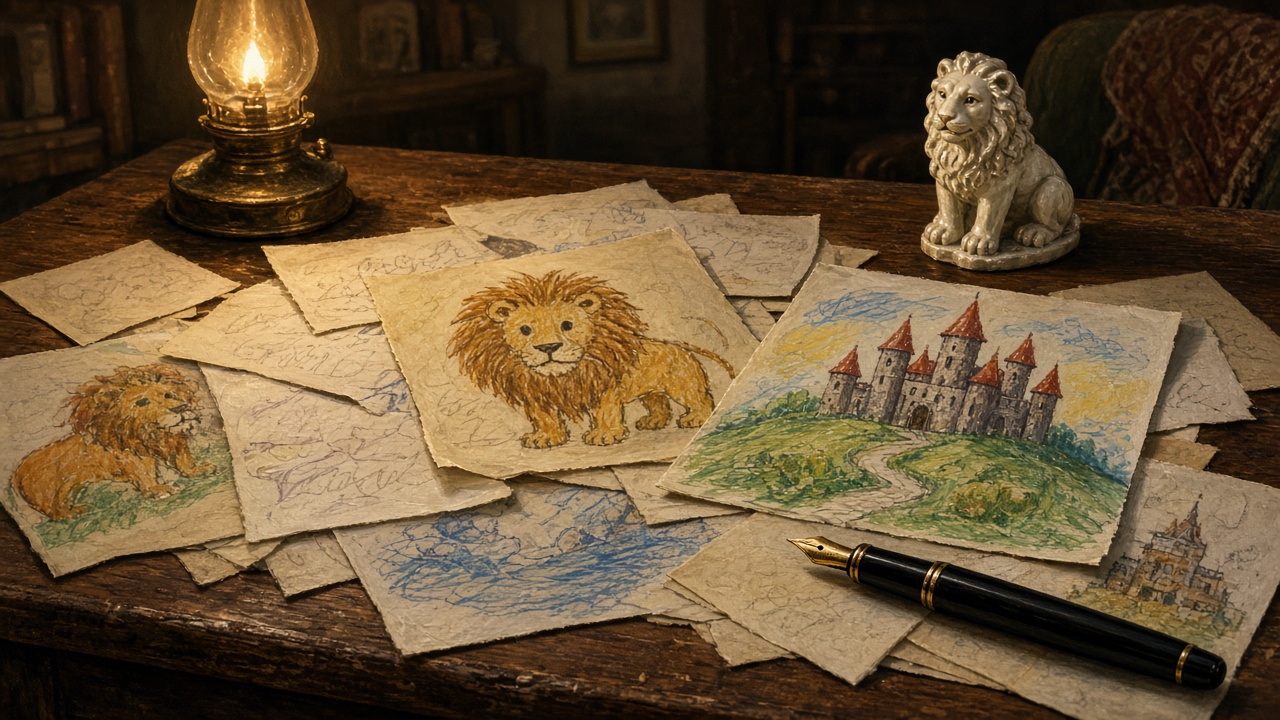
Children from all over the world wrote to the author of Narnia. He responded to them seriously, with humor, and never talked down to them. A collection full of tenderness and writing advice.
The letters date from 1944 to 1963. Lewis answered questions about Aslan, the reading order, the continuation of Narnia (there won’t be any), the death of Reepicheep, or the disappearance of Susan. He also gave his famous writing advice: use simple words, don’t say something is “terrible” but make it terrible, don’t use words too big for the thing. To a little boy who feared loving Aslan more than Jesus, he replied with exemplary delicacy.
- Original title — C.S. Lewis: Letters to Children
- First published — 1985
- Genre — Correspondence
- First English edition — Macmillan / Collins, 1985, ed. Lyle W. Dorsett and Marjorie Lamp Mead
- Available in bookstores — Available (Téqui).
- Reading level — Easy — from 8-9 years old
- For whom — For young readers of Narnia and their parents, to read together.
- Year — 1985
Other French titles
- Letters to Children
[{title, publisher, year, translator?, note?, source?}]
- Lettres du pays de Narnia : C.S. Lewis writes to children — Pierre Téqui — 2020
Themes
- Writing well and simply.
- Aslan and Christianity explained to children.
- Respect for young readers.
Family
Letters and autobiography
Other names
- C.S. Lewis: Letters to Children
- Letters to Children
- Correspondence
Quick facts
How to approach it
Reading level: Easy — from 8-9 years old. For young readers of Narnia and their parents, to read together.
In a nutshell
The letters date from 1944 to 1963. Lewis answered questions about Aslan, the reading order, the continuation of Narnia (there won’t be any), the death of Reepicheep or the disappearance of Susan. He also gave his famous writing advice: use simple words, don’t say something is “terrible” but make it terrible, don’t use words too big for the thing. To a little boy who feared loving Aslan more than Jesus, he replied with exemplary delicacy.
In the workshop of Lewis
Lewis answered his own mail, often helped by his brother Warnie who typed the letters. It is in one of these letters that he states preferring the chronological order of the Chronicles, while adding that the order doesn’t matter much.
What announces Narnia
All the collection revolves around Narnia.
What a modern reader retains
Lewis’s writing advice to children is still used in classrooms today: simple words, things shown rather than told. And his answers to questions about Susan, Reepicheep, or Aslan remain the best answers to questions that modern readers still ask themselves.
What it leaves behind
One of the most touching books about Lewis, ideal for parents and teachers.
Key takeaways
- Write well and simply.
- Aslan and Christianity explained to children.
- Respect for young readers.
Read it in French
- Lettres du pays de Narnia : C.S. Lewis écrit aux enfants, Pierre Téqui, 2020
See also
- In what order should I read The Chronicles of Narnia?
- Narnia in the family and in the classroom: a guide for parents and teachers
- The Kilns household: Warnie, « Minto » and Maureen, the family Lewis chose
Sources
- https://www.pintswithjack.com/csl-in-france/
- https://en.wikipedia.org/wiki/C._S._Lewis_bibliography
Échanges entre lecteurs
Une question, un souvenir de lecture, une idée ? Partagez-les avec les autres lecteurs, dans le respect de la charte des commentaires.
Les commentaires ne sont pas disponibles pour le moment.
Les commentaires sont fermés sur cette page.
Aucun commentaire pour le moment. Soyez la première personne à partager votre avis !
Merci ! Votre commentaire sera visible après relecture.