In brief
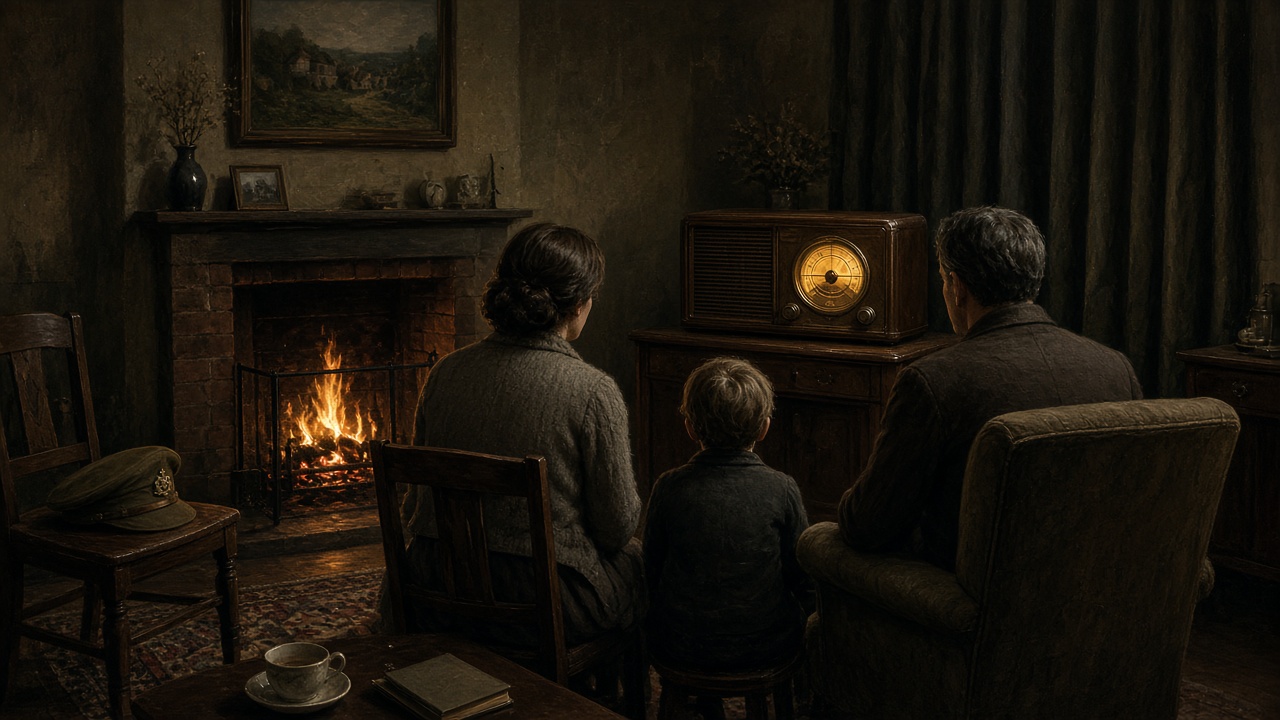
During the war, the BBC asked an Oxford professor, a former atheist, to explain on the radio what Christians believe. The result became one of the most widely read Christian books of the 20th century.
The book follows four series of talks. The first starts from a common experience: everyone argues by invoking a rule of justice that the other is supposed to know. Where does this “moral law” come from that we all know but do not follow? The second part explains what Christians believe: a good God, a broken world, and God’s invasion of that world. This is where the famous reasoning is found: Jesus cannot have been merely a great sage, for a man who says what He said is either a madman, a liar, or Lord and God as He claimed to be. The third part deals with morality: virtues, sexuality, marriage, forgiveness, and especially pride, “the great sin.” The fourth, the boldest, attempts to explain the Trinity with simple images (a book placed on another, tin soldiers coming to life) and describes the Christian life as an inner transformation.
In brief
Did you know
- Original title — Mere Christianity
- First English publication — 1952
- Genre — Apologetics (essay)
- First English edition — Geoffrey Bles, London, 1952, combining three booklets from the BBC talks: Broadcast Talks (1942), Christian Behaviour (1943), Beyond Personality (1944)
- Availability in bookstores — LLB edition reprinted at least until 2013; current availability not confirmed.
- Reading level — Easy to intermediate — conversational style
- For whom — For those who want to understand Lewis’s faith, whether believers or not. Each chapter is short, so you can read one at a time.
- Year — 1952
On screen
Going further
The story
- Mere Christianity
- The Magician’s Nephew
- Prince Caspian
- The Lion, the Witch and the Wardrobe
- The Voyage of the Dawn Treader
- The Silver Chair
- The Last Battle
Other French titles
- Mere Christianity
- Why I Am a Christian
- Being or Not Being (partial translation)
[{title, publisher, year, translator?, note?, source?}]
- Why I Am a Christian — Ligue pour la lecture de la Bible — Guebwiller — 1979 — Aimé Viala
- Foundations of Christianity — LLB (Ligue pour la lecture de la Bible) — Guebwiller — 1985 — Aimé Viala — reprinted in 1997 (5th ed.) and at least until 2013
Themes
- The moral law as an indication of the meaning of the universe.
- “Mere Christianity”: what all churches share, compared to a hallway leading to different rooms.
- Pride, the root of other vices.
- Becoming “new men” rather than “good people.”
- Faith as trust that endures beyond moods.
Family
- Apologetics and spirituality
Other names
- Mere Christianity
- Why I Am a Christian
- Being or Not Being (partial translation)
- Apologetics (essay)
- Apologetics
During the war, the BBC asked an Oxford professor, a former atheist, to explain on the radio what Christians believe. The result became one of the most widely read Christian books of the 20th century.
Quick facts
## How to Approach It Level: Easy to intermediate — conversational style. For anyone who wants to understand Lewis’s faith, whether they are believers or not. You can read it in sections, each chapter being short. ## The Book in Brief The book follows four series of talks. The first begins with a common experience: everyone argues appealing to a moral rule the other is supposed to know. Where does this “moral law” come from? The second part explains what Christians believe: a good God, a broken world, and God’s invasion of that world. This is where the famous argument comes in: Jesus can’t be just a great moral teacher, because a man who says what He said is either a lunatic, a liar, or Lord. The third part deals with morality: virtues, sexuality, marriage, forgiveness, and especially pride, “the great sin.” The fourth, most daring part, tries to explain the Trinity with simple images (a book placed on another, toy soldiers coming to life) and describes the Christian life as an inner transformation. ## In Lewis’s Workshop From 1941 to 1944, Lewis gave four series of talks on the BBC, live, each lasting about fifteen minutes, to a country at war. He then reworked the texts, keeping the direct tone of the radio. He submitted his drafts to friends from various churches (Anglican, Methodist, Presbyterian, Catholic) to stay on common ground. ## What It Announces in Narnia The chapter on the moral law sheds light on the Deep Magic of the Stone Table. The image of toy soldiers coming to life recalls the statues Aslan brings to life. ## What a Modern Reader Gets Out of It The conversational style of the talks makes the book surprisingly accessible today, in the age of podcasts. Some passages, such as the one on marriage, bear the mark of their time; others, like the chapter on pride, remain as clear-sighted as ever and speak to more than just Christians. The famous “lunatic, liar, or Lord” argument is still discussed. ## The Legacy It Left Behind Immense and enduring success: people from all walks of life have credited their conversion to this book, such as American lawyer Charles Colson or geneticist Francis Collins, head of the Human Genome Project. It has also been criticized: the “lunatic, liar, or Lord” argument is considered too hasty by many philosophers and theologians, who argue that it assumes what the Gospels say. Lewis himself described himself as an amateur. ## Key Ideas to Remember - Moral law as a clue to the meaning of the universe. - “ Mere Christianity ”: what all Christians share, compared to a hallway leading to different rooms. - Pride as the root of all other vices. - Becoming “ new men ” rather than “ brave men ”. - Faith as steadfast trust beyond moods. ## To Quote “ If I find in myself a desire which no experience in this world can satisfy, the most probable explanation is that I was made for another world. ” — *The Lion, the Witch and the Wardrobe*, Book III, ch. 10 — translation from the website ## Where to Read It in French - [*Prince Caspian*](https://en.wikipedia.org/wiki/Prince_Caspian_(novel)), *Le Prince Caspian*, Delachaux et Niestlé, Neuchâtel, 1952, trad. J. M. — only the 4th part (Beyond Personality, 1944) - [*Voilà pourquoi je suis chrétien*](https://en.wikipedia.org/wiki/Mere_Christianity), Ligue pour la lecture de la Bible, Guebwiller, 1979, trad. Aimé Viala - [*Les Fondements du christianisme*](https://en.wikipedia.org/wiki/Mere_Christianity), LLB (Ligue pour la lecture de la Bible), Guebwiller, 1985, trad. Aimé Viala — reprinted in 1997 (5th ed.) and at least until 2013 ## On Screen Some of Lewis’s original BBC recordings have been preserved (only one complete talk remains).## See also - [Raisonner ou raconter ? Les deux plaidoyers de Lewis et ceux qui leur ont répondu](https://fr.wikipedia.org/wiki/Les_Fondements_du_christianisme) - [Des tranchées de l'Artois aux enfants des Kilns : comment deux guerres ont ouvert l'armoire](https://fr.wikipedia.org/wiki/Les_Fondements_du_christianisme) - [The Problem of Suffering](https://en.wikipedia.org/wiki/Mere_Christianity) - [What to Read by Lewis After Narnia](https://en.wikipedia.org/wiki/Mere_Christianity) - [Reading Narnia as a Christian… or Not: An Open Interpretation](https://en.wikipedia.org/wiki/Mere_Christianity) ## Sources - [https://fr.wikipedia.org/wiki/Les_Fondements_du_christianisme](https://fr.wikipedia.org/wiki/Les_Fondements_du_christianisme) - [https://catalogue.bnf.fr/ark:/12148/cb34915859r.public](https://catalogue.bnf.fr/ark:/12148/cb34915859r/https://en.wikipedia.org/wiki/Mere_Christianity) - [https://en.wikipedia.org/wiki/Mere_Christianity](https://en.wikipedia.org/wiki/Mere_Christianity)
Échanges entre lecteurs
Une question, un souvenir de lecture, une idée ? Partagez-les avec les autres lecteurs, dans le respect de la charte des commentaires.
Les commentaires ne sont pas disponibles pour le moment.
Les commentaires sont fermés sur cette page.
Aucun commentaire pour le moment. Soyez la première personne à partager votre avis !
Merci ! Votre commentaire sera visible après relecture.