The Return of the Wanderer
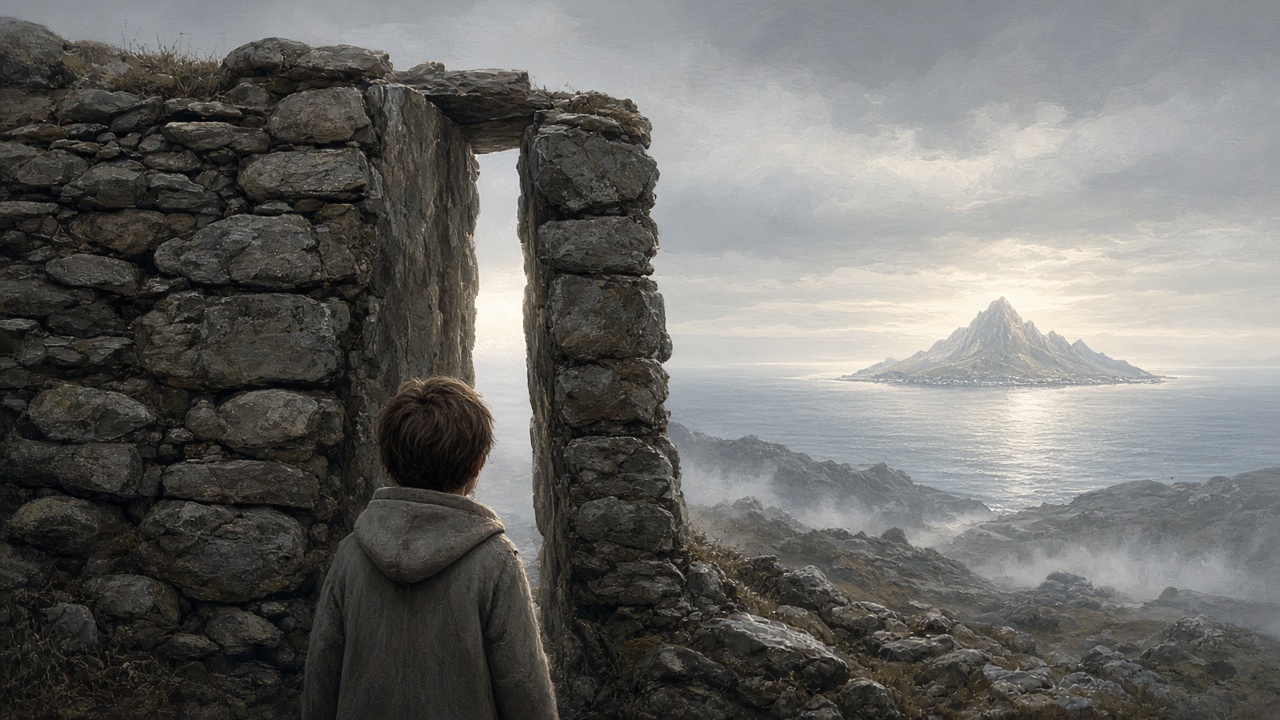
The first book by Lewis after his conversion: a parody of The Pilgrim's Progress by Bunyan, in which a young man, John, sets out in search of an island glimpsed in his childhood. Written in two weeks.
John grew up in the land of Puritania, where a religion of rules and fears reigns. One day, through a window in a wall, he glimpses a wonderful island, and this desire never leaves him. He sets out westward. Along the way, he meets characters who embody the intellectual fashions of the time: Mr Tumnus (rationalism), the aesthetes of Claptrap, the modern young poets, the Freudians, the nationalists. To the north, hard and cold thinkers; to the south, soft and confused feelings. He learns that the path is narrow between these two extremes. An old woman, Mrs Kirke, offers to carry him, but he long refuses. The book follows step by step Lewis's journey from atheism to faith.
- Original title — The Pilgrim's Regress: An Allegorical Apology for Christianity, Reason and Romanticism
- First published — 1933
- Genre — Autobiographical allegory
- First English edition — J.M. Dent, London, 1933; 3rd edition with an important preface added in 1943
- Available in bookstores — No French translation listed: the BnF has only an English edition (1956), the SUDOC lists 9 all in English, Swisscovery lists English editions and a German translation (*Flucht aus Puritanien*, 1985). A.-F. Caballero (2024) also writes that it has never been translated. The usual translation of the title is "The Pilgrim's Regress." There are Italian (Jaca Book, 1998) and Spanish (Planeta, 2008) translations.
- Reading level — Demanding — many allusions to intellectual trends of the 1920s
- For whom — For readers who already know Surprised by Joy and read English.
- Year — 1933
Themes
- The "Joy," that inconsolable desire that drives one to seek (see Surprised by Joy).
- The dead ends of rationalism and sentimentalism.
- Conversion as a return.
- Satire of intellectual fashions.
Family
Novels and stories
Other names
- The Pilgrim's Regress: An Allegorical Apology for Christianity, Reason and Romanticism
- Autobiographical allegory
- Fiction
The first book by Lewis after his conversion: a parody of The Pilgrim's Progress by Bunyan, in which a young man, John, sets out in search of an island glimpsed in his childhood. Written in two weeks.
Quick facts
How to approach it
Level: Demanding — many allusions to intellectual trends of the 1920s. For readers who already know Surprised by Joy and read English.
In a nutshell
John grew up in the land of Puritania, where a religion of rules and fears reigns. One day, through a window in a wall, he glimpses a wonderful island, and this desire never leaves him. He sets out westward. Along the way, he meets characters who embody the intellectual fashions of the time: Mr Enlightenment (rationalism), the aesthetes of Claptrap, the modern young poets, the Freudians, the nationalists. To the north, hard and cold thinkers; to the south, soft and confused feelings. He learns that the path is narrow between these two extremes. An old woman, Mother Kirk, offers to carry him, but he long refuses. The book follows step by step Lewis's journey from atheism to faith.
In Lewis's workshop
Lewis wrote it in August 1932, on holiday in Belfast with his friend Arthur Greeves, less than a year after his conversion. In 1943, he added a preface and running heads to clarify it, acknowledging that the book was obscure and at times unfair.
The glimpsed island foreshadows the Far East and the land of Aslan that Reepicheep seeks in The Voyage of the Dawn Treader.
What today's reader remembers
This is Lewis's most dated book because of its allusions to intellectual fashions of the 1920s. But its central image, an island glimpsed in childhood and sought all one's life, remains universal. For a French-speaking reader, it is also one of the great absences: as far as we know, there is still no published translation.
Its legacy
Modest success at the time. The book is read today mainly to understand the young Lewis's thought and his theory of "Joy." The 1943 preface is often cited as one of the best pages on desire.
Key ideas to remember
- The "Joy," that inconsolable desire that drives one to seek (see Surprised by Joy).
- The dead ends of rationalism and sentimentalism.
- Conversion as a return.
- Satire of intellectual fashions.
See also
- Surprised by Joy
- The alter ego and the anti-self: Arthur Greeves and Owen Barfield, the two friendships that shaped Lewis
- From the biscuit tin to the land of Aslan: "Joy," the secret desire that connects all of Lewis's works
- Biography of C.S. Lewis (1): from Belfast to Oxford, 1898–1931
Sources
- https://www.pintswithjack.com/csl-in-france/
- https://en.wikipedia.org/wiki/The_Pilgrim%27s_Regress
Échanges entre lecteurs
Une question, un souvenir de lecture, une idée ? Partagez-les avec les autres lecteurs, dans le respect de la charte des commentaires.
Les commentaires ne sont pas disponibles pour le moment.
Les commentaires sont fermés sur cette page.
Aucun commentaire pour le moment. Soyez la première personne à partager votre avis !
Merci ! Votre commentaire sera visible après relecture.