Learn about Aslan's death
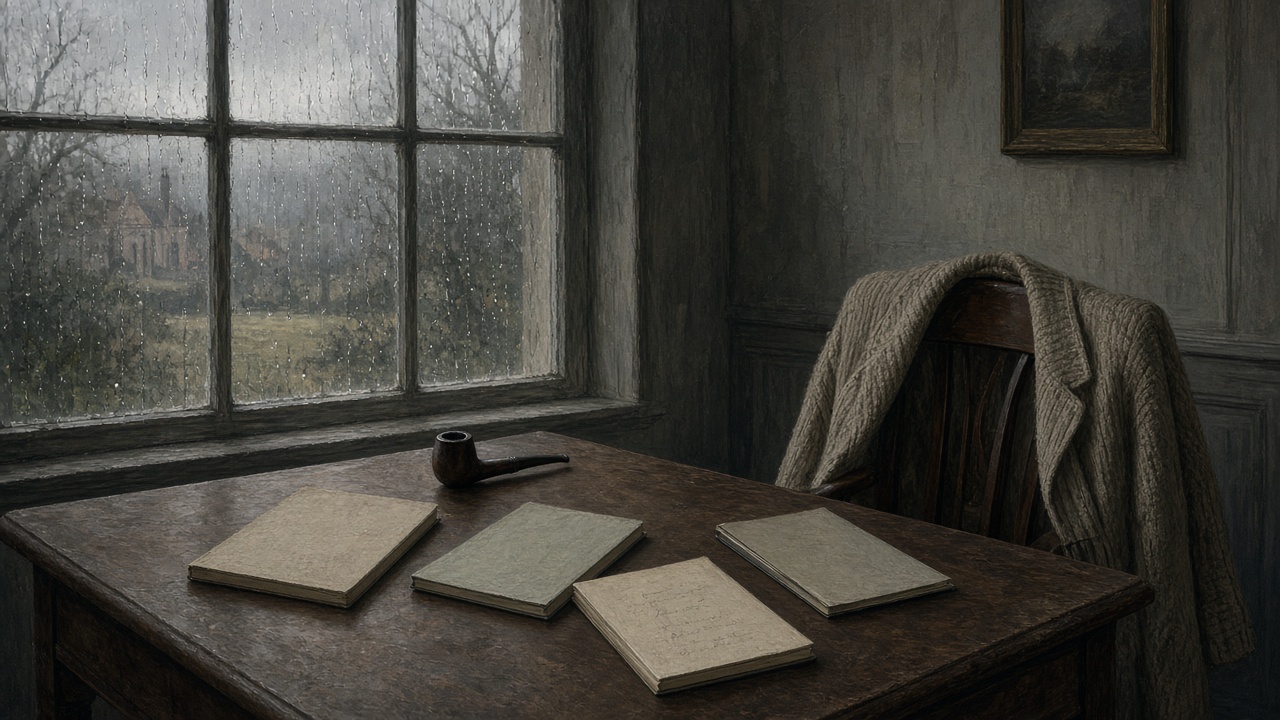
After the death of his wife, Joy, in July 1960, Lewis filled four notebooks with unvarnished notes: anger, doubt, absence, and then a slow recovery. A book of about a hundred pages that has accompanied millions of grieving people.
The text follows the four notebooks. In the first, Lewis describes the physical sensations of grief, so similar to fear, the need for companionship and the fear of others, and that God who seems to have slammed the door and bolted it. He dares to write that he fears less ceasing to believe than discovering that God is cruel. Gradually, he realizes that his memories of “H.” are distorting, that he risks loving an image and not a person. The last notebook is more serene, without easy consolation: perhaps the door wasn’t bolted, it’s he who was shouting too loudly to hear. The book is all the stronger because the author of The Problem of Pain puts his former certainties to the test.
- Original title — A Grief Observed
- First published — 1961
- Genre — Grief journal
- First English edition — Faber and Faber, London, 1961, under the pseudonym N.W. Clerk; under Lewis’s name after his death (1964)
- Availability in bookstores — Available (Cerf, paperback)
- Reading level — Easy to read, hard to live
- For whom — For grieving people, when they feel capable, and for those who accompany them.
Other French titles
- Un chagrin passionné (free online translation, Samizdat, 2016)
[{title, publisher, year, translator?, note?, source?}]
- Learning to Die — Éditions du Cerf — Paris — 1974 — Jean Prignaud and Timothy Radcliffe
- Learning to Die — Éditions du Cerf (paperback) — 2019 — Jean Prignaud and Timothy Radcliffe — postscript by Mathieu Terence; published October 31, 2019
- Learning to Die — Samizdat (Paul Gosselin’s website) — Quebec — 2016 — C. Bourgeois — free online translation
themes
- Grief and its stages, without imposed chronology.
- The doubting believer.
- Memory and the loved one.
- Faith as a relationship, not a system.
Short quotes with source
- No one ever told me that grief felt so like fear. — Learning to Die, ch. 1 (first sentence) — translation from the website
Family
Letters and autobiography
Other names
- A Grief Observed
- Learning to Die (free online translation, Samizdat, 2016)
- Grief journal
- Autobiography
After the death of his wife, Joy, in July 1960, Lewis filled four notebooks with unvarnished notes: anger, doubt, absence, and then a slow recovery. A book of about a hundred pages that has accompanied millions of grieving people.
Quick facts
## How to approach it Level: Easy to read, hard to live with. For those grieving, when they feel able, and for those accompanying them. ## The book in a few words The text follows four notebooks. In the first, Lewis notes the physical sensations of grief, so similar to fear, the need for companionship and the fear of others, and this God who seems to have slammed the door and bolted it. He dares to write that he fears less ceasing to believe than discovering that God is cruel. Gradually, he realizes that his memories of “H.” are distorting, that he risks loving an image and not a person. The last notebook is more at peace, without easy consolation: perhaps the door wasn’t bolted after all, it was he who was shouting too loudly to hear. The book is all the more powerful in that the author of *The Problem of Pain* puts his old certainties to the test. ## In Lewis’s workshop Lewis published this text under the pseudonym N.W. Clerk, with Faber, T.S. Eliot’s publisher, who guessed the author. Friends, not knowing he had written it, recommended it to him to help him. Lewis’s name only appears after his death. ## What announces Narnia The desire to see loved ones again and the promise of reunion color the end of *The Last Battle*, written before Joy’s death but after that of his mother, who had deeply marked Lewis when he was a child. ## What a modern reader retains Today, people often speak of the “stages of grief” as a program. Lewis, on the contrary, shows a grief that goes in circles, returns, contradicts itself. It is probably for this reason that this little book continues to be offered and shared: it does not provide instructions, it allows one to not be well. ## The legacy it has left behind One of the most widely read books on grief in the world, recommended by psychologists as well as chaplains. The film *Shadowlands* (1993) is largely inspired by it. ## Key ideas to remember- Grief and its stages, without any imposed chronology.
- The believer’s doubt.
- Memory and the loved one.
- Faith as a relationship, not as a system.
“No one had ever told me that grief felt so like fear.”
— *A Grief Observed*, ch. 1 (first sentence) — translation from the website
- Apprendre la mort, Éditions du Cerf, Paris, 1974, translated by Jean Prignaud and Timothy Radcliffe
- Apprendre la mort, Éditions du Cerf (pocket edition), 2019, translated by Jean Prignaud and Timothy Radcliffe — postface by Mathieu Terence; released on October 31, 2019
- Un chagrin passionné, Samizdat (Paul Gosselin’s website), Quebec, 2016, translated by C. Bourgeois — free online translation
Échanges entre lecteurs
Une question, un souvenir de lecture, une idée ? Partagez-les avec les autres lecteurs, dans le respect de la charte des commentaires.
Les commentaires ne sont pas disponibles pour le moment.
Les commentaires sont fermés sur cette page.
Aucun commentaire pour le moment. Soyez la première personne à partager votre avis !
Merci ! Votre commentaire sera visible après relecture.